Common myths about Earth and space, checked against NASA, NOAA, ESA and EPA.
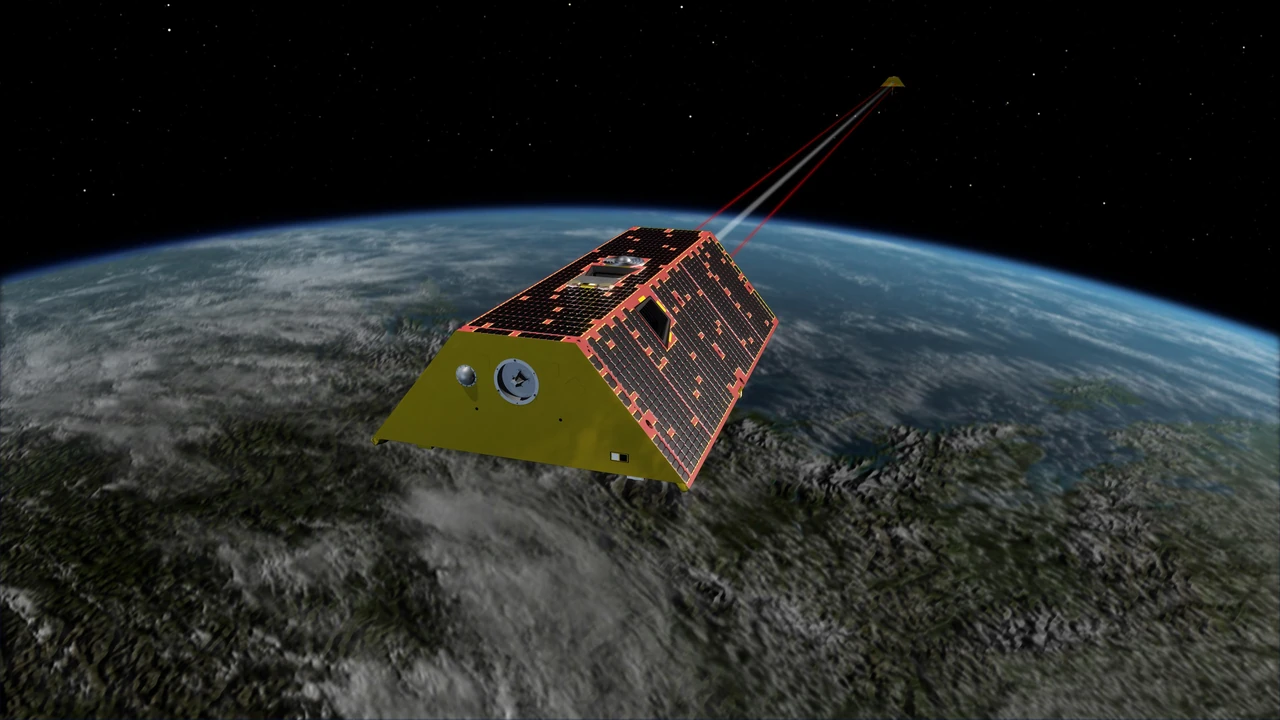
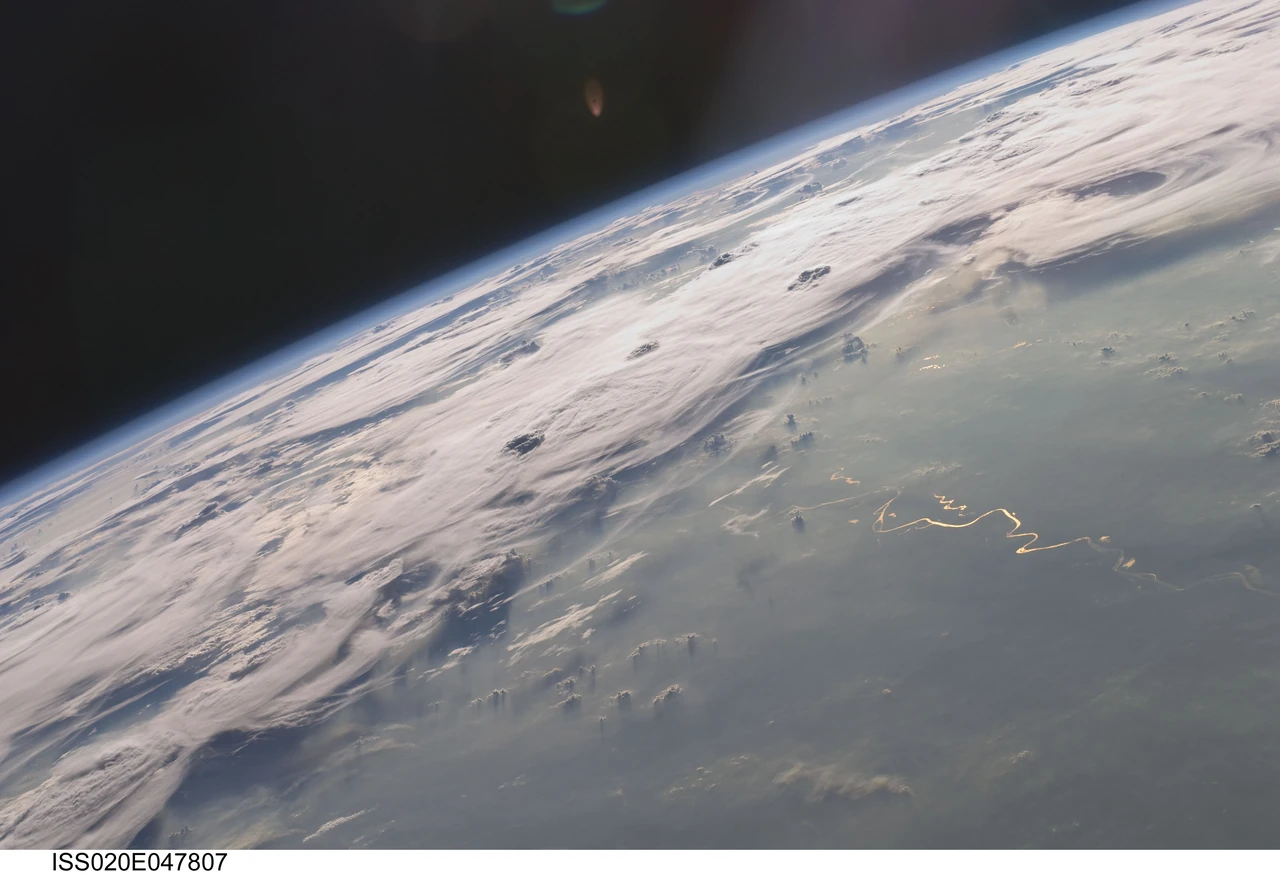
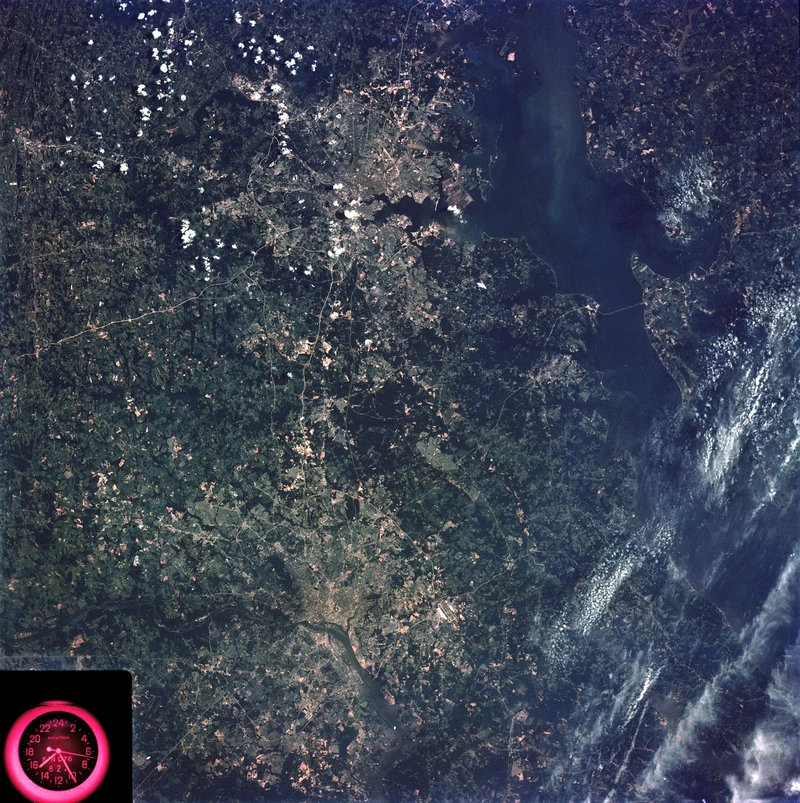
NASA Blue MarbleNASA/JPL-CaltechNASA/Jeff Williams (ISS020-E-047807, Oct. 6, 2009)NASA (SL3-83-166, Skylab, 1973)Created by the Founder and SI.
Why This Page Exists
Myths spread faster than the data behind them. Each one below is checked against a NASA, NOAA, ESA or EPA source, linked so you can read it yourself. Where the news is good, we say so. Where the problem isn't solved, we say that too.
Free to reuse with a link back. Each row keeps its original source.
Myth
The ozone hole can't be fixed.
Fact
It is healing. NOAA and NASA ranked the 2025 Antarctic ozone hole the fifth smallest since 1992, when the Montreal Protocol began to take effect, and the ozone layer remains on track to recover fully later this century.
It's slow: banned chemicals still leak from old products, so scientists expect the Antarctic hole to recover around the late 2060s.
If an asteroid were coming, there would be nothing we could do.
Fact
Humanity has already moved one. NASA's DART spacecraft hit the asteroid moonlet Dimorphos in 2022 and shortened its orbit by 33 minutes and 15 seconds.
DART was a test on a small asteroid that posed no threat. Finding asteroids early gives time to act, which is why NASA is building NEO Surveyor.
It won't. Apophis will safely pass close to Earth on April 13, 2029, and NASA is confident there is no risk of it impacting our planet for at least 100 years.
It really will pass close, about 20,000 miles away, which is why NASA's OSIRIS-APEX is going to study it.
In early 2025 it briefly had a small chance of hitting Earth. More observations showed it poses no significant risk to Earth, and in 2026 NASA ruled out a Moon impact too.
Early impact odds often rise before they fall to zero. That is the tracking system working, not failing.
NOAA's SOLAR-1 watches the Sun from about a million miles away and is a cornerstone of the U.S. space weather early warning system, delivering storm imagery to forecasters within 30 minutes of capture.
Forecasts aren't perfect, and warning time varies from storm to storm. ESA's Vigil, planned for 2031, aims to add up to four to five days' notice of some effects.
Agencies are acting. ESA guided its Aeolus satellite down in 2023 in the first assisted reentry of its kind, and ESA's Zero Debris approach aims to sharply limit new debris from its missions by 2030.
The problem is still growing: ESA's 2025 report says better rule-following is not yet enough to stop debris from increasing. Removal missions are the next step.
Wings lift because air over the top has to race to meet the air underneath at the back.
Fact
NASA calls this "equal transit time" idea the most popular incorrect theory of lift. Air over the top of a lifting wing really moves much faster than that idea predicts.
Part of it is right: faster air over the top does mean lower pressure there. NASA explains lift as the wing turning the air, with both the top and bottom surfaces helping.
Astronauts float because there's no gravity in space.
Fact
At the space station's height, Earth's gravity is still about 90 percent as strong as on the ground. Astronauts float because they and their spacecraft are falling around Earth together.
Scientists call this feeling of weightlessness microgravity.
Earth's tilted axis causes the seasons. In the Northern Hemisphere, winter actually comes when Earth is closest to the Sun.
Earth's orbit is a bit lopsided, but the change in distance is small compared with how far away the Sun is. The two hemispheres have opposite seasons at the same time.
NASA says calling it the "dark side" is misleading. As the Moon orbits Earth, different parts are in sunlight or darkness at different times.
We really do always see the same side, because the Moon spins at the same rate it orbits Earth. People first saw the far side in 1959, from a Soviet spacecraft.
NOAA's National Weather Service says lightning often strikes the same place again and again, especially tall, pointy, isolated objects. The Empire State Building is hit about 23 times a year.
Safety tip from the same page: if you hear thunder, get inside a real building or a hard-topped car right away.
Lightning often strikes more than three miles (5 km) from the center of a storm, and "bolts from the blue" can strike 10 to 15 miles (16 to 24 km) away.
You aren't safe anywhere outdoors in a thunderstorm, so head inside as soon as you hear thunder.
You can only see the northern lights near the North Pole.
Fact
NOAA says auroras form in two ovals, around the north and south magnetic poles. During big geomagnetic storms they can be seen over most of the United States.
The best places are still far north or far south, between about 60 and 75 degrees latitude.
NOAA says explorers have seen less than 0.001% of the deep-ocean floor, and as of April 2026 only 28.7% of the seafloor had been mapped in high detail.
More than 90% of the ocean is deep ocean, so most of it is still waiting to be explored.
It is healing. NOAA and NASA ranked the 2025 Antarctic ozone hole the fifth smallest since 1992, when the Montreal Protocol began to take effect, and the ozone layer remains on track to recover fully later this century. It's slow: banned chemicals still leak from old products, so scientists expect the Antarctic hole t…
Is it true that If an asteroid were coming, there would be nothing we could do?
Humanity has already moved one. NASA's DART spacecraft hit the asteroid moonlet Dimorphos in 2022 and shortened its orbit by 33 minutes and 15 seconds. DART was a test on a small asteroid that posed no threat. Finding asteroids early gives time to act, which is why NASA is building NEO Surveyor.
Is it true that Asteroid Apophis will hit Earth in 2029?
It won't. Apophis will safely pass close to Earth on April 13, 2029, and NASA is confident there is no risk of it impacting our planet for at least 100 years. It really will pass close, about 20,000 miles away, which is why NASA's OSIRIS-APEX is going to study it.
Is it true that Asteroid 2024 YR4 is going to hit us in 2032?
In early 2025 it briefly had a small chance of hitting Earth. More observations showed it poses no significant risk to Earth, and in 2026 NASA ruled out a Moon impact too. Early impact odds often rise before they fall to zero. That is the tracking system working, not failing.
NOAA says it plainly: when a coral bleaches, it is not dead. If the stress is not severe, corals have been known to recover. If the heat stress lasts too long, bleached coral does die. That's why restoration groups replant reefs.
Is it true that Solar storms hit without any warning?
NOAA's SOLAR-1 watches the Sun from about a million miles away and is a cornerstone of the U.S. space weather early warning system, delivering storm imagery to forecasters within 30 minutes of capture. Forecasts aren't perfect, and warning time varies from storm to storm. ESA's Vigil, planned for 2031, aims to add up…