Aeolus Assisted Reentry (ESA)
ESA guided its retired Aeolus wind satellite down in the first assisted reentry of its kind, cutting the already low debris risk by a factor of 150.
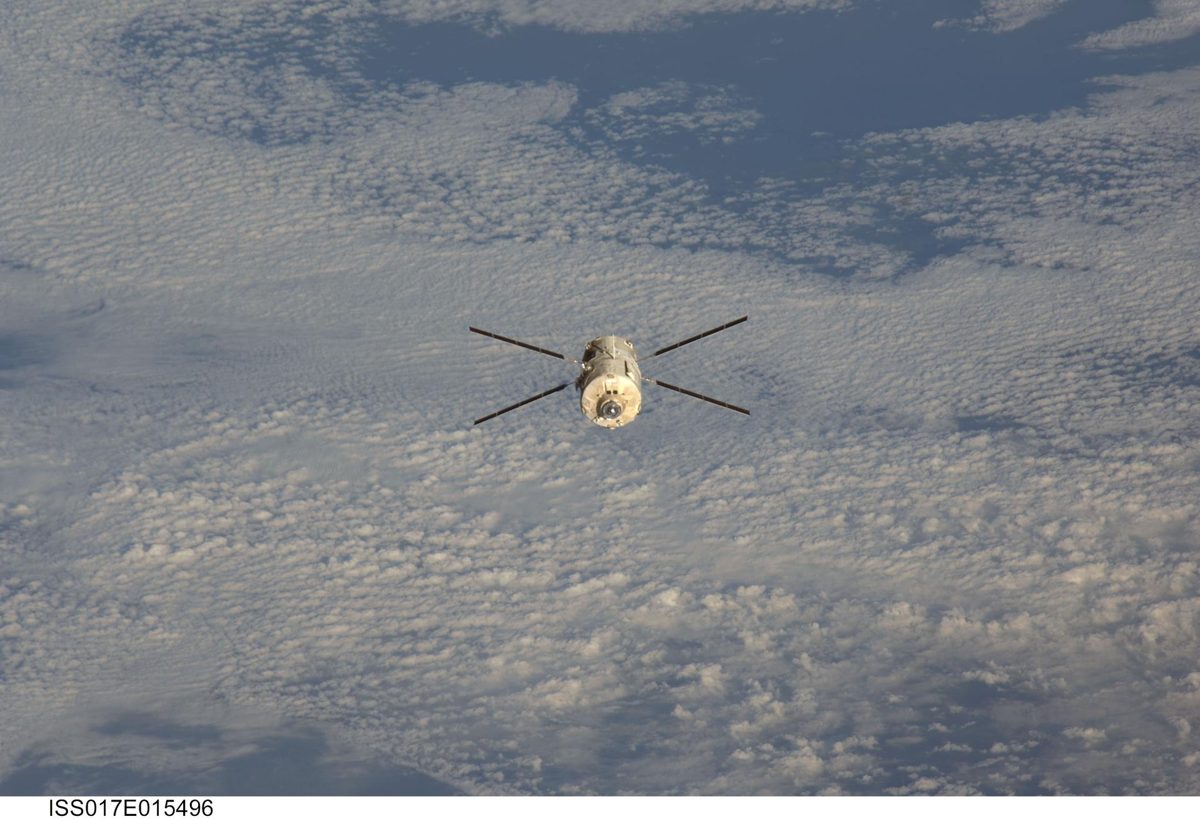
Image: NASA.
Last reviewed: 3 sources cited
Explain Like I'm 10
- What is it? A series of engine burns that steered a satellite never designed for controlled When a spacecraft or piece of space junk falls back into Earth's air. The friction makes it very hot, so most small objects burn up. Glossary into a safer, planned reentry.
- Why does it matter? To show that old satellites can be brought home more safely, and to push ESA toward debris-neutral missions by 2030.
The Five W's of Aeolus Assisted Reentry
Who
The European Space Agency, operating from its ESOC mission control in Darmstadt, Germany.
Source: ESA, Aeolus: a historic end
What
A series of engine burns that steered a satellite never designed for controlled reentry into a safer, planned reentry.
Source: ESA, Aeolus: a historic end
When
Burns from July 24, 2023; Aeolus reentered above Antarctica on July 28, 2023.
Source: ESA, Aeolus: a historic end
Where
Low Earth The curved path an object takes as it travels around a planet, moon or star, like a satellite circling Earth. Glossary, ending in Earth's atmosphere with debris targeted at the Atlantic ground track.
Source: ESA, Aeolus: a historic end
Why
To show that old satellites can be brought home more safely, and to push ESA toward debris-neutral missions by 2030.
Source: ESA, Aeolus: a historic end
Source: ESA, Zero Debris Charter
Impact Statement
Agency solution · active (Zero Debris approach)
When ESA's Aeolus wind satellite ran out of mission life, it was not designed for a controlled ending. In July 2023 ESA's mission control used its last fuel to lower it to 120 km and line it up so any surviving pieces would fall along a planned Atlantic track, the first assisted reentry of its kind.
The already low risk from falling debris dropped by a factor of 150, and the satellite spent weeks less adrift in orbit.
Source: ESA, Aeolus: a historic end
Source: ESA, Final images before Aeolus demise
It is part of ESA's Zero Debris approach: by 2030 all ESA missions are to be debris neutral.
Source: ESA, Zero Debris Charter
For Further Information: ESA, Aeolus: a historic end
ESA's first-of-its-kind assisted reentry of the Aeolus satellite cut the already low risk from falling debris by a factor of 150.
Want to go deeper? ESA, Aeolus: a historic end has the full story and the latest updates.
 For Further Information
Related Solutions
More solutions like this one, matched by meaning.

For Teachers
Discussion questions
- What is Aeolus Assisted Reentry (ESA), and what problem does it help solve?
- Who is behind Aeolus Assisted Reentry (ESA), and where does the work happen?
- How does Aeolus Assisted Reentry (ESA) help both people and nature? Use one fact from this page.
Sources are listed with each fact in the Five W's above.
Standards Alignment
U.S. Next Generation Science Standards (NGSS) and Common Core. Official text, in English.
- HS-ESS1-4 (Grade 9-12) Use mathematical or computational representations to predict the motion of orbiting objects in the solar system.
- CCSS RST.6-8.1 (Grade 6-8) Cite specific textual evidence to support analysis of science and technical texts.
Cite This Page
APA
Saving Planets. (n.d.). Aeolus Assisted Reentry (ESA). https://www.savingplanets.com/Aeolus.html
MLA
"Aeolus Assisted Reentry (ESA)." Saving Planets, https://www.savingplanets.com/Aeolus.html.