
Glossary
Simple definitions of words used across Saving Planets. On solution pages, tap or hover over a dotted word to see its meaning.
A B C D E G H I K L M N O P R S T W
A
- Aerosol
- Tiny bits of dust, smoke, salt or pollution floating in the air. They can block sunlight and help clouds form.
- Asteroid
- A rocky object that orbits the Sun, much smaller than a planet. Most are in a belt between Mars and Jupiter.
B
- Biodiversity
- The variety of all living things in a place: plants, animals, fungi and tiny microbes.
- Biomass
- The total amount of living material, like the wood and leaves in a forest. Measuring it shows how much carbon plants store.
C
- Carbon dioxide (CO₂)
- A gas that people and animals breathe out and that burning fuel releases. Plants take it in, and too much of it in the air warms the planet.
- Coral bleaching
- When water stays too warm, corals push out the tiny algae living inside them and turn white. Bleached corals can recover, but they may starve and die if the heat lasts.
- Coronal mass ejection (CME)
- A huge cloud of charged gas thrown out from the Sun. If it hits Earth it can cause auroras and disturb satellites and power grids.
D
- Deorbit
- To bring a satellite or piece of space junk down out of orbit on purpose, usually so it burns up in the atmosphere.
E
- Ecosystem
- A community of living things and the place they live, like a reef or a forest, all depending on each other.
- Evapotranspiration
- Water moving from the ground into the air, partly by evaporating from soil and partly by passing through plants and out of their leaves.
G
- Geostationary orbit
- A high orbit, about 22,000 miles up, where a satellite moves with Earth's spin and stays over the same spot.
- Greenhouse gas
- A gas, like carbon dioxide or methane, that traps heat in the air around Earth, the way a greenhouse keeps plants warm.
H
- Harmful algal bloom
- When tiny water plants called algae grow out of control. Some make toxins that can harm people, pets and fish.
I
- Infrared
- A kind of light our eyes can't see that we feel as heat. Special cameras use it to see warm objects and gases.
- Ionosphere
- A high layer of the atmosphere, about 50 to 600 miles up, full of electrically charged particles.
K
- Kelp
- Large brown seaweed that grows in cool ocean water and forms underwater forests full of sea life.
L
- Lagrange point
- A spot in space where the pull of the Sun and Earth balance, so a spacecraft can stay in place with little fuel. L1 sits between Earth and the Sun.
M
- Magnetosphere
- Earth's invisible magnetic shield. It steers most of the Sun's charged particles away from our planet.
- Mangrove
- A tree that grows in salty water along tropical coasts. Its tangled roots protect shores from waves and shelter young fish.
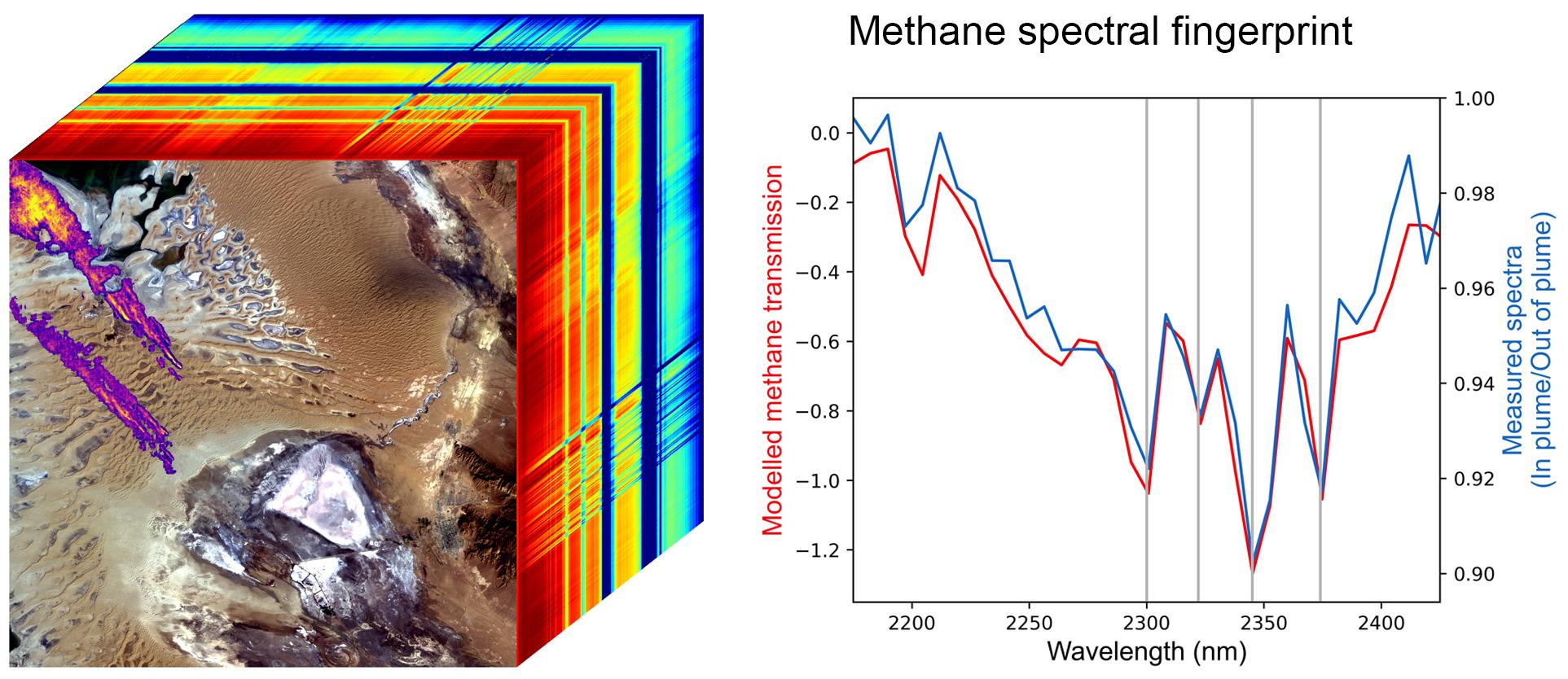
- Methane
- A greenhouse gas that traps much more heat than carbon dioxide over a few decades. It leaks from oil and gas sites, landfills and farms.
- Microplastics
- Pieces of plastic smaller than 5 millimeters, about the size of a grain of rice or smaller. They come from bigger plastic breaking apart.
N
- Near-Earth object
- An asteroid or comet whose orbit brings it close to Earth's path around the Sun. Scientists track them to make sure none is on course to hit us.
O
- Orbit
- The curved path an object takes as it travels around a planet, moon or star, like a satellite circling Earth.
- Overfishing
- Catching fish faster than they can reproduce.
- Ozone
- A gas high in the sky that blocks harmful ultraviolet rays from the Sun. Near the ground, ozone is a pollutant.
P
- Phosphorus
- A nutrient that helps algae and plants grow. Too much of it in lakes and rivers makes algae grow faster than the ecosystem can handle.
- Phytoplankton
- Tiny plant-like living things that drift in water and use sunlight to make food. They make much of the oxygen we breathe and feed ocean life.
R
- Radar
- A tool that sends out radio waves and listens for the echoes. From space it can see the ground through clouds, day or night.
- Reentry
- When a spacecraft or piece of space junk falls back into Earth's air. The friction makes it very hot, so most small objects burn up.
- Reforestation
- Planting trees where a forest was lost so it can grow back.
S
- Salinity
- How salty water is. Saltier water is heavier, so differences in salinity help drive ocean currents.
- Salt marsh
- A coastal wetland of grasses that floods with salty tide water. It soaks up storm surges and stores carbon in its mud.
- Satellite altimetry
- Measuring the height of the sea or land from space by timing how long a radar or laser pulse takes to bounce back.
- Sea ice
- Frozen seawater that floats on the ocean surface. It grows in the polar winter and shrinks in summer.
- Seagrass
- Flowering plants that grow underwater in shallow seas, forming meadows that shelter animals and store carbon.
- Sediment
- Sand, mud and gravel carried by water that settles on river beds, lake bottoms and beaches.
- Solar wind
- A steady stream of charged particles flowing out from the Sun in every direction.
- Space debris
- Old satellites, rocket parts and broken pieces left in orbit that no longer do anything useful.
- Subduction zone
- A place where one of Earth's plates slides under another. The biggest earthquakes and tsunamis start here.
- Synthetic aperture radar (SAR)
- A radar on a moving satellite that combines many echoes into one sharp picture, as if it had a giant antenna.
T
- Telescope
- An instrument that collects light (or other energy) to see faraway things more clearly.
- Tsunami
- A series of giant ocean waves, usually caused by an undersea earthquake, volcano or landslide.
W
- Watershed
- All the land where rain and snow drain into the same river or lake.