Ramses (ESA / JAXA)
ESA and JAXA's Ramses must launch by spring 2028 to meet Apophis before its 2029 Earth pass. Its €81.2 million build contract was signed in February 2026.
Image: ESA.
Last reviewed: 2 sources cited
Explain Like I'm 10
- What is it? A spacecraft with two CubeSats that will study Apophis before, during and after its Earth pass.
- Why does it matter? To understand A rocky object that orbits the Sun, much smaller than a planet. Most are in a belt between Mars and Jupiter. Glossary' physical properties and behaviour and strengthen planetary defense.
The Five W's of Ramses
What
A spacecraft with two CubeSats that will study Apophis before, during and after its Earth pass.
Source: ESA, Ramses contracts
When
Contract signed February 10, 2026; first switch-on September 2026; launch by spring 2028.
Source: ESA, Ramses contracts
Source: ESA, First switch-on for Ramses
Where
Asteroid Apophis, which passes Earth on Friday, April 13, 2029.
Source: ESA, First switch-on for Ramses
Why
To understand asteroids' physical properties and behaviour and strengthen planetary defense.
Source: ESA, Ramses contracts
Impact Statement
Agency solution · active (in development, contracted)
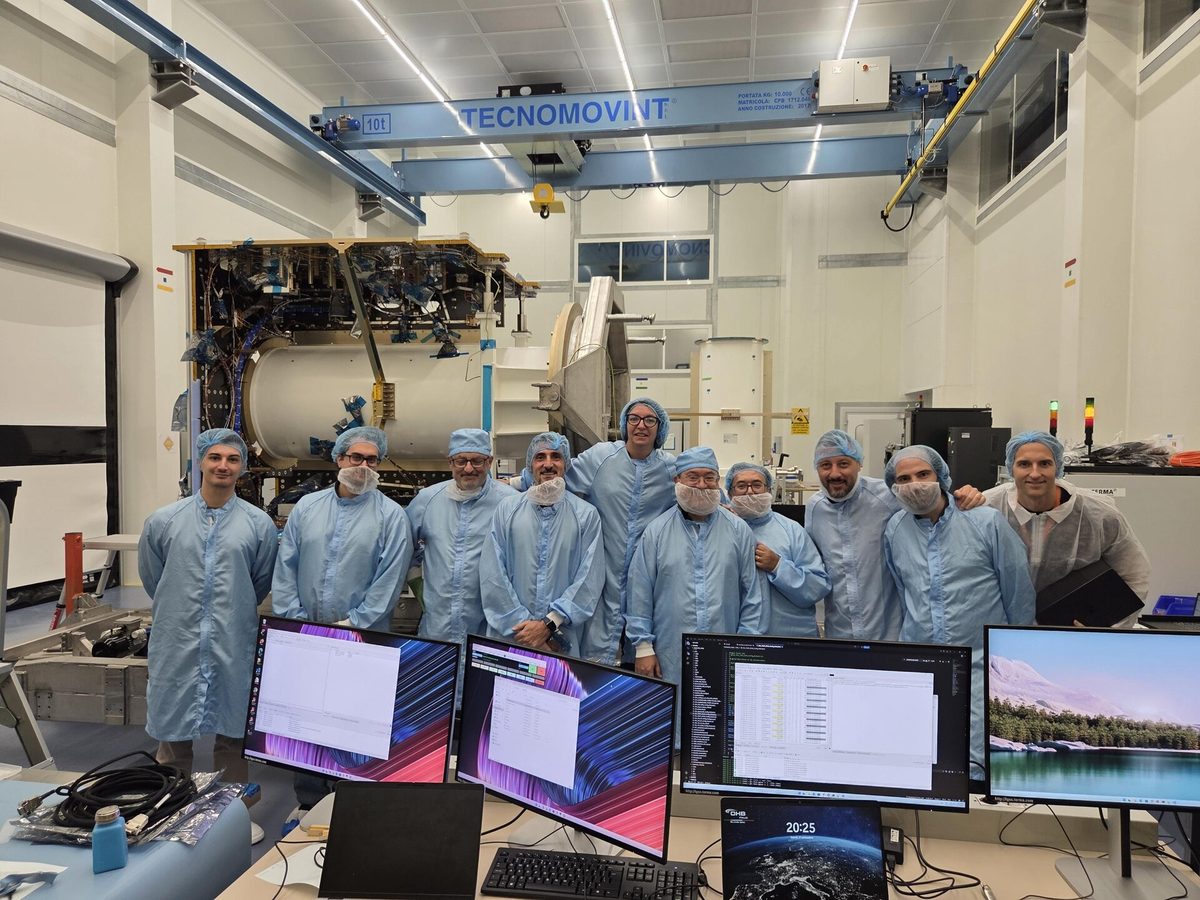
ESA's Rapid Apophis Mission for Space Safety, Ramses, will rendezvous with Apophis before its rare close encounter with Earth. ESA signed the €81.2 million build contract with OHB Italia on February 10, 2026, and the spacecraft was switched on for the first time in September 2026.
It must reach space by spring 2028 on a Japanese H3 rocket. JAXA contributes the solar arrays and a thermal A kind of light our eyes can't see that we feel as heat. Special cameras use it to see warm objects and gases. Glossary imager.
Source: ESA, Ramses contracts
Source: ESA, First switch-on for Ramses
Building on Hera, Ramses strengthens international cooperation and Europe's planetary defense capabilities.
Want to go deeper? ESA, Ramses contracts has the full story and the latest updates.
 For Further Information
Related Solutions
More solutions like this one, matched by meaning.
For Teachers
Discussion questions
- What is Ramses (ESA / JAXA), and what problem does it help solve?
- Who is behind Ramses (ESA / JAXA), and where does the work happen?
- How does Ramses (ESA / JAXA) help both people and nature? Use one fact from this page.
Sources are listed with each fact in the Five W's above.
Standards Alignment
U.S. Next Generation Science Standards (NGSS) and Common Core. Official text, in English.
- 4-ESS3-2 (Grade 3-5) Generate and compare multiple solutions to reduce the impacts of natural Earth processes on humans.
- MS-ESS1-3 (Grade 6-8) Analyze and interpret data to determine scale properties of objects in the solar system.
- MS-ESS3-2 (Grade 6-8) Analyze and interpret data on natural hazards to forecast future catastrophic events and inform the development of technologies to mitigate their effects.
- HS-ESS1-4 (Grade 9-12) Use mathematical or computational representations to predict the motion of orbiting objects in the solar system.
- CCSS RST.6-8.1 (Grade 6-8) Cite specific textual evidence to support analysis of science and technical texts.
Cite This Page
APA
Saving Planets. (n.d.). Ramses (ESA / JAXA). https://www.savingplanets.com/Ramses.html
MLA
"Ramses (ESA / JAXA)." Saving Planets, https://www.savingplanets.com/Ramses.html.