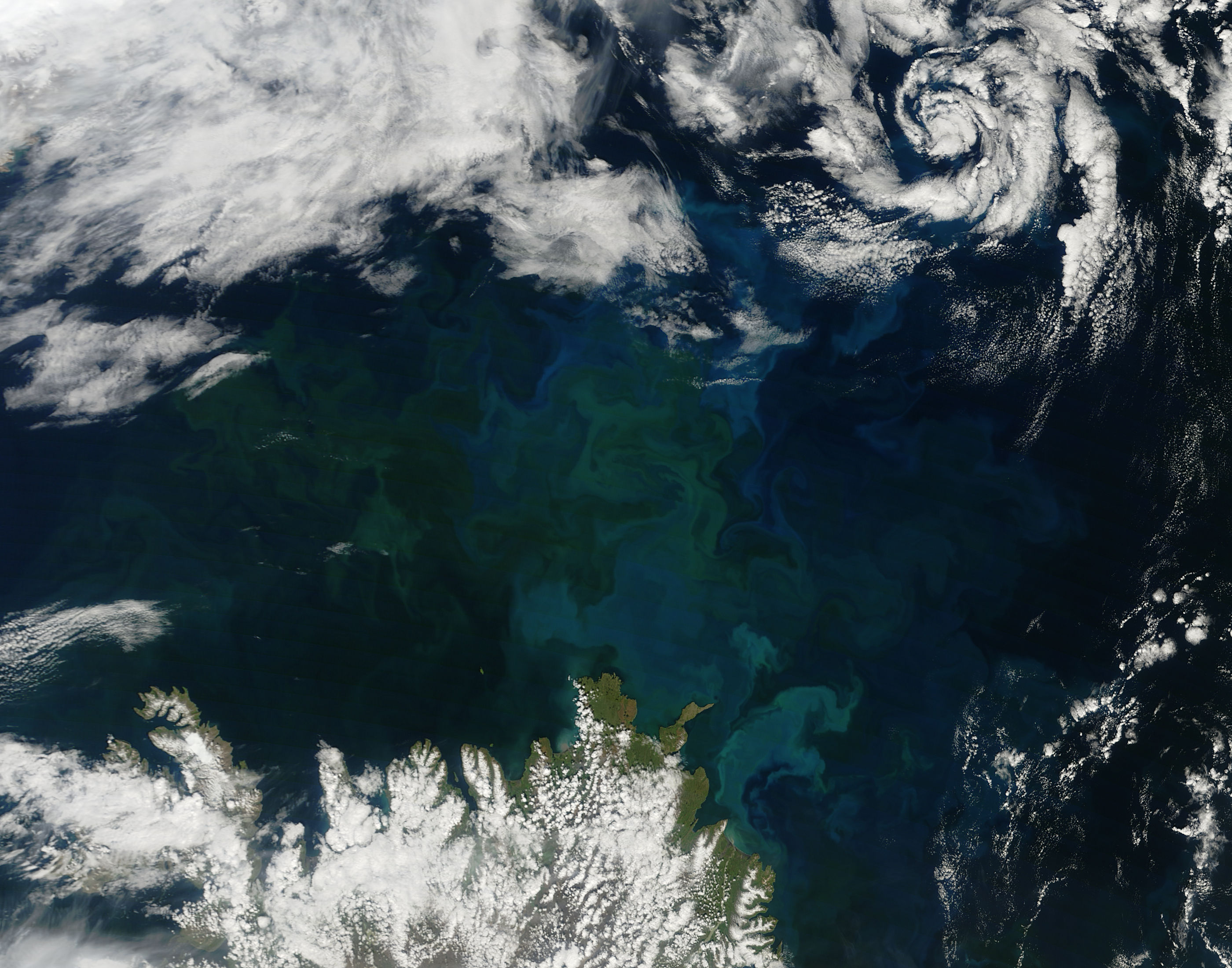

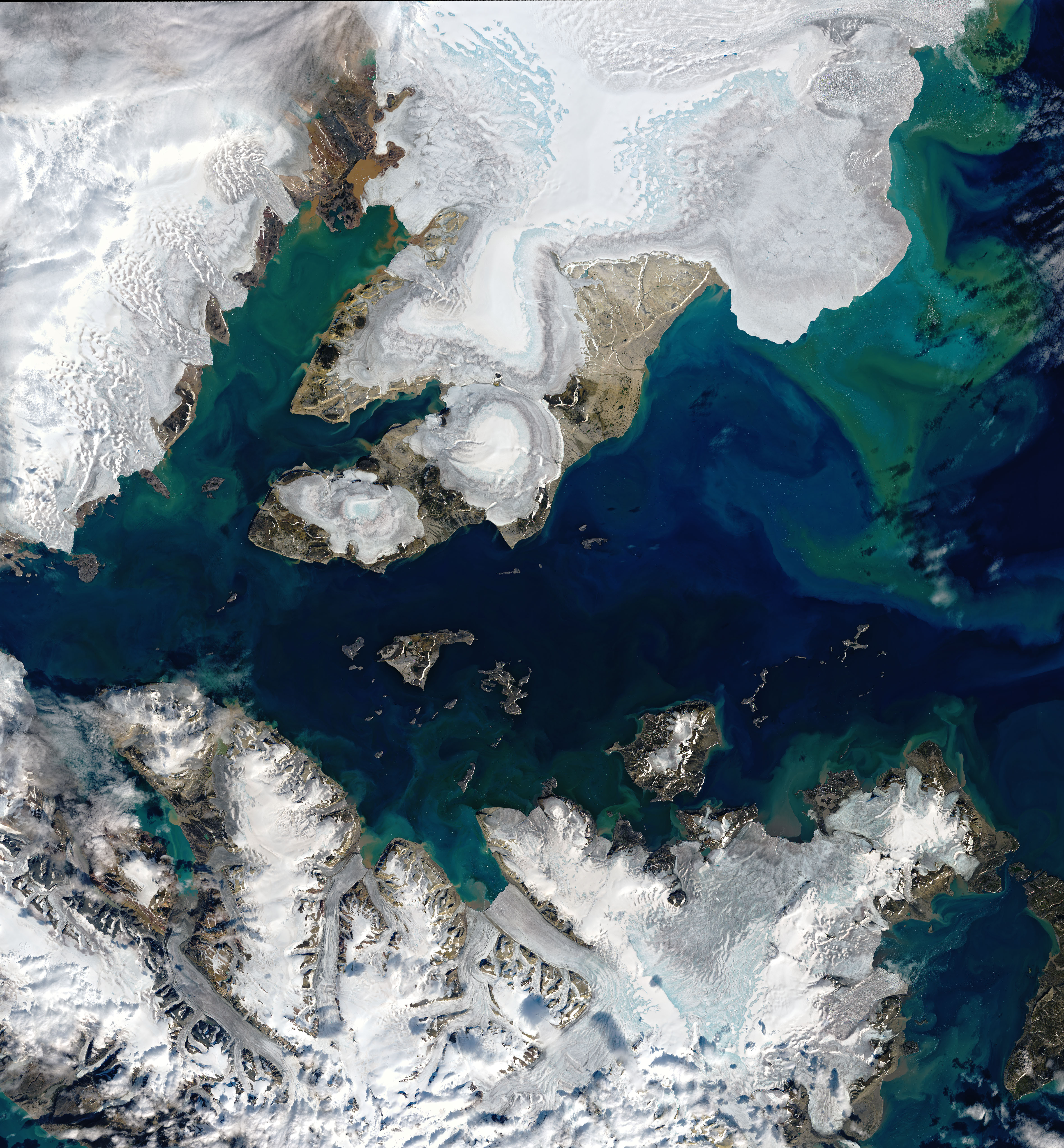
Phytoplankton, the Ocean's Oxygen Engine
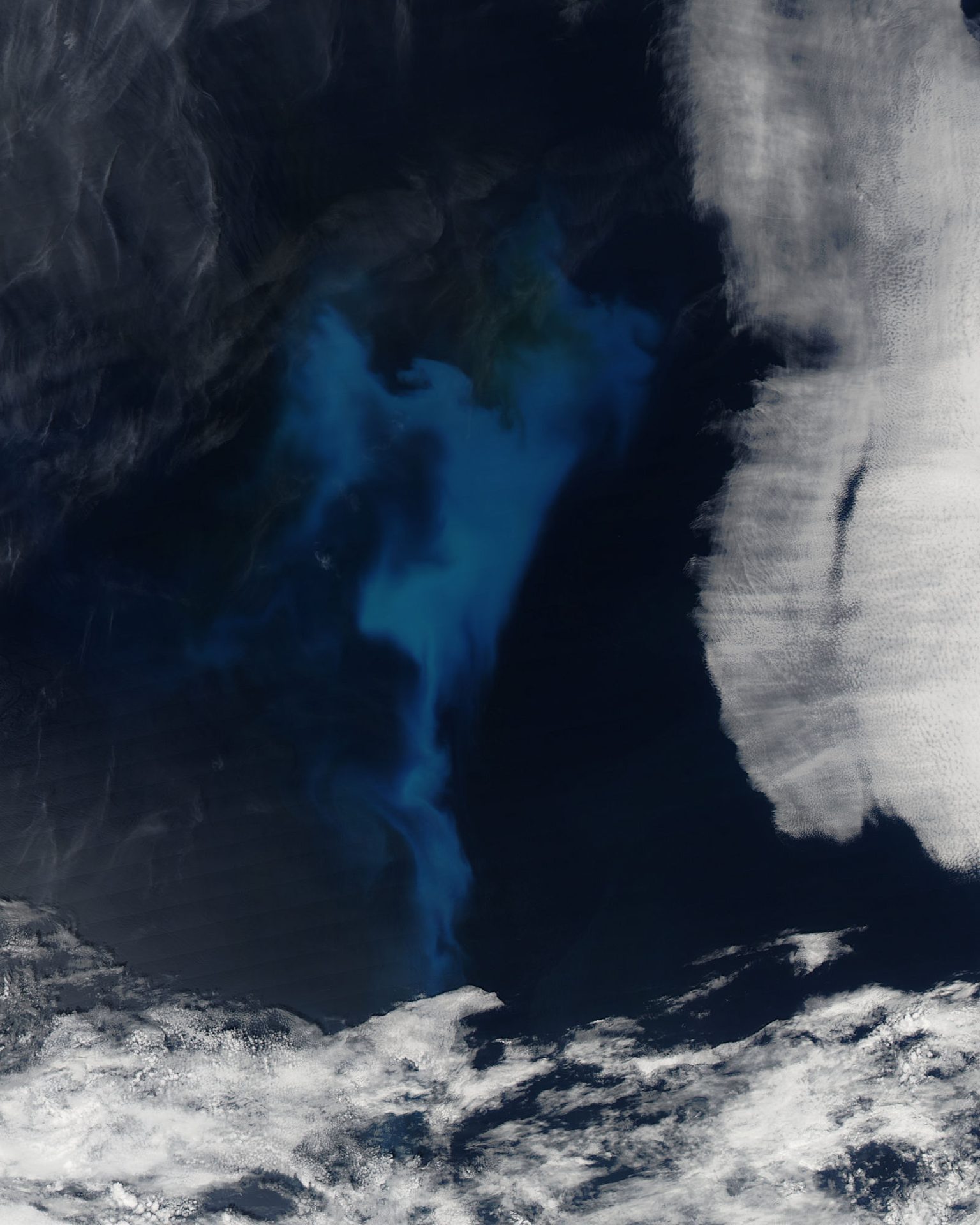
Tiny ocean plants produce about half of Earth's oxygen, making phytoplankton one of the planet's most important natural systems.
Image: NASA.
Last reviewed: 2 sources cited
Explain Like I'm 10
- What is it? A natural system that turns sunlight and A gas that people and animals breathe out and that burning fuel releases. Plants take it in, and too much of it in the air warms the planet. Glossary into food and oxygen.
- Why does it matter? Healthy oceans mean breathable air and a working food web.
The Five W's of Phytoplankton
Who
Tiny plant-like living things that drift in water and use sunlight to make food. They make much of the oxygen we breathe and feed ocean life. Glossary, drifting plants, algae and bacteria that photosynthesize near the ocean surface.
What
A natural system that turns sunlight and carbon dioxide into food and oxygen.
When
Every day; marine life uses about as much oxygen as phytoplankton produce.
Where
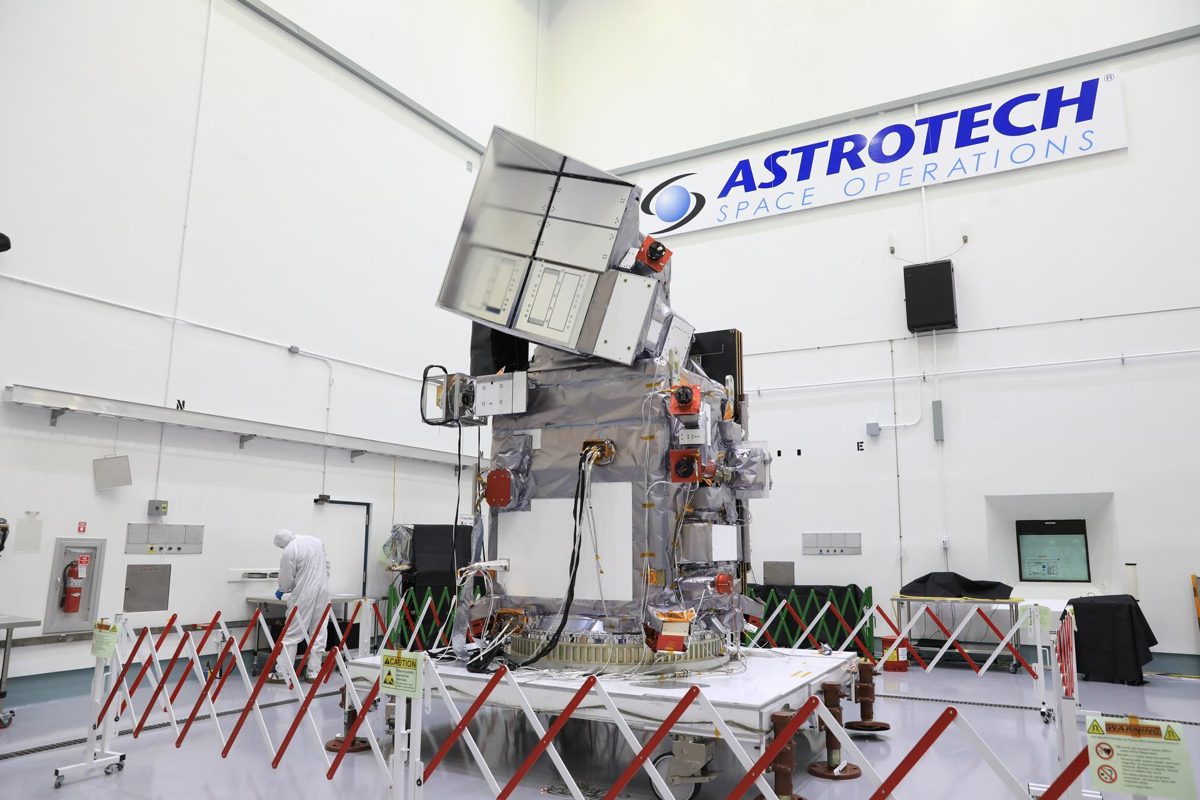
The sunlit upper layer of every ocean; satellites like NASA's PACE track it from space.
Source: NOAA, How much oxygen comes from the ocean?
Source: NASA, PACE mission
Why
Healthy oceans mean breathable air and a working food web.
Impact Statement
Natural solution
About half of Earth's oxygen comes from the ocean, and most of it is made by phytoplankton, drifting plants and algae too small to see one by one. A single kind, Prochlorococcus, produces up to 20% of the oxygen in our whole biosphere.
Keeping the ocean healthy keeps this oxygen engine running.
Source: NOAA, How much oxygen comes from the ocean?
For Further Information: NOAA, How much oxygen comes from the ocean?
About half of Earth's oxygen comes from the ocean, most of it made by tiny phytoplankton.
Want to go deeper? NOAA, How much oxygen comes from the ocean? has the full story and the latest updates.
 For Further Information
Related Solutions
More solutions like this one, matched by meaning.
For Teachers
Discussion questions
- What is Phytoplankton, the Ocean's Oxygen Engine, and what problem does it help solve?
- Who is behind Phytoplankton, the Ocean's Oxygen Engine, and where does the work happen?
- How does Phytoplankton, the Ocean's Oxygen Engine help both people and nature? Use one fact from this page.
Sources are listed with each fact in the Five W's above.
Standards Alignment
U.S. Next Generation Science Standards (NGSS) and Common Core. Official text, in English.
- K-ESS3-3 (Grade K-2) Communicate solutions that will reduce the impact of humans on the land, water, air, and/or other living things in the local environment.
- 5-ESS3-1 (Grade 3-5) Obtain and combine information about ways individual communities use science ideas to protect the Earth's resources and environment.
- MS-ESS3-3 (Grade 6-8) Apply scientific principles to design a method for monitoring and minimizing a human impact on the environment.
- MS-LS2-5 (Grade 6-8) Evaluate competing design solutions for maintaining biodiversity and ecosystem services.
- HS-ESS3-4 (Grade 9-12) Evaluate or refine a technological solution that reduces impacts of human activities on natural systems.
- CCSS RI.5.9 (Grade 3-5) Integrate information from several texts on the same topic in order to write or speak about the subject knowledgeably.
- CCSS RST.6-8.1 (Grade 6-8) Cite specific textual evidence to support analysis of science and technical texts.
Cite This Page
APA
Saving Planets. (n.d.). Phytoplankton, the Ocean's Oxygen Engine. https://www.savingplanets.com/Phytoplankton.html
MLA
"Phytoplankton, the Ocean's Oxygen Engine." Saving Planets, https://www.savingplanets.com/Phytoplankton.html.