NEO Surveyor
Finding asteroids before they find us.
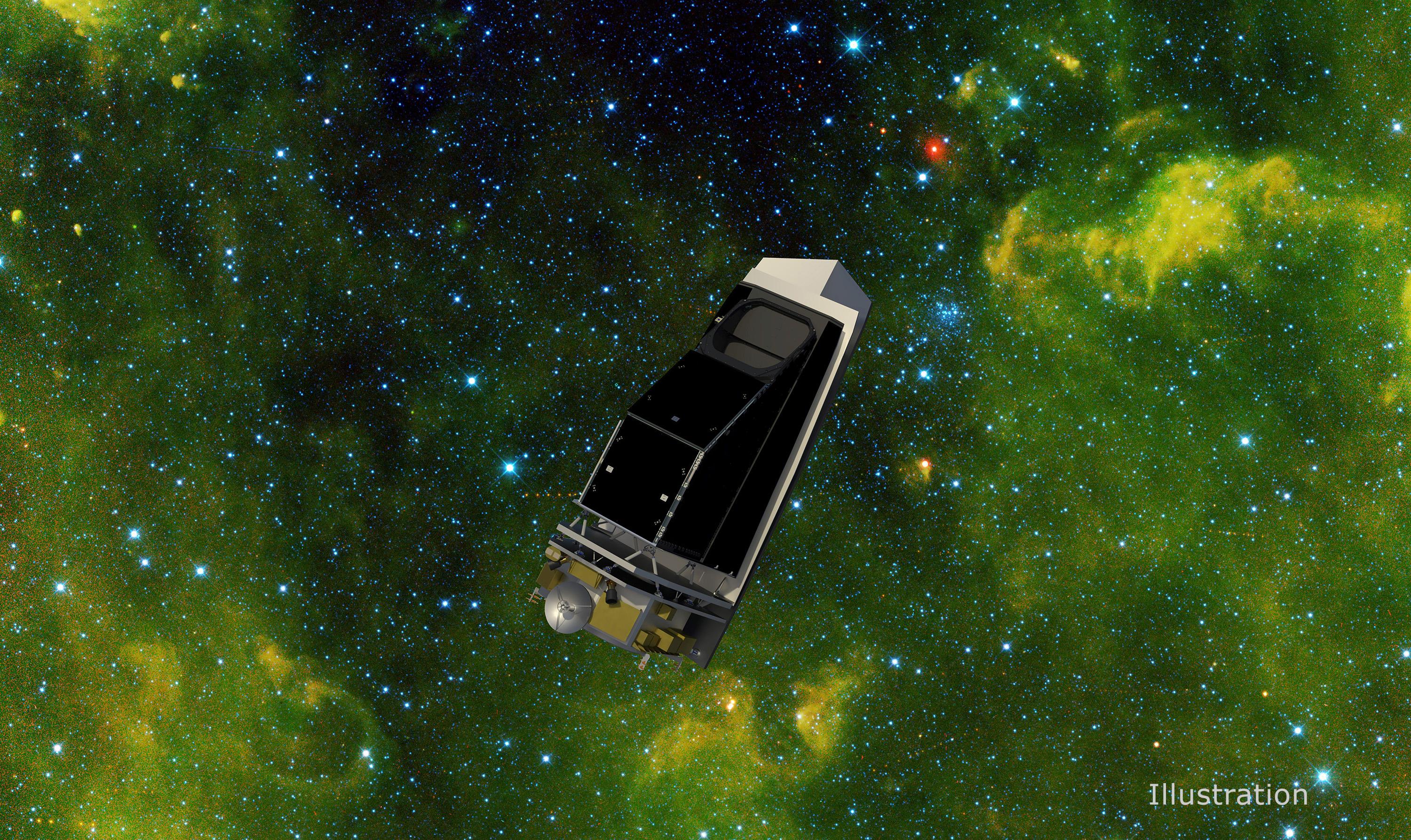
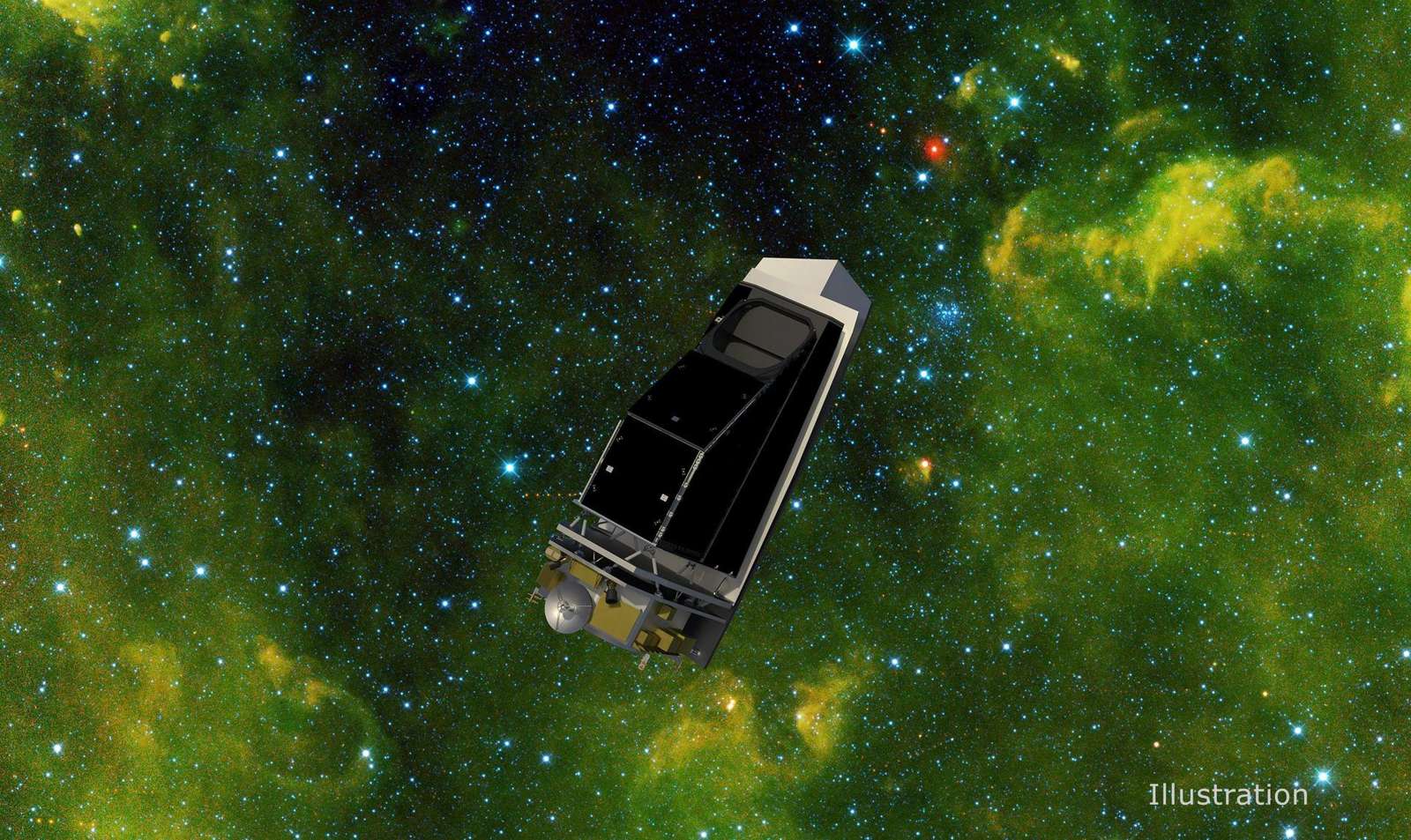
Image: NASA/JPL-Caltech/University of Arizona (PIA25253, illustration).
Last reviewed: 3 sources cited
Explain Like I'm 10
- What is it? The first space An instrument that collects light (or other energy) to see faraway things more clearly. Glossary specifically designed to detect A rocky object that orbits the Sun, much smaller than a planet. Most are in a belt between Mars and Jupiter. Glossary and comets that may be potential hazards to Earth: a single telescope about 50 cm (almost 20 inches) across, seeing in two heat-sensing A kind of light our eyes can't see that we feel as heat. Special cameras use it to see warm objects and gases. Glossary wavelengths.
- Why does it matter? We can only do something about a hazardous asteroid if we find it first. Dark asteroids reflect little visible light but glow in the infrared as sunlight heats them, so an infrared telescope finds what others miss.
The Five W's of NEO Surveyor
Who
NASA, with the mission built at NASA's Jet Propulsion Laboratory and overseen by the Planetary Defense Coordination Office. BAE Systems, Space Dynamics Laboratory and Teledyne build parts of the spacecraft and instrument.
Source: NASA, launch services contract
What
The first space telescope specifically designed to detect asteroids and comets that may be potential hazards to Earth: a single telescope about 50 cm (almost 20 inches) across, seeing in two heat-sensing infrared wavelengths.
Source: NASA, NEO Surveyor
Source: NASA, launch services contract
When
Launch no earlier than September 2027, on a SpaceX Falcon 9 from Florida.
Source: NASA, launch services contract
Where
Deep space, looking for objects that come within 30 million miles of Earth's The curved path an object takes as it travels around a planet, moon or star, like a satellite circling Earth. Glossary, including those approaching from the direction of the Sun, where daytime glare hides them from ground telescopes.
Source: NASA, NEO Surveyor
Source: NASA, launch services contract
Why
We can only do something about a hazardous asteroid if we find it first. Dark asteroids reflect little visible light but glow in the infrared as sunlight heats them, so an infrared telescope finds what others miss.
Source: NASA, NEO Surveyor
Impact Statement
Over a five-year baseline survey, NEO Surveyor is designed to find at least two-thirds of the unknown An asteroid or comet whose orbit brings it close to Earth's path around the Sun. Scientists track them to make sure none is on course to hit us. Glossary larger than 140 meters (460 feet), the size that could cause major regional damage if one hit Earth. Two infrared channels also measure each object's size more accurately and reveal clues to its composition, shape, spin and orbit.
Source: NASA, launch services contract
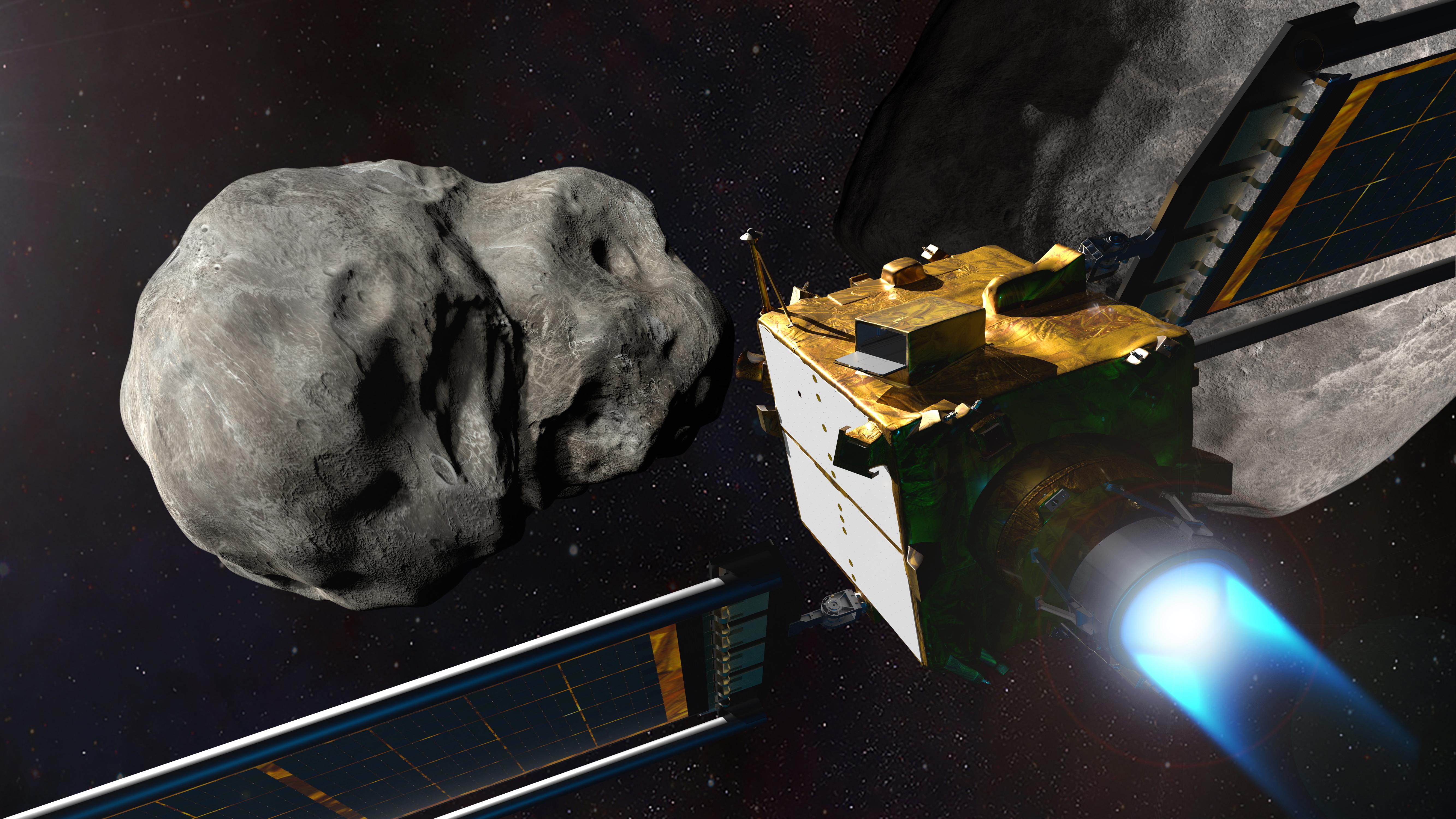
Finding them is the first half of planetary defense. Missions like DART and Hera are the second half.
Want to go deeper? NASA's NEO Surveyor page has the mission's latest build updates.
 For further information
Related Solutions
More solutions like this one, matched by meaning.

Help This Work
NASA doesn't take donations, but anyone can join one of its citizen science projects.
For Teachers
Discussion questions
- What is NEO Surveyor, and what problem does it help solve?
- Who is behind NEO Surveyor, and where does the work happen?
- How does NEO Surveyor help both people and nature? Use one fact from this page.
Sources are listed with each fact in the Five W's above.
Standards Alignment
U.S. Next Generation Science Standards (NGSS) and Common Core. Official text, in English.
- 4-ESS3-2 (Grade 3-5) Generate and compare multiple solutions to reduce the impacts of natural Earth processes on humans.
- MS-ESS1-3 (Grade 6-8) Analyze and interpret data to determine scale properties of objects in the solar system.
- MS-ESS3-2 (Grade 6-8) Analyze and interpret data on natural hazards to forecast future catastrophic events and inform the development of technologies to mitigate their effects.
- HS-ESS1-4 (Grade 9-12) Use mathematical or computational representations to predict the motion of orbiting objects in the solar system.
- CCSS RST.6-8.1 (Grade 6-8) Cite specific textual evidence to support analysis of science and technical texts.
Cite This Page
APA
Saving Planets. (n.d.). NEO Surveyor. https://www.savingplanets.com/NEO_Surveyor.html
MLA
"NEO Surveyor." Saving Planets, https://www.savingplanets.com/NEO_Surveyor.html.