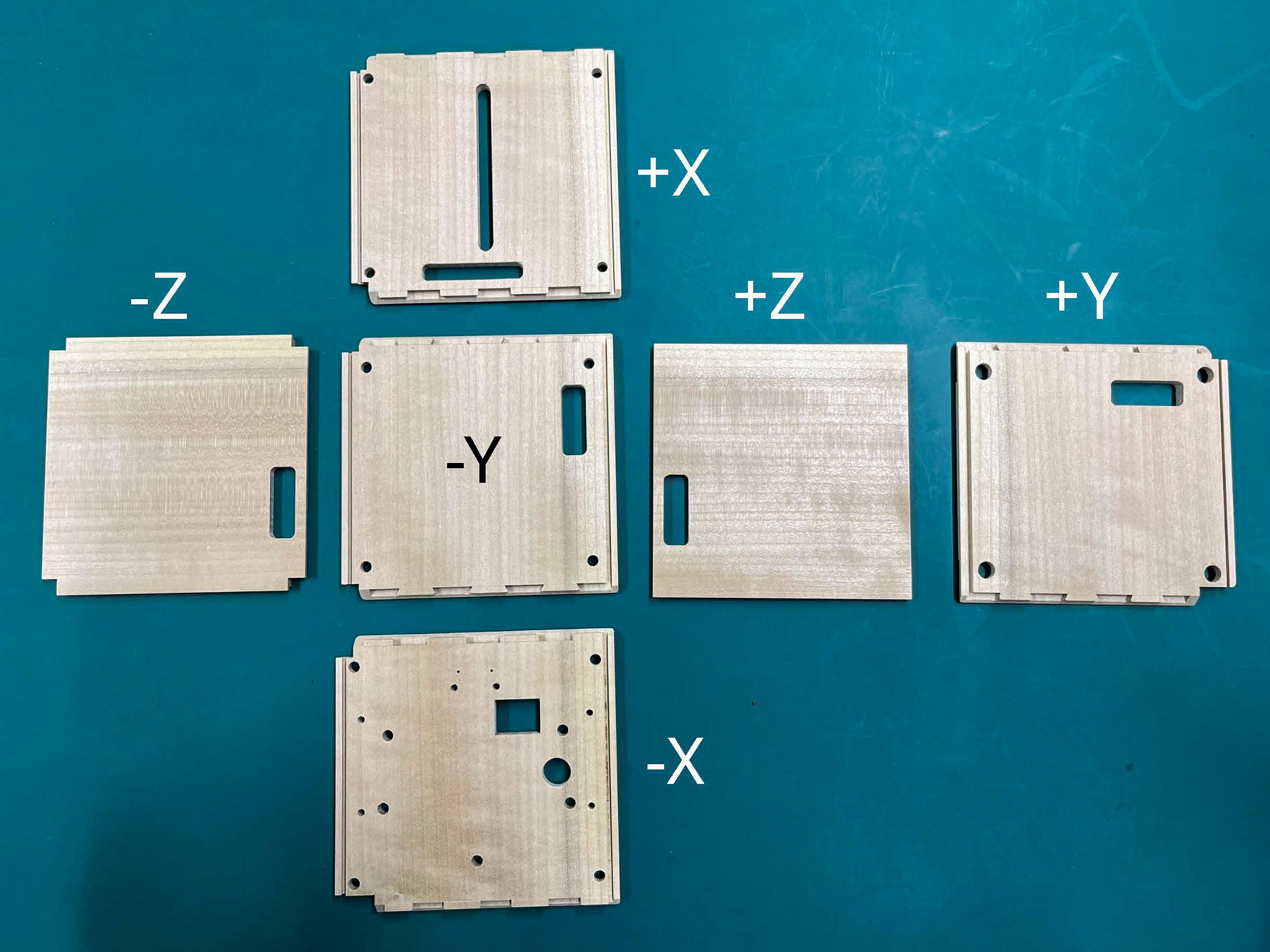


LignoSat Wooden Satellite (Kyoto University)
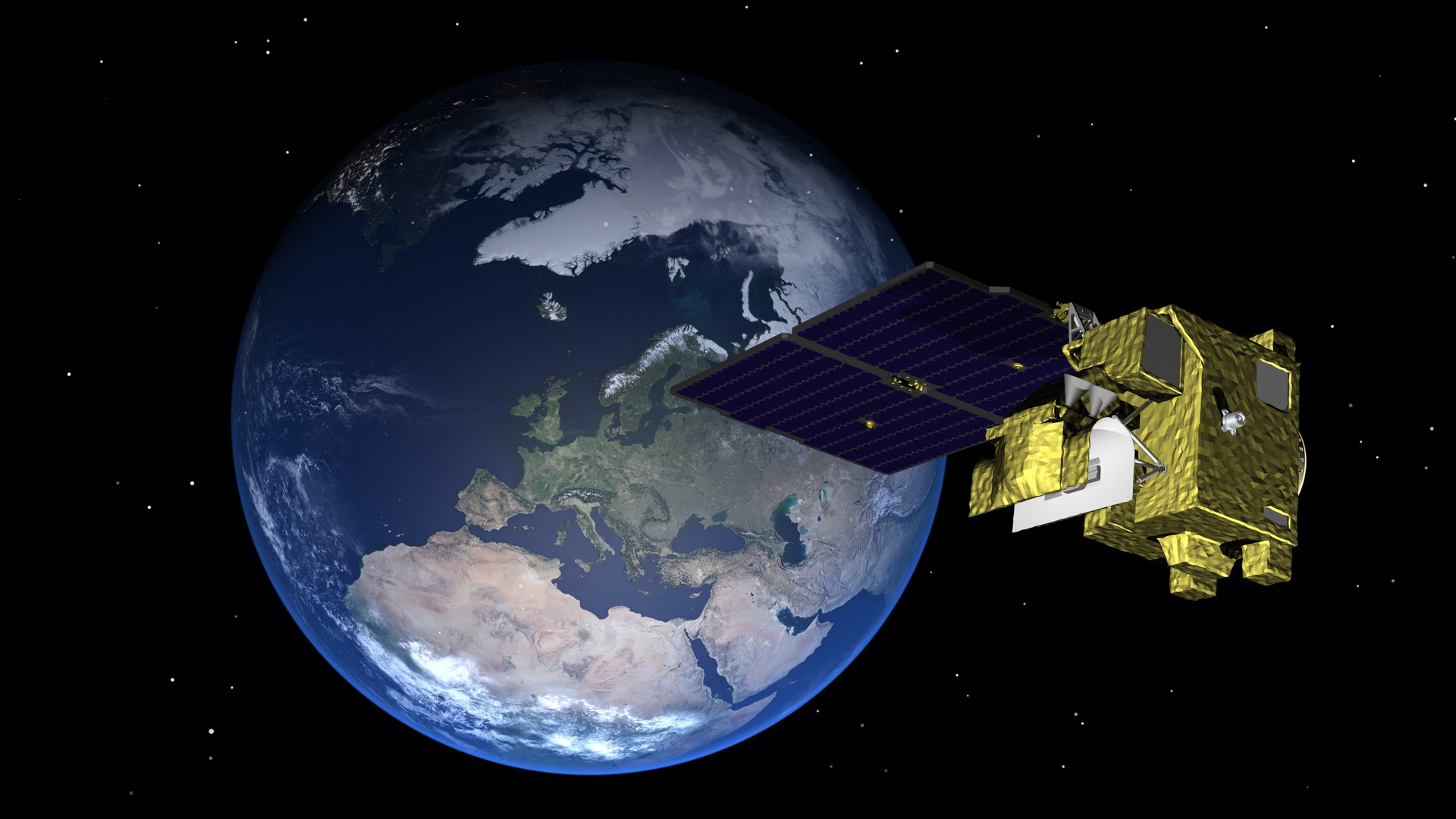
LignoSat, the world's first wooden satellite, proved wood can survive in orbit; a follow-on is a potential solution on the horizon.
Image: Kyoto University via NASA.
Last reviewed: 2 sources cited
Explain Like I'm 10
- What is it? A 10 cm CubeSat with a wooden structure, testing how wood handles strain, temperature and radiation in space.
- Why does it matter? A renewable structure that burns up more cleanly could cut the pollution satellites leave behind when they reenter.
The Five W's of LignoSat Wooden Satellite
Who
Kyoto University with Sumitomo Forestry; JAXA deployed it from the space station.
Source: NASA, JAXA’s first wooden satellite deploys
Source: Kyoto University, LignoSat report (UNISEC, Aug 2026)
What
A 10 cm CubeSat with a wooden structure, testing how wood handles strain, temperature and radiation in space.
When
Deployed December 9, 2024; reentered April 4, 2025.
Source: Kyoto University, LignoSat report (UNISEC, Aug 2026)
Where
Low Earth The curved path an object takes as it travels around a planet, moon or star, like a satellite circling Earth. Glossary, released from Japan's Kibo module on the International Space Station.
Why
A renewable structure that burns up more cleanly could cut the pollution satellites leave behind when they reenter.
Source: Kyoto University, LignoSat report (UNISEC, Aug 2026)
Impact Statement
University and company solution · demonstrated; follow-on on the horizon
Metal satellites leave alumina particles in the upper atmosphere when they burn up; wood burns away more cleanly. LignoSat, built by Kyoto University with Sumitomo Forestry from honoki magnolia panels joined without glue or nails, was deployed from the International Space Station by JAXA on December 9, 2024.
It stayed in one piece until reentering on April 4, 2025, though no radio signal was received.
Source: NASA, JAXA’s first wooden satellite deploys
Source: Kyoto University, LignoSat report (UNISEC, Aug 2026)
LignoSat follow-on. This is a potential solution Kyoto University is advancing. We expect to know more within the coming months and will keep you updated here.
Source: Kyoto University, LignoSat report (UNISEC, Aug 2026)
For Further Information: NASA, JAXA’s first wooden satellite deploys
LignoSat, the world's first wooden satellite, was built from magnolia wood panels joined with a traditional Japanese technique that uses no glue or nails.
Want to go deeper? NASA, JAXA’s first wooden satellite deploys has the full story and the latest updates.
 For Further Information
Related Solutions
More solutions like this one, matched by meaning.


For Teachers
Discussion questions
- What is LignoSat Wooden Satellite (Kyoto University), and what problem does it help solve?
- Who is behind LignoSat Wooden Satellite (Kyoto University), and where does the work happen?
- How does LignoSat Wooden Satellite (Kyoto University) help both people and nature? Use one fact from this page.
Sources are listed with each fact in the Five W's above.
Standards Alignment
U.S. Next Generation Science Standards (NGSS) and Common Core. Official text, in English.
- HS-ESS1-4 (Grade 9-12) Use mathematical or computational representations to predict the motion of orbiting objects in the solar system.
- CCSS RST.6-8.1 (Grade 6-8) Cite specific textual evidence to support analysis of science and technical texts.
Cite This Page
APA
Saving Planets. (n.d.). LignoSat Wooden Satellite (Kyoto University). https://www.savingplanets.com/LignoSat.html
MLA
"LignoSat Wooden Satellite (Kyoto University)." Saving Planets, https://www.savingplanets.com/LignoSat.html.