Europa Clipper (NASA)
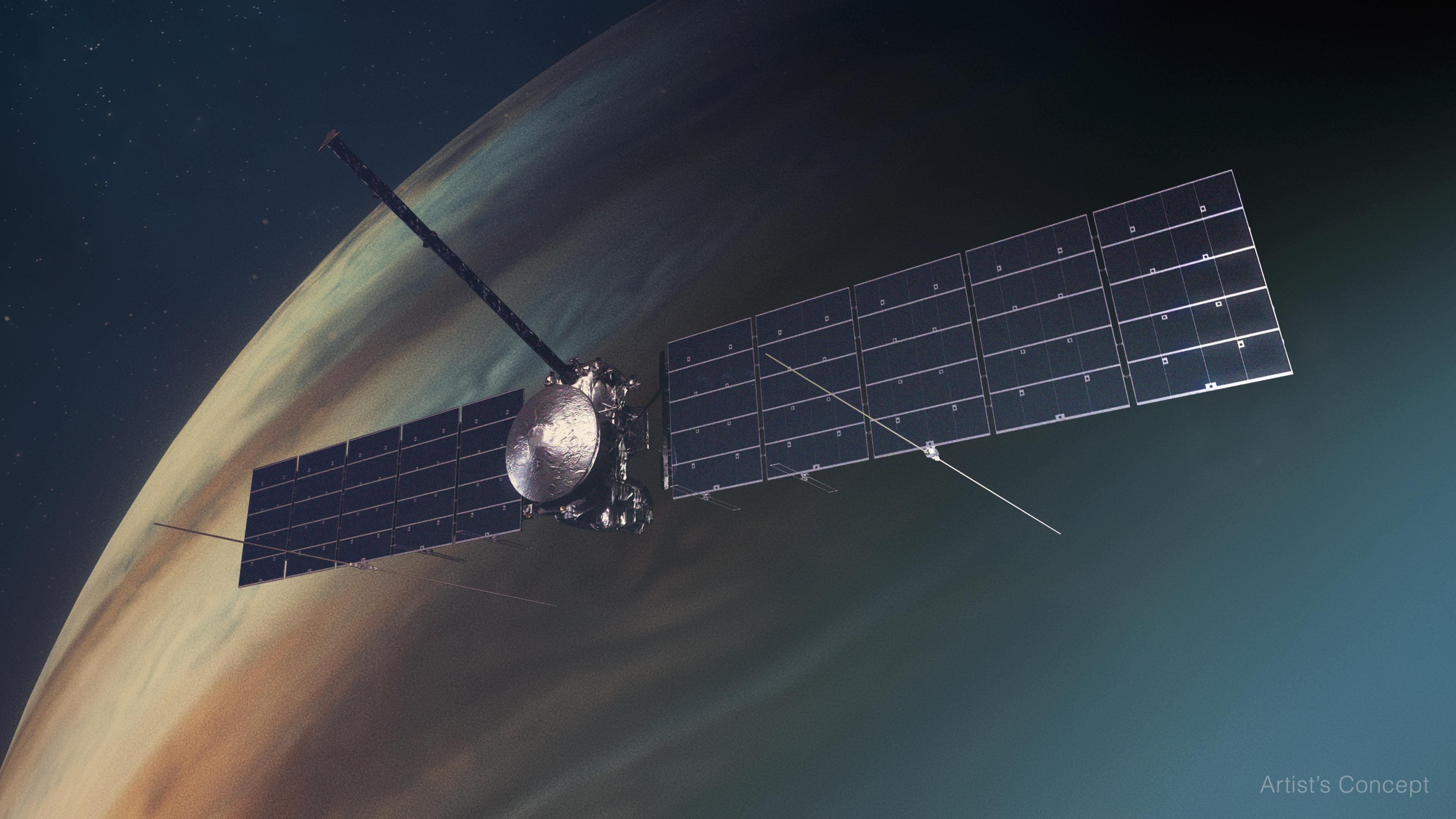
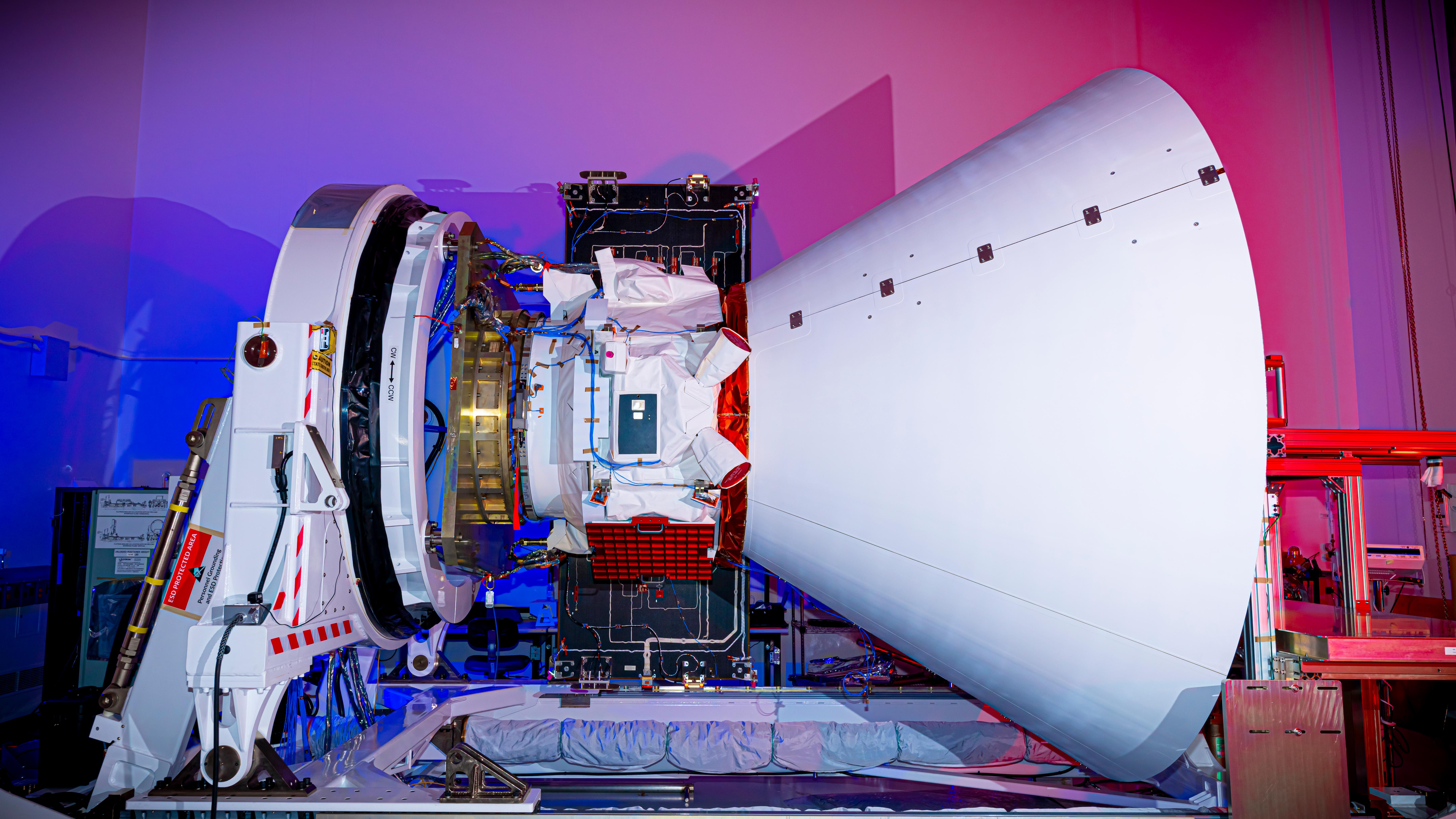
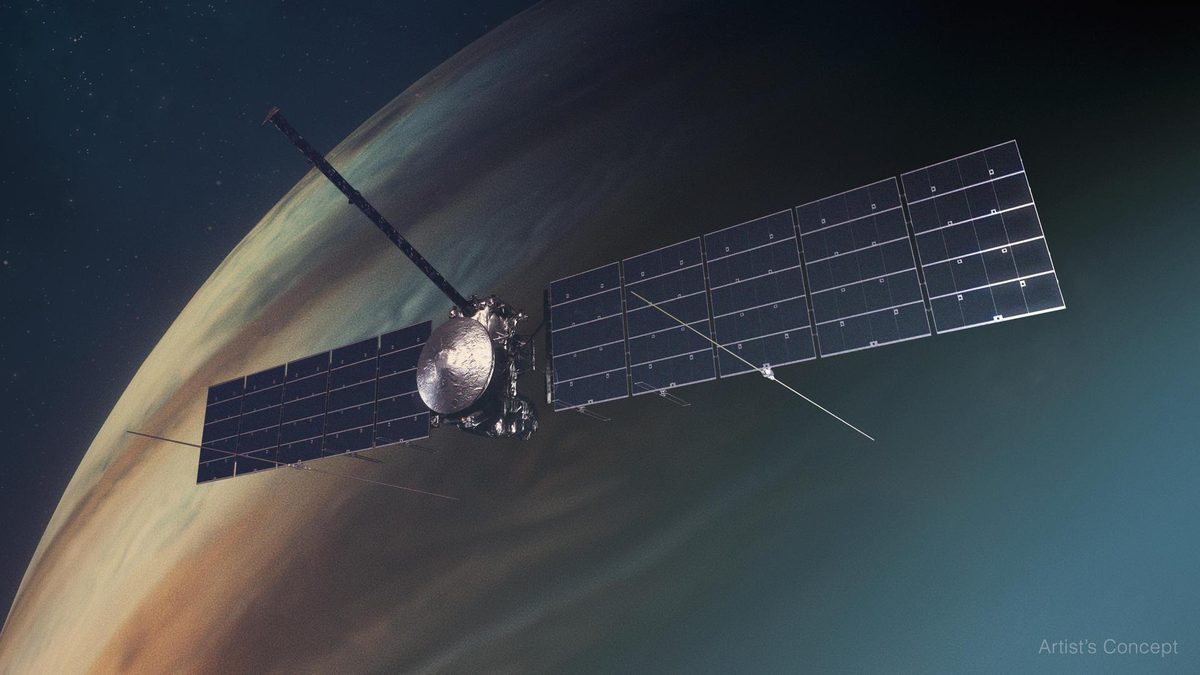
NASA's Europa Clipper is on its way to Jupiter's ocean moon, with an Earth gravity assist on December 3, 2026 and 49 close Europa flybys from 2030.
Image: NASA/JPL-Caltech.
Last reviewed: 1 source cited
Explain Like I'm 10
- What is it? An orbiter that will make 49 close flybys of Europa to study its ice shell, ocean and chemistry.
- Why does it matter? To determine whether Europa has conditions suitable to support life.
The Five W's of Europa Clipper
What
An orbiter that will make 49 close flybys of Europa to study its ice shell, ocean and chemistry.
Source: NASA, Europa Clipper
When
Launched October 14, 2024; Earth gravity-assist flyby December 3, 2026; arrives at Jupiter in April 2030.
Source: NASA, Europa Clipper
Where
Jupiter's icy moon Europa, about 1.8 billion miles of travel from Earth.
Source: NASA, Europa Clipper
Impact Statement
Agency solution · active
Europa Clipper launched on October 14, 2024 and is the first mission designed to study in detail an ocean world beyond Earth. It will travel 1.8 billion miles to reach Jupiter in April 2030, The curved path an object takes as it travels around a planet, moon or star, like a satellite circling Earth. Glossary the planet and fly past Europa 49 times to find out whether the moon's hidden ocean has conditions suitable for life.
Source: NASA, Europa Clipper
Learning how a frozen ocean world works sharpens our understanding of water, chemistry and habitability, the same things we protect on Earth.
For Further Information: NASA, Europa Clipper
NASA's Europa Clipper will travel 1.8 billion miles to Jupiter and fly past the ocean moon Europa 49 times.
Want to go deeper? NASA, Europa Clipper has the full story and the latest updates.
 For Further Information
Related Solutions
More solutions like this one, matched by meaning.

Help This Work
NASA doesn't take donations, but anyone can join one of its citizen science projects.
For Teachers
Discussion questions
- What is Europa Clipper (NASA), and what problem does it help solve?
- Who is behind Europa Clipper (NASA), and where does the work happen?
- How does Europa Clipper (NASA) help both people and nature? Use one fact from this page.
Sources are listed with each fact in the Five W's above.
Standards Alignment
U.S. Next Generation Science Standards (NGSS) and Common Core. Official text, in English.
- HS-ESS1-4 (Grade 9-12) Use mathematical or computational representations to predict the motion of orbiting objects in the solar system.
- CCSS RST.6-8.1 (Grade 6-8) Cite specific textual evidence to support analysis of science and technical texts.
Cite This Page
APA
Saving Planets. (n.d.). Europa Clipper (NASA). https://www.savingplanets.com/Europa_Clipper.html
MLA
"Europa Clipper (NASA)." Saving Planets, https://www.savingplanets.com/Europa_Clipper.html.