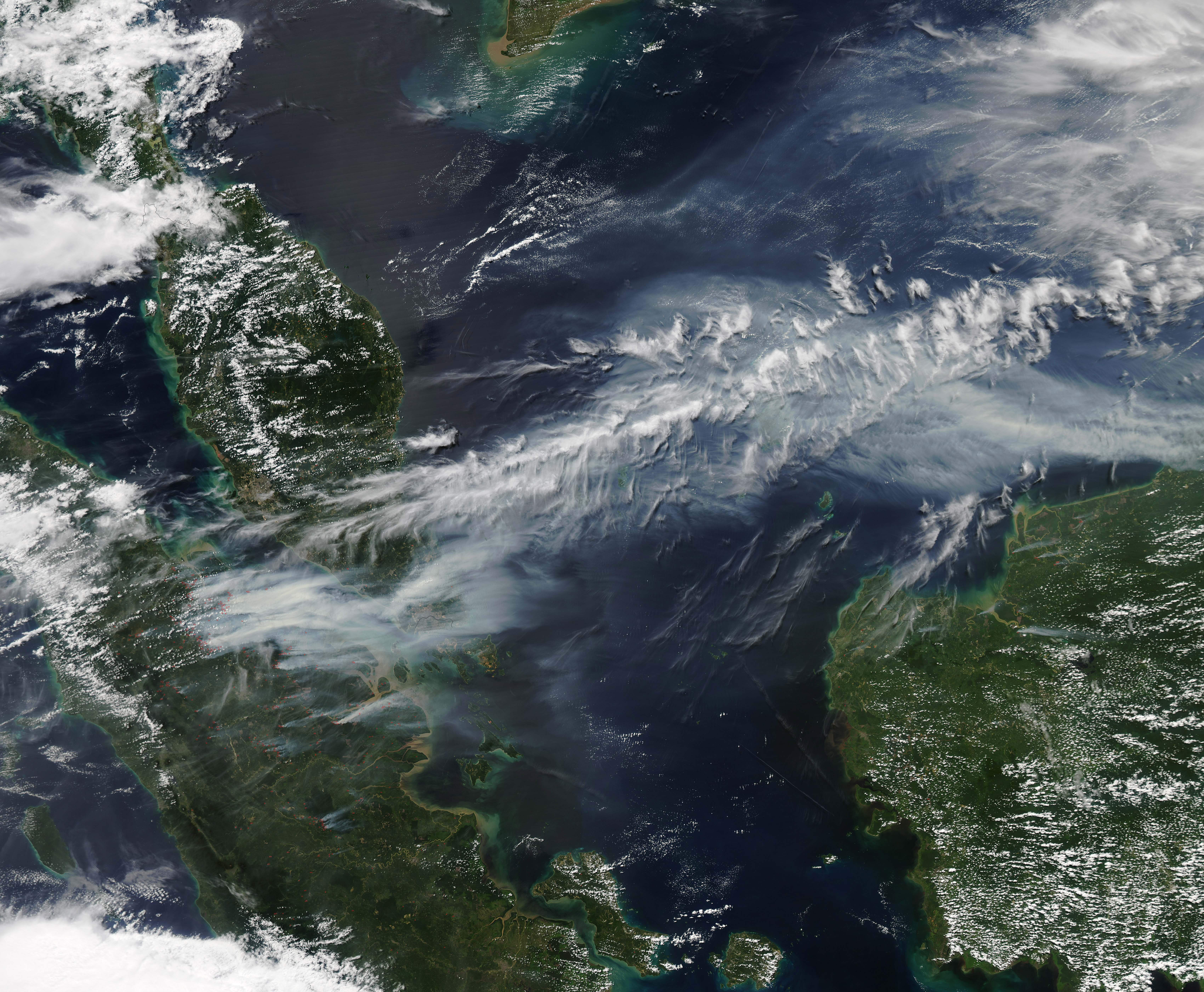
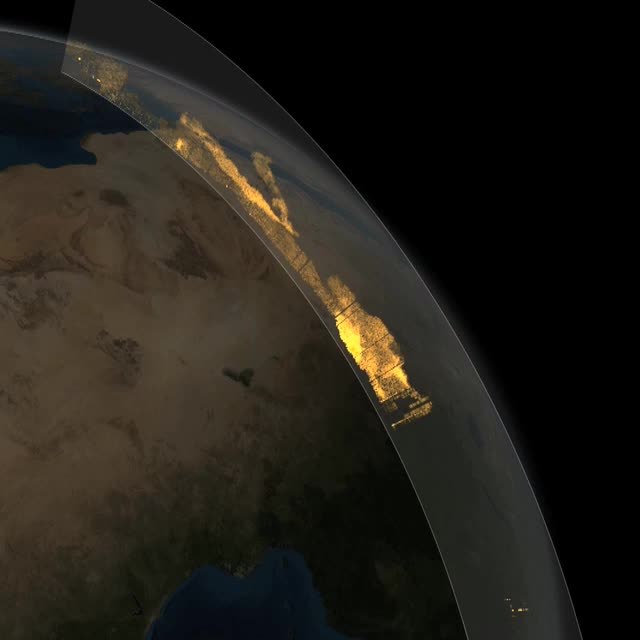
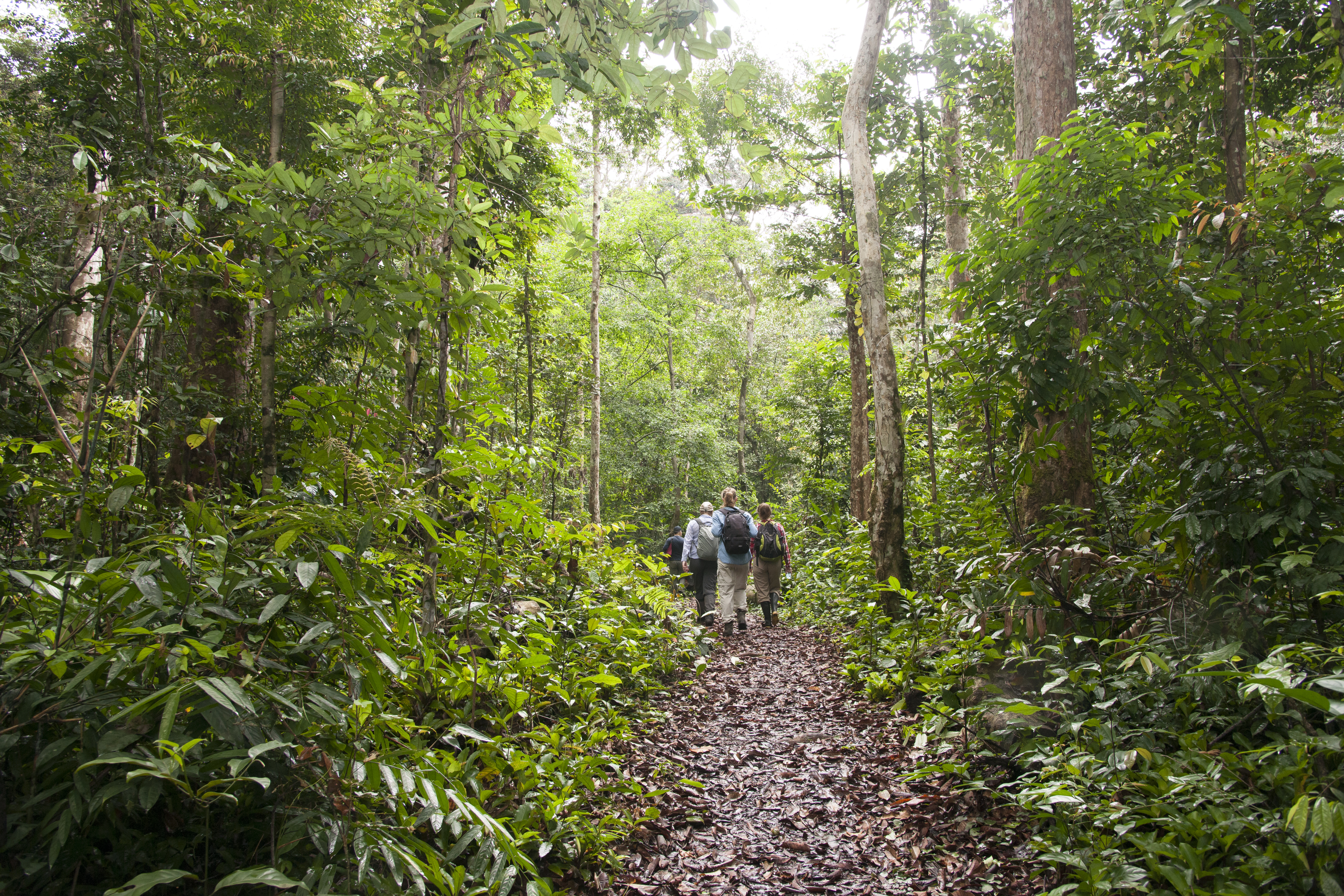
Biomass (ESA)
ESA's Biomass satellite launched on April 29, 2025 on Vega-C.
Image: NASA.
Last reviewed: 1 source cited
Explain Like I'm 10
- What is it? The first P-band A radar on a moving satellite that combines many echoes into one sharp picture, as if it had a giant antenna. Glossary in space.
- Why does it matter? To measure the woody The total amount of living material, like the wood and leaves in a forest. Measuring it shows how much carbon plants store. Glossary where forests store carbon, and track deforestation and regrowth.
The Five W's of Biomass
What
The first P-band synthetic aperture A tool that sends out radio waves and listens for the echoes. From space it can see the ground through clouds, day or night. Glossary in space.
Source: ESA, Biomass launched
Where
Earth The curved path an object takes as it travels around a planet, moon or star, like a satellite circling Earth. Glossary, looking through the world's forest canopies.
Source: ESA, Biomass launched
Why
To measure the woody biomass where forests store carbon, and track deforestation and regrowth.
Source: ESA, Biomass launched
Impact Statement
Agency solution · active
ESA's Biomass satellite launched on April 29, 2025 on Vega-C. It carries the first P-band synthetic aperture radar in space; its long wavelength (about 70 cm) reaches through forest canopies to measure the woody trunks and branches where carbon is stored.
Its maps of forest carbon, height and disturbance give the world a better count of deforestation and regrowth. See our Forests hub for the groups replanting on the ground.
For Further Information: ESA, Biomass launched to count forest carbon
Want to go deeper? ESA, Biomass launched to count forest carbon has the full story and the latest updates.
 For Further Information
Related Solutions
More solutions like this one, matched by meaning.
For Teachers
Discussion questions
- What is Biomass (ESA), and what problem does it help solve?
- Who is behind Biomass (ESA), and where does the work happen?
- How does Biomass (ESA) help both people and nature? Use one fact from this page.
Sources are listed with each fact in the Five W's above.
Standards Alignment
U.S. Next Generation Science Standards (NGSS) and Common Core. Official text, in English.
- 5-ESS3-1 (Grade 3-5) Obtain and combine information about ways individual communities use science ideas to protect the Earth's resources and environment.
- MS-ESS3-2 (Grade 6-8) Analyze and interpret data on natural hazards to forecast future catastrophic events and inform the development of technologies to mitigate their effects.
- MS-ESS3-3 (Grade 6-8) Apply scientific principles to design a method for monitoring and minimizing a human impact on the environment.
- CCSS RST.6-8.1 (Grade 6-8) Cite specific textual evidence to support analysis of science and technical texts.
Cite This Page
APA
Saving Planets. (n.d.). Biomass (ESA). https://www.savingplanets.com/Biomass.html
MLA
"Biomass (ESA)." Saving Planets, https://www.savingplanets.com/Biomass.html.