Trees for the Future
Partnering with East African farmers on regenerative farms: 450M+ trees grown and 99,000 acres restored (nonprofit figures).
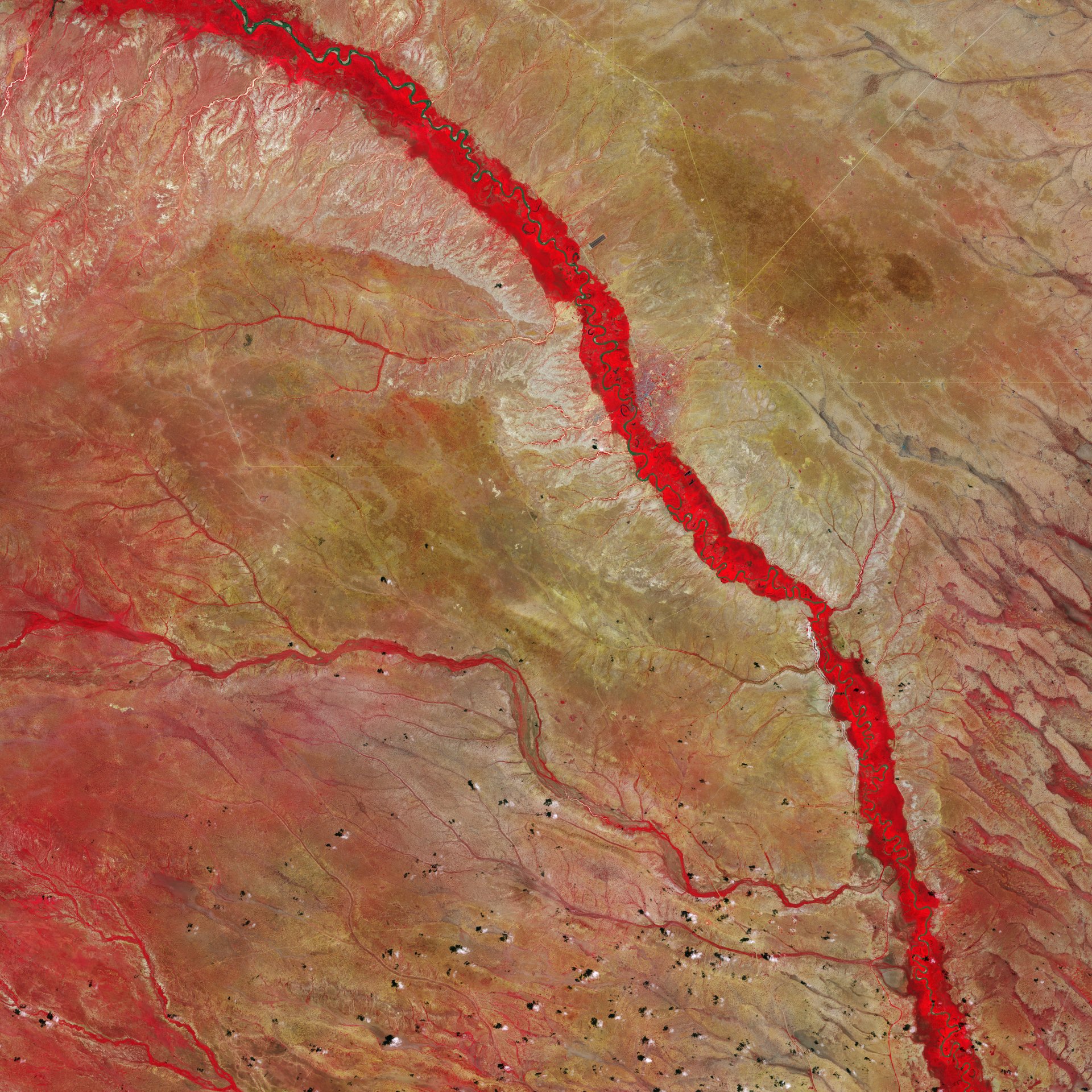
Image: NASA (STS072-722-004).
Last reviewed: 1 source cited
Explain Like I'm 10
- What is it? Regenerative farming with diverse trees and plants to restore soil, The variety of all living things in a place: plants, animals, fungi and tiny microbes. Glossary and harvests.
- Why does it matter? Degraded land hurts families; restored soil means more food and income.
- How does it help people? Farmers and their families are the first to benefit: restored soil equals more food, and more food creates a surplus to sell (nonprofit description).
The Five W's of Trees for the Future
Who
Trees for the Future (TREES), a nonprofit that is farmer-led and science-backed.
What
Regenerative farming with diverse trees and plants to restore soil, biodiversity and harvests.
Where
Eastern Africa, with 63,700 program farmers (nonprofit figure).
Why
Degraded land hurts families; restored soil means more food and income.
Impact Statement
Nonprofit solution · active
TREES reports more than 450 million trees grown, 99,000 acres restored and 63,700 program farmers, with about 9.8 tonnes of carbon removed per farm each year (nonprofit figures).
Source: Trees for the Future (nonprofit site)
For Further Information: Trees for the Future (nonprofit site)
How This Saves People & the Planet
For People
Farmers and their families are the first to benefit: restored soil equals more food, and more food creates a surplus to sell (nonprofit description).
Source: Trees for the Future (nonprofit site)
For Nature
Regenerative farms restore soil health, strengthen biodiversity and capture carbon (nonprofit description).
Want to go deeper? Trees for the Future explains its farmer-led model.
 For Further Information
Related Solutions
More solutions like this one, matched by meaning.
Help This Work
Links go straight to the organization. Saving Planets doesn't receive any of the money.
Last reviewed: 1 source cited How we check a Donate link
For Teachers
Discussion questions
- What is Trees for the Future, and what problem does it help solve?
- Who is behind Trees for the Future, and where does the work happen?
- How does Trees for the Future help both people and nature? Use one fact from this page.
Sources are listed with each fact in the Five W's above.
Standards Alignment
U.S. Next Generation Science Standards (NGSS) and Common Core. Official text, in English.
- K-ESS3-3 (Grade K-2) Communicate solutions that will reduce the impact of humans on the land, water, air, and/or other living things in the local environment.
- 5-ESS3-1 (Grade 3-5) Obtain and combine information about ways individual communities use science ideas to protect the Earth's resources and environment.
- MS-ESS3-3 (Grade 6-8) Apply scientific principles to design a method for monitoring and minimizing a human impact on the environment.
- MS-LS2-5 (Grade 6-8) Evaluate competing design solutions for maintaining biodiversity and ecosystem services.
- HS-ESS3-4 (Grade 9-12) Evaluate or refine a technological solution that reduces impacts of human activities on natural systems.
- CCSS RI.5.9 (Grade 3-5) Integrate information from several texts on the same topic in order to write or speak about the subject knowledgeably.
- CCSS RST.6-8.1 (Grade 6-8) Cite specific textual evidence to support analysis of science and technical texts.
Cite This Page
APA
Saving Planets. (n.d.). Trees for the Future. https://www.savingplanets.com/Trees_for_the_Future.html
MLA
"Trees for the Future." Saving Planets, https://www.savingplanets.com/Trees_for_the_Future.html.