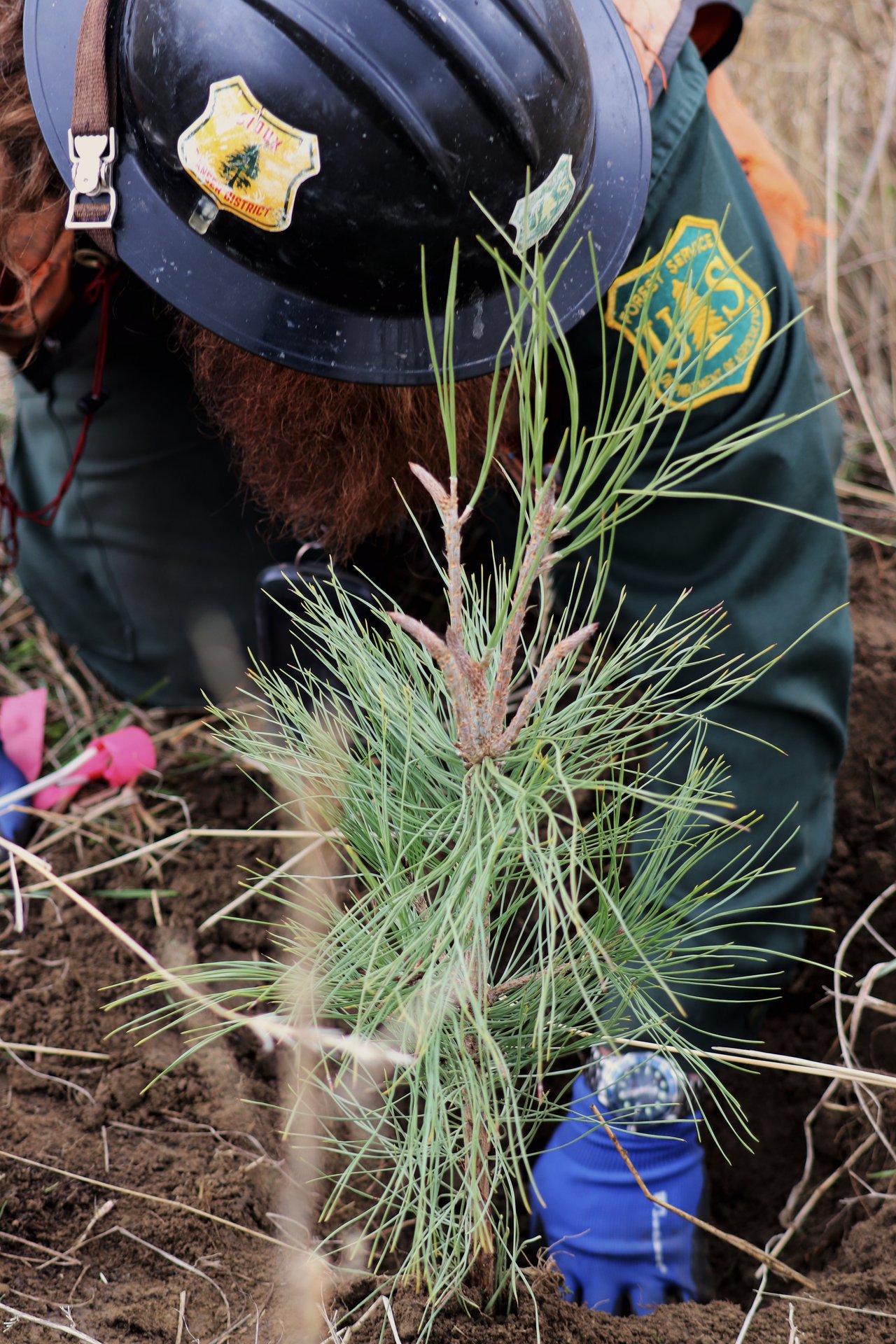
Every contribution funds the full lifecycle — seed collection, nursery care, planting, and years of monitoring — so trees survive rather than just getting planted. The nonprofit arm charges zero fees or overhead to donors.
💡 Explain Like I'm 10
What is it? Restoring degraded land into native, biodiverse forests that capture carbon and support communities. Projects use up to five times more native species than typical carbon-offset plantings, tracked with open-source software from nursery to canopy.
Why does it matter? Half of global forests are damaged or destroyed. Native, biodiverse restoration rebuilds habitat and resilience far better than monoculture planting, and long-term stewardship is what makes the carbon capture last.
The Five W's of Terraformation
Created by the Founder and SI
Who
Terraformation, founded by Yishan Wong, former CEO of Reddit, and based in Waimea, Hawaii. The company runs a Seed to Forest Accelerator training early-stage forestry teams, and its nonprofit arm, Terraformation.org Foundation, is a U.S. 501(c)(3).
What
Restoring degraded land into native, biodiverse forests that capture carbon and support communities. Projects use up to five times more native species than typical carbon-offset plantings, tracked with open-source software from nursery to canopy.
When
Founded in 2020. In November 2025 they appointed Jad Daley as president to help triple global native Planting trees where a forest was lost so it can grow back. Glossary by 2030. Their accelerator has supported cohorts across Africa, Latin America, and Asia-Pacific.
Where
Projects span Africa, Latin America, and the Asia-Pacific, plus native forest restoration in Hawaii at 'Iole in North Kohala. Individuals can fund a native Hawaiian tree from seed for $25.
Why
Half of global forests are damaged or destroyed. Native, biodiverse restoration rebuilds habitat and resilience far better than monoculture planting, and long-term stewardship is what makes the carbon capture last.
U.S. Next Generation Science Standards (NGSS) and Common Core. Official text, in English.
K-ESS3-3(Grade K-2)Communicate solutions that will reduce the impact of humans on the land, water, air, and/or other living things in the local environment.
5-ESS3-1(Grade 3-5)Obtain and combine information about ways individual communities use science ideas to protect the Earth's resources and environment.
MS-ESS3-3(Grade 6-8)Apply scientific principles to design a method for monitoring and minimizing a human impact on the environment.
MS-LS2-5(Grade 6-8)Evaluate competing design solutions for maintaining biodiversity and ecosystem services.
HS-ESS3-4(Grade 9-12)Evaluate or refine a technological solution that reduces impacts of human activities on natural systems.
CCSS RI.5.9(Grade 3-5)Integrate information from several texts on the same topic in order to write or speak about the subject knowledgeably.
CCSS RST.6-8.1(Grade 6-8)Cite specific textual evidence to support analysis of science and technical texts.