Saharan Dust Feeds the Amazon
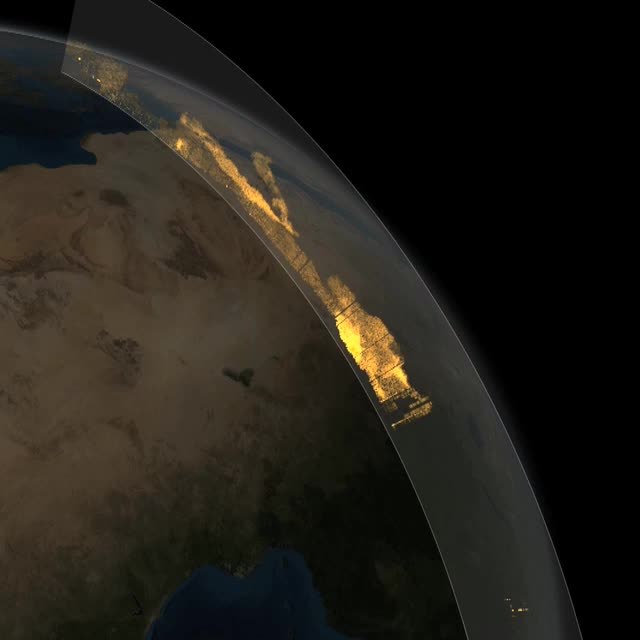
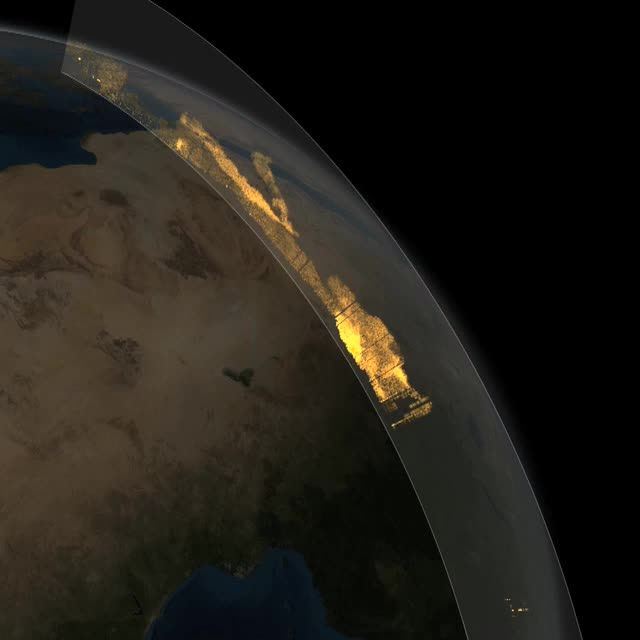
Every year about 27.7 million tons of Saharan dust falls on the Amazon, delivering some 22,000 tons of phosphorus that the rainforest needs (NASA).
Image: NASA's Goddard Space Flight Center.
Last reviewed: 3 sources cited
Explain Like I'm 10
- What is it? Wind carries phosphorus-rich dust from the Sahara across the Atlantic to fertilize the Amazon.
- Why does it matter? Rain washes phosphorus out of Amazon soils; the dust replaces it.
- How does it help people? A healthy Amazon matters to people far beyond Brazil: its forest helps make its own rain (see The Amazon Makes Its Own Rainy Season), and Saharan dust keeps that forest fed.
The Five W's of Saharan Dust Feeds the Amazon
Who
Nature, measured by NASA’s CALIPSO satellite and scientists at NASA Goddard.
What
Wind carries phosphorus-rich dust from the Sahara across the Atlantic to fertilize the Amazon.
When
Every year; the satellite estimate covers multiple years of data.
Where
Much of the dust comes from the Bodélé Depression in Chad, an ancient lake bed, and falls over the Amazon basin.
Why
Rain washes phosphorus out of Amazon soils; the dust replaces it.
Impact Statement
Natural solution
On average wind lifts 182 million tons of dust a year past the western edge of the Sahara, and 27.7 million tons fall over the Amazon basin. The estimated 22,000 tons of phosphorus it brings each year is about the same amount the Amazon loses to rain and flooding.
Source: NASA, Saharan dust feeds the Amazon
Source: Yu et al. 2015, Geophysical Research Letters
For Further Information: NASA, Saharan dust feeds the Amazon
About 27.7 million tons of Saharan dust fall on the Amazon each year, enough to fill 104,908 semi trucks.
How This Saves People & the Planet
For People
A healthy Amazon matters to people far beyond Brazil: its forest helps make its own rain (see The Amazon Makes Its Own Rainy Season), and Saharan dust keeps that forest fed.
Source: NASA, Saharan dust feeds the Amazon
Source: NASA JPL, the Amazon makes its own rainy season
For Nature
Phosphorus is an essential nutrient for plant growth. Dust from one of the planet’s most desolate places replaces what the rain washes away in one of its most fertile.
Want to go deeper? NASA's story has the satellite data and visualizations.
 For Further Information
Related Solutions
More solutions like this one, matched by meaning.
For Teachers
Discussion questions
- What is Saharan Dust Feeds the Amazon, and what problem does it help solve?
- Who is behind Saharan Dust Feeds the Amazon, and where does the work happen?
- How does Saharan Dust Feeds the Amazon help both people and nature? Use one fact from this page.
Sources are listed with each fact in the Five W's above.
Standards Alignment
U.S. Next Generation Science Standards (NGSS) and Common Core. Official text, in English.
- K-ESS3-3 (Grade K-2) Communicate solutions that will reduce the impact of humans on the land, water, air, and/or other living things in the local environment.
- 5-ESS3-1 (Grade 3-5) Obtain and combine information about ways individual communities use science ideas to protect the Earth's resources and environment.
- MS-ESS3-3 (Grade 6-8) Apply scientific principles to design a method for monitoring and minimizing a human impact on the environment.
- MS-LS2-5 (Grade 6-8) Evaluate competing design solutions for maintaining biodiversity and ecosystem services.
- HS-ESS3-4 (Grade 9-12) Evaluate or refine a technological solution that reduces impacts of human activities on natural systems.
- CCSS RI.5.9 (Grade 3-5) Integrate information from several texts on the same topic in order to write or speak about the subject knowledgeably.
- CCSS RST.6-8.1 (Grade 6-8) Cite specific textual evidence to support analysis of science and technical texts.
Cite This Page
APA
Saving Planets. (n.d.). Saharan Dust Feeds the Amazon. https://www.savingplanets.com/Saharan_Dust_Amazon.html
MLA
"Saharan Dust Feeds the Amazon." Saving Planets, https://www.savingplanets.com/Saharan_Dust_Amazon.html.