
LeoLabs
The traffic cameras of low Earth orbit.
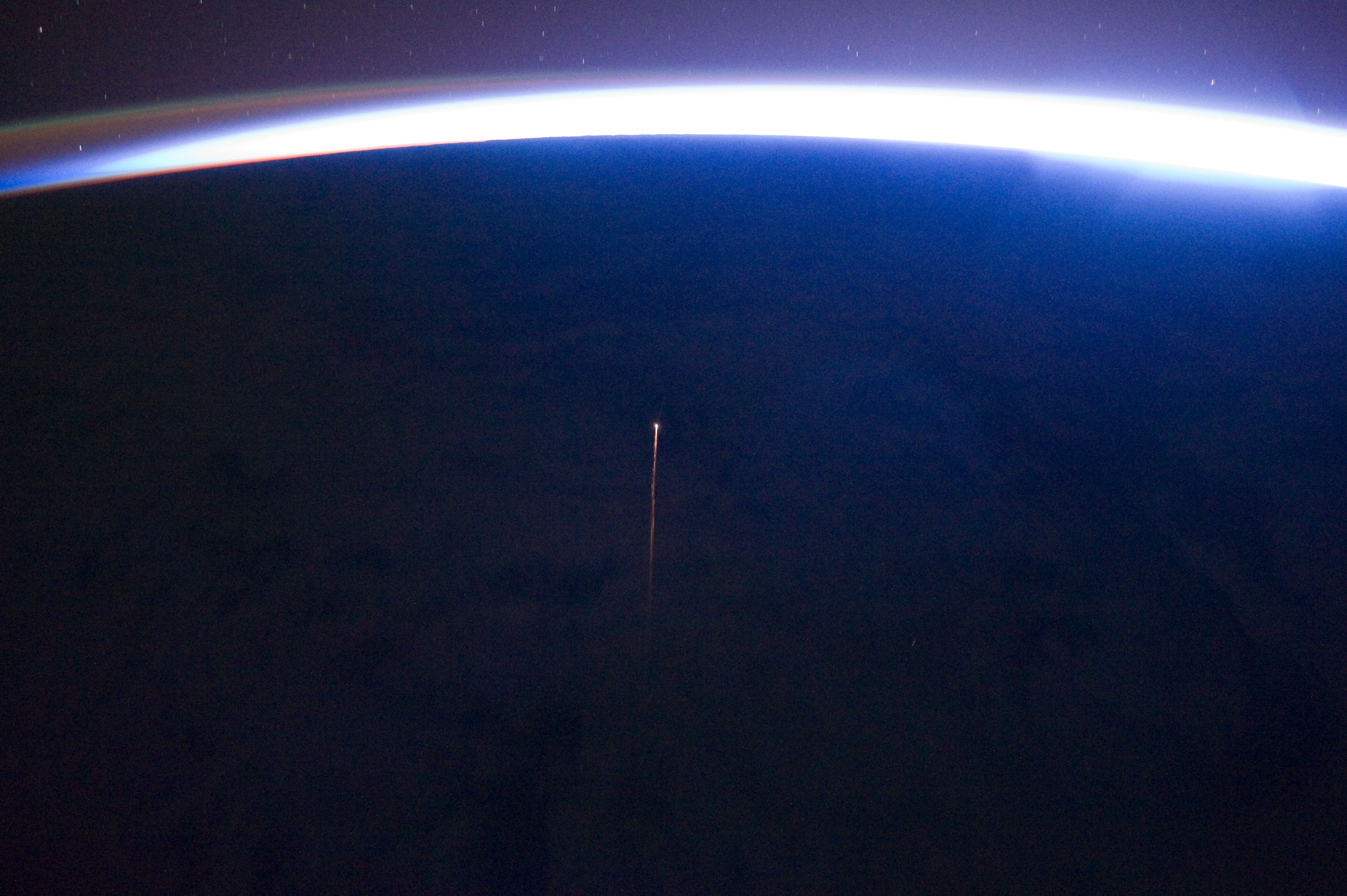
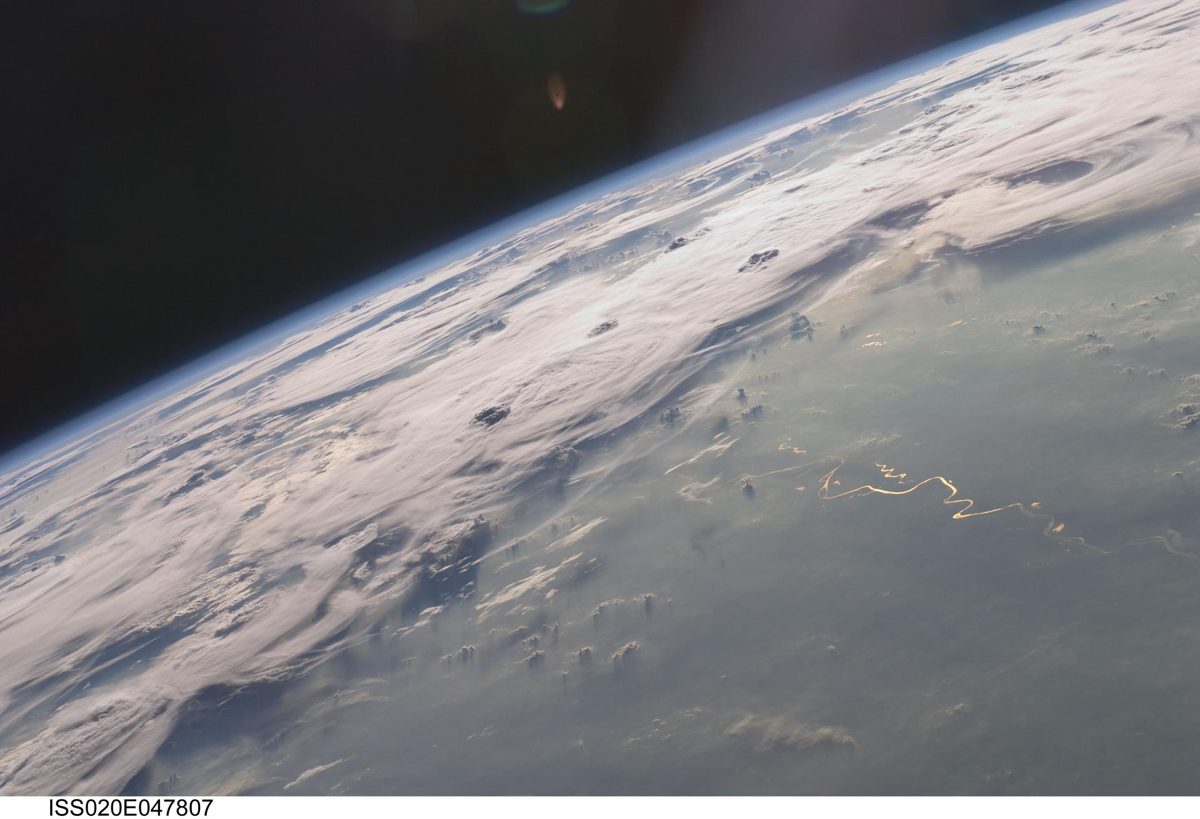
Image: NASA, ISS Expedition 23 crew (iss023e057948): the thin layer of atmosphere that low-orbit satellites fly through.
Last reviewed: 4 sources cited
Explain Like I'm 10
- What is it? A global network of ground-based radars that track satellites and debris in low Earth The curved path an object takes as it travels around a planet, moon or star, like a satellite circling Earth. Glossary and turn the data into collision warnings, a kind of traffic camera system for low orbit.
- Why does it matter? Debris between 1 and 10 cm, about 500,000 pieces by NASA's estimate, is too small for routine tracking yet can do serious damage. Finding it is the first step to avoiding it.
The Five W's of LeoLabs
Who
LeoLabs, a company founded in 2016 as a spinout of SRI International, serving satellite operators, space agencies, defense, insurers and scientists (company description).
What
A global network of ground-based radars that track satellites and debris in low Earth orbit and turn the data into collision warnings, a kind of traffic camera system for low orbit.
Source: LeoLabs, Radars (company page)
When
Operating now. Its Costa Rica A tool that sends out radio waves and listens for the echoes. From space it can see the ground through clouds, day or night. Glossary became fully operational in April 2021, built nine months after breaking ground (company figures).
Where
Tracker radars in Australia, the Azores, Costa Rica, New Zealand and Texas, plus a UHF radar in Arizona and time on a partner radar in Alaska (company list).
Source: LeoLabs, Radars (company page)
Why
Debris between 1 and 10 cm, about 500,000 pieces by NASA's estimate, is too small for routine tracking yet can do serious damage. Finding it is the first step to avoiding it.
Impact Statement
LeoLabs says its Costa Rica radar can track objects down to 2 cm, and that objects in that range represent the vast majority of the risk in low orbit (company figures, 2021). Its current Tracker radars are listed for debris larger than 10 cm, with a Ranger radar for smaller debris in development (company page).
Source: LeoLabs press release, Apr 2021 (company figure)
Source: LeoLabs, Radars (company page)
Tracking does not remove debris, but it lets operators dodge it and tells removal missions where the targets are.
Want to go deeper? LeoLabs explains its radar network on its website.
 For further information
Related Solutions
More solutions like this one, matched by meaning.
Help This Work
This is a company, not a charity, so there's no donation page. You can still join the team.
For Teachers
Discussion questions
- What is LeoLabs, and what problem does it help solve?
- Who is behind LeoLabs, and where does the work happen?
- How does LeoLabs help both people and nature? Use one fact from this page.
Sources are listed with each fact in the Five W's above.
Standards Alignment
U.S. Next Generation Science Standards (NGSS) and Common Core. Official text, in English.
- HS-ESS1-4 (Grade 9-12) Use mathematical or computational representations to predict the motion of orbiting objects in the solar system.
- CCSS RST.6-8.1 (Grade 6-8) Cite specific textual evidence to support analysis of science and technical texts.
Cite This Page
APA
Saving Planets. (n.d.). LeoLabs. https://www.savingplanets.com/LeoLabs.html
MLA
"LeoLabs." Saving Planets, https://www.savingplanets.com/LeoLabs.html.