Comet Interceptor (ESA / JAXA)
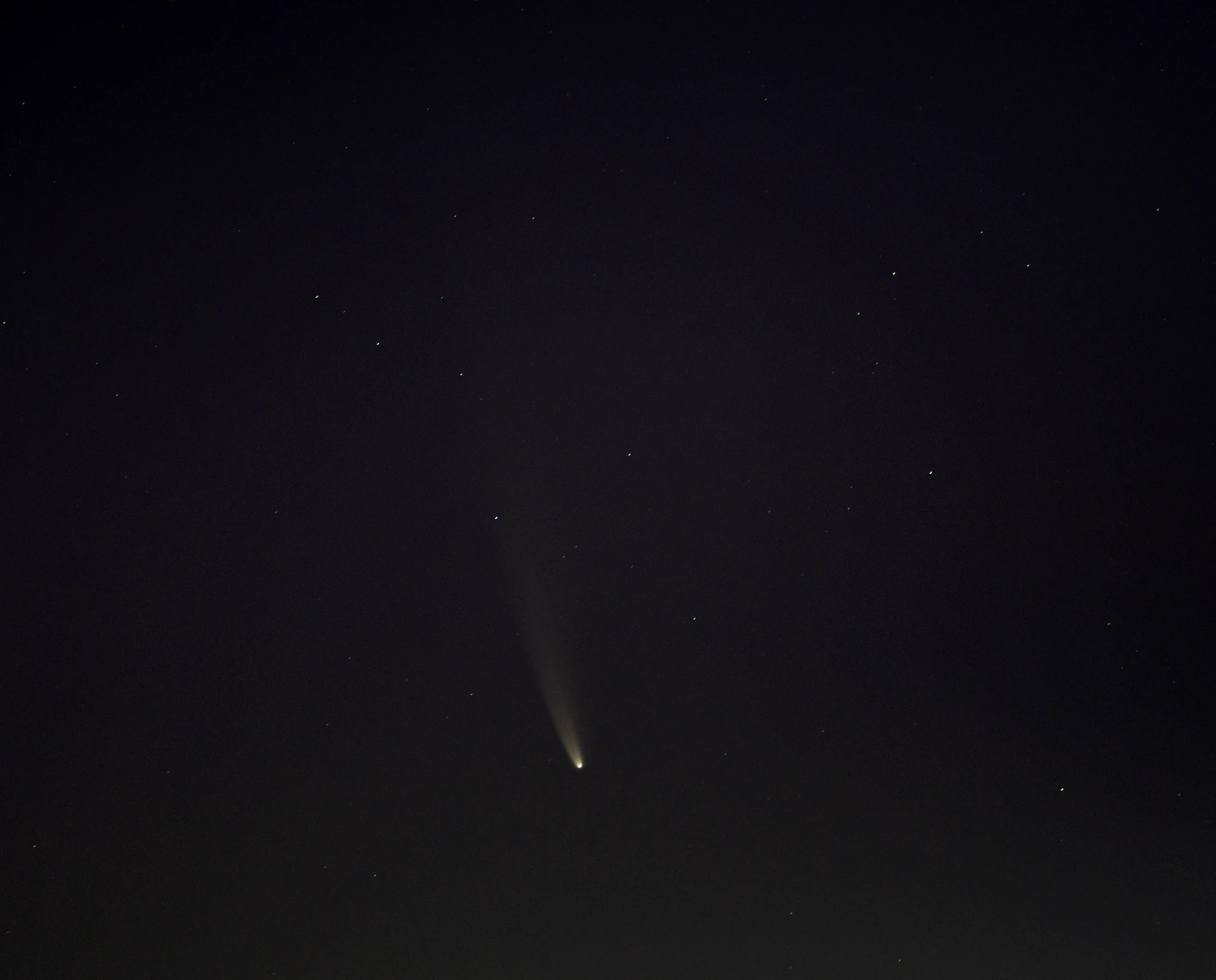
Three spacecraft will wait in space for a fresh comet and fly past it together to make a 3D map; launch is planned for late 2028 or early 2029 (ESA).
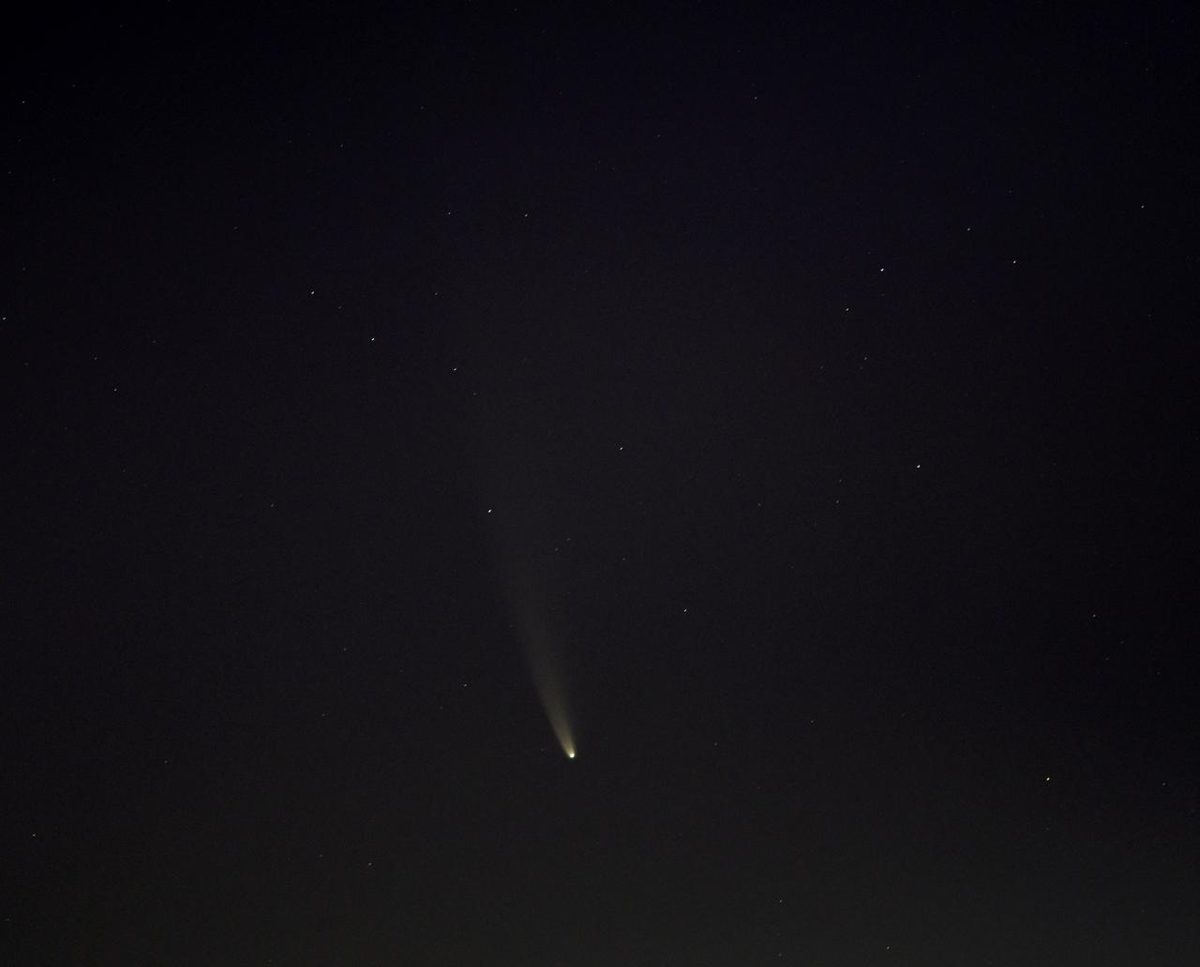
Image: NASA/Bill Ingalls (Comet NEOWISE).
Last reviewed: 1 source cited
Explain Like I'm 10
- Some comets come from very far away and have never been near the Sun before.
- Comet Interceptor will wait in space until scientists find one.
- Then three spacecraft fly past it together to make a 3D picture.
The Five W's of Comet Interceptor (ESA / JAXA)
Who
ESA leads the mission in collaboration with JAXA, which provides one of the probes.
Source: ESA, Comet Interceptor factsheet
What
A main spacecraft and two probes that observe a comet from several directions at the same time.
Source: ESA, Comet Interceptor factsheet
When
Launch planned for late 2028 or early 2029; the mission should finish within six years of launch.
Source: ESA, Comet Interceptor factsheet
Where
It parks at the Sun-Earth L2 point, 1.5 million km from Earth, then intercepts its target.
Source: ESA, Comet Interceptor factsheet
Why
A comet entering the inner Solar System for the first time still holds material from the dawn of the Solar System.
Source: ESA, Comet Interceptor factsheet
Impact Statement
Agency solution · planned
Comet Interceptor will be the first mission to visit a long-period comet as it journeys into the inner Solar System, or possibly an interstellar object.
Source: ESA, Comet Interceptor factsheet
For Further Information: ESA, Comet Interceptor factsheet
Comet Interceptor launches before its comet is even discovered, then waits in space to catch it.
How This Saves People & the Planet
For People
Being ready to launch toward a newly found object is practice for responding quickly to surprises from space.
Source: ESA, Comet Interceptor factsheet
For Nature
Comets may have helped deliver water and other ingredients to the young Earth; a pristine comet shows them unchanged.
Source: ESA, Comet Interceptor factsheet
Want to go deeper? ESA has the full Comet Interceptor factsheet.
 For Further Information
Related Solutions
More solutions like this one, matched by meaning.
For Teachers
Discussion questions
- What is Comet Interceptor (ESA / JAXA), and what problem does it help solve?
- Who is behind Comet Interceptor (ESA / JAXA), and where does the work happen?
- How does Comet Interceptor (ESA / JAXA) help both people and nature? Use one fact from this page.
Sources are listed with each fact in the Five W's above.
Standards Alignment
U.S. Next Generation Science Standards (NGSS) and Common Core. Official text, in English.
- 4-ESS3-2 (Grade 3-5) Generate and compare multiple solutions to reduce the impacts of natural Earth processes on humans.
- MS-ESS1-3 (Grade 6-8) Analyze and interpret data to determine scale properties of objects in the solar system.
- MS-ESS3-2 (Grade 6-8) Analyze and interpret data on natural hazards to forecast future catastrophic events and inform the development of technologies to mitigate their effects.
- HS-ESS1-4 (Grade 9-12) Use mathematical or computational representations to predict the motion of orbiting objects in the solar system.
- CCSS RST.6-8.1 (Grade 6-8) Cite specific textual evidence to support analysis of science and technical texts.
Cite This Page
APA
Saving Planets. (n.d.). Comet Interceptor (ESA / JAXA). https://www.savingplanets.com/Comet_Interceptor.html
MLA
"Comet Interceptor (ESA / JAXA)." Saving Planets, https://www.savingplanets.com/Comet_Interceptor.html.