


Salt Marshes
Salt marshes are nurseries for more than 75% of fisheries species and buffer shorelines from erosion and floods (NOAA).
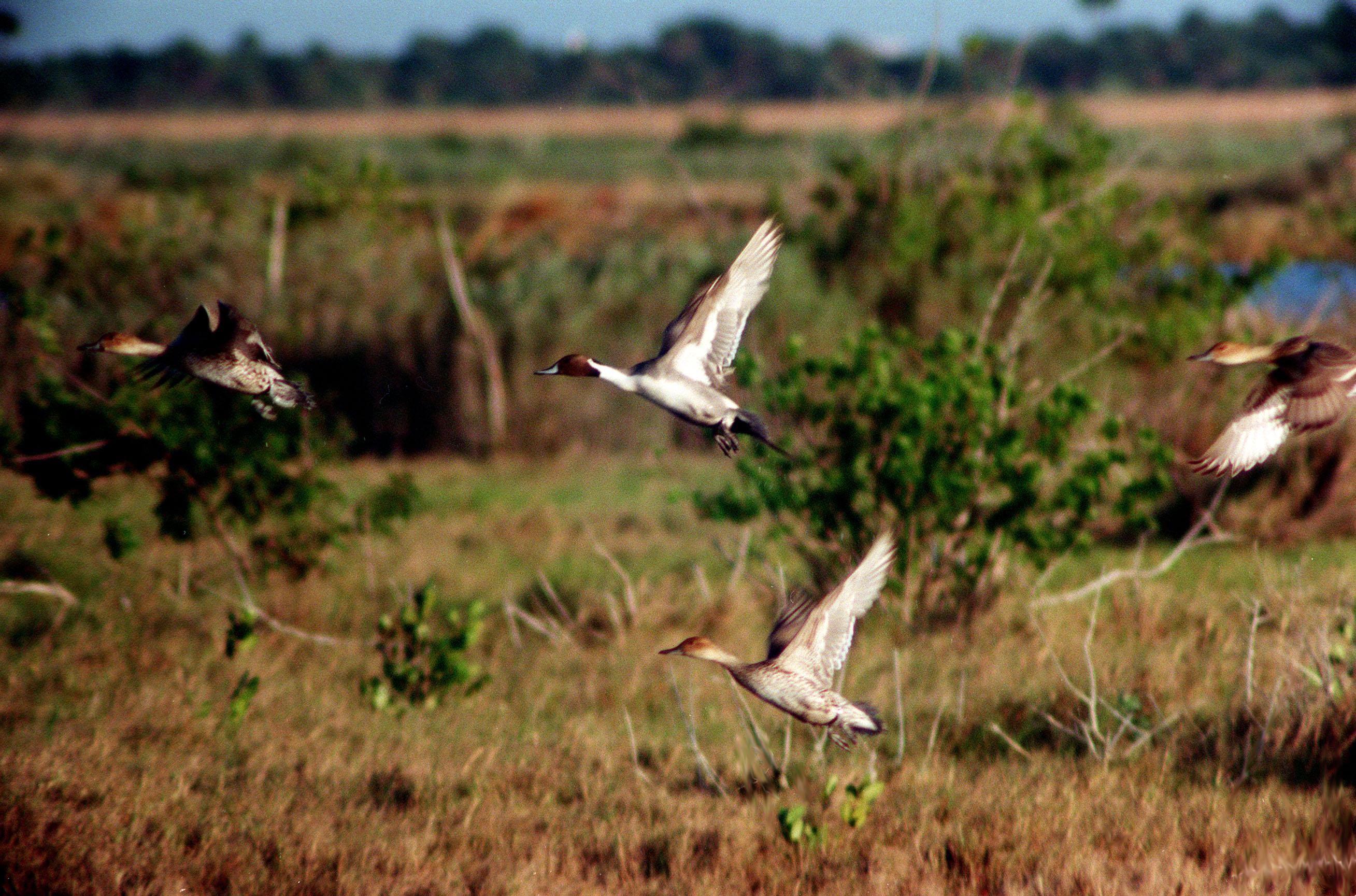
Image: NASA/KSC (KSC-99WL10).
Last reviewed: 1 source cited
Explain Like I'm 10
- What is it? Coastal wetlands flooded and drained by the tides, with deep, spongy peat soils.
- Why does it matter? They are essential for healthy fisheries, coastlines and communities.
- How does it help people? A coastal wetland of grasses that floods with salty tide water. It soaks up storm surges and stores carbon in its mud. Glossary reduce flooding by slowing and absorbing rainwater, protect shorelines from erosion, and support the seafood many communities depend on.
The Five W's of Salt Marshes
Who
Nature, described by NOAA’s National Ocean Service.
What
Coastal wetlands flooded and drained by the tides, with deep, spongy peat soils.
Where
Worldwide, especially at middle to high latitudes; in the U.S. on every coast, with about half along the Gulf Coast.
Why
They are essential for healthy fisheries, coastlines and communities.
Impact Statement
Natural solution
Salt marshes provide food, refuge or nursery habitat for more than 75% of fisheries species, including shrimp, blue crab and many finfish. They protect shorelines from erosion by buffering waves and trapping Sand, mud and gravel carried by water that settles on river beds, lake bottoms and beaches. Glossary.
Source: NOAA Ocean Service, What is a salt marsh?
For Further Information: NOAA Ocean Service, What is a salt marsh?
Salt marshes are food, refuge or nursery habitat for more than 75% of fisheries species, including shrimp and blue crab.
How This Saves People & the Planet
For People
Salt marshes reduce flooding by slowing and absorbing rainwater, protect shorelines from erosion, and support the seafood many communities depend on.
Source: NOAA Ocean Service, What is a salt marsh?
For Nature
They filter runoff and metabolize excess nutrients to protect water quality, and shelter young fish and shellfish. See also A tree that grows in salty water along tropical coasts. Its tangled roots protect shores from waves and shelter young fish. Glossary Forests and Flowering plants that grow underwater in shallow seas, forming meadows that shelter animals and store carbon. Glossary Meadows.
Want to go deeper? NOAA Ocean Service explains how salt marshes work.
 For Further Information
Related Solutions
More solutions like this one, matched by meaning.
For Teachers
Discussion questions
- What is Salt Marshes, and what problem does it help solve?
- Who is behind Salt Marshes, and where does the work happen?
- How does Salt Marshes help both people and nature? Use one fact from this page.
Sources are listed with each fact in the Five W's above.
Standards Alignment
U.S. Next Generation Science Standards (NGSS) and Common Core. Official text, in English.
- K-ESS3-3 (Grade K-2) Communicate solutions that will reduce the impact of humans on the land, water, air, and/or other living things in the local environment.
- 5-ESS3-1 (Grade 3-5) Obtain and combine information about ways individual communities use science ideas to protect the Earth's resources and environment.
- MS-ESS3-3 (Grade 6-8) Apply scientific principles to design a method for monitoring and minimizing a human impact on the environment.
- MS-LS2-5 (Grade 6-8) Evaluate competing design solutions for maintaining biodiversity and ecosystem services.
- HS-ESS3-4 (Grade 9-12) Evaluate or refine a technological solution that reduces impacts of human activities on natural systems.
- CCSS RI.5.9 (Grade 3-5) Integrate information from several texts on the same topic in order to write or speak about the subject knowledgeably.
- CCSS RST.6-8.1 (Grade 6-8) Cite specific textual evidence to support analysis of science and technical texts.
Cite This Page
APA
Saving Planets. (n.d.). Salt Marshes. https://www.savingplanets.com/Salt_Marshes.html
MLA
"Salt Marshes." Saving Planets, https://www.savingplanets.com/Salt_Marshes.html.