Nancy Grace Roman Space Telescope (NASA)
NASA's Roman telescope launched Aug 30, 2026 to L2: Hubble-sharp images 100x wider, a census of planetary systems, first images by early 2027.
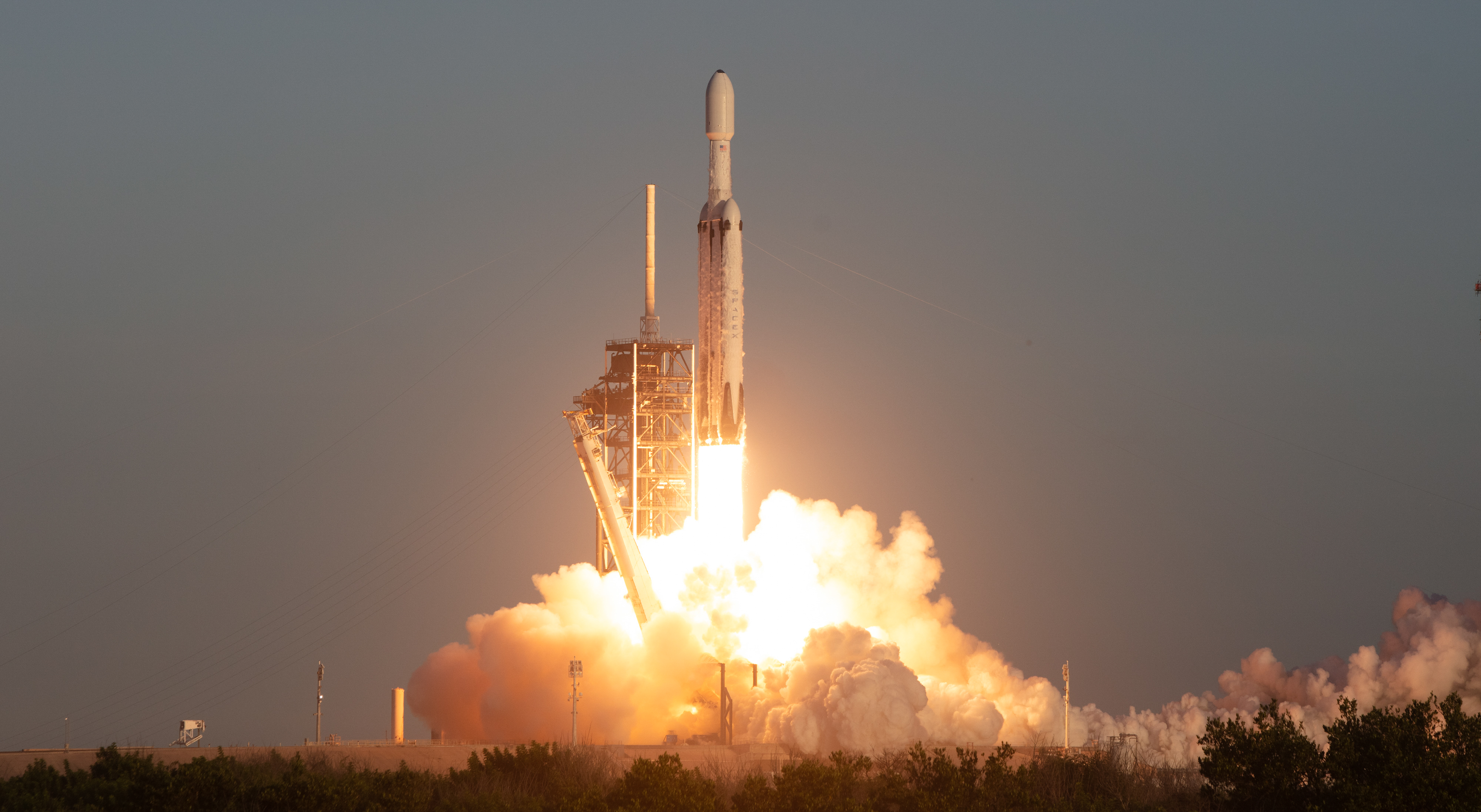
Image: NASA/Sydney Rohde. Roman lifts off on a Falcon Heavy, Aug 30, 2026.
Last reviewed: 16 sources cited
Meet Roman, Hubble's Wide-Eyed Cousin
Roman is NASA's newest space telescope, launched August 30, 2026. It has a mirror the same size as Hubble's and images just as sharp, but each picture covers a patch of sky at least 100 times larger. NASA says one Roman image holds the detail of 100 Hubble pictures, and Roman can survey the sky about a thousand times faster than Hubble. That speed is what lets it take a census of planets across our galaxy and help show how rare a world like Earth may be.
Source: NASA, Roman mission page; NASA, Roman launch release (Aug 30, 2026)
Who Was Nancy Grace Roman?
The telescope is named for the astronomer who made space telescopes possible in the first place.
Born to Look Up
Born May 16, 1925 in Nashville, Tennessee. By 6th grade she had started an astronomy club with her friends.
NASA's First Chief of Astronomy
She joined NASA in 1959, six months after it formed, and became its first Chief of Astronomy and its first woman executive.
Mother of Hubble
She planned NASA's space astronomy program and fought to get Hubble approved by Congress. Her colleague Ed Weiler named her the "mother of Hubble."
In Her Own Words
"If I hadn't been stubborn, I would've been talked out of it years earlier." She died December 25, 2018.
Source: NASA, Who is Nancy Grace Roman?; NASA, Nancy Grace Roman
What Will Roman Do?
Her namesake telescope is built for huge, fast surveys of the sky.
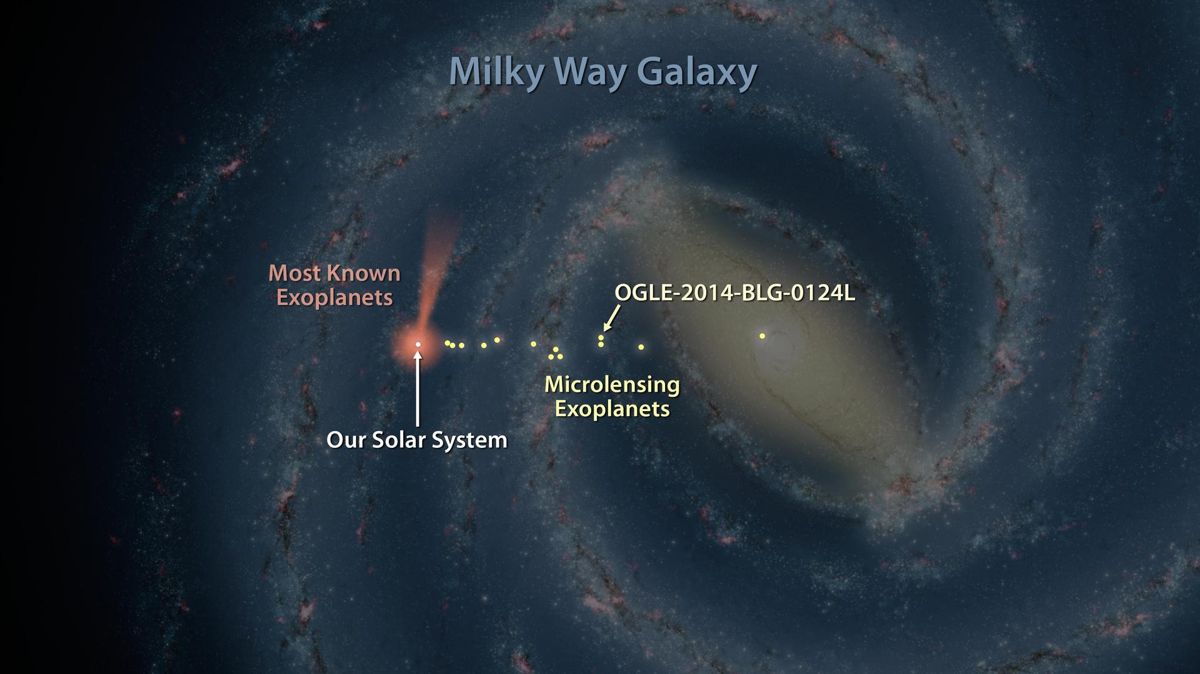
NASA built Roman to explore dark energy and dark matter, map a billion galaxies, and take a statistical census of planetary systems in our galaxy. A few numbers show the scale:
300 MP
Infrared camera with 18 detectors, each about the size of a saltine cracker
1.4 TB
Data sent home every day, the most of any NASA astrophysics mission so far
1,000+
Exoplanets NASA expects from its survey of the inner Milky Way
Source: NASA, Roman launch release (Aug 30, 2026); NASA, About Roman
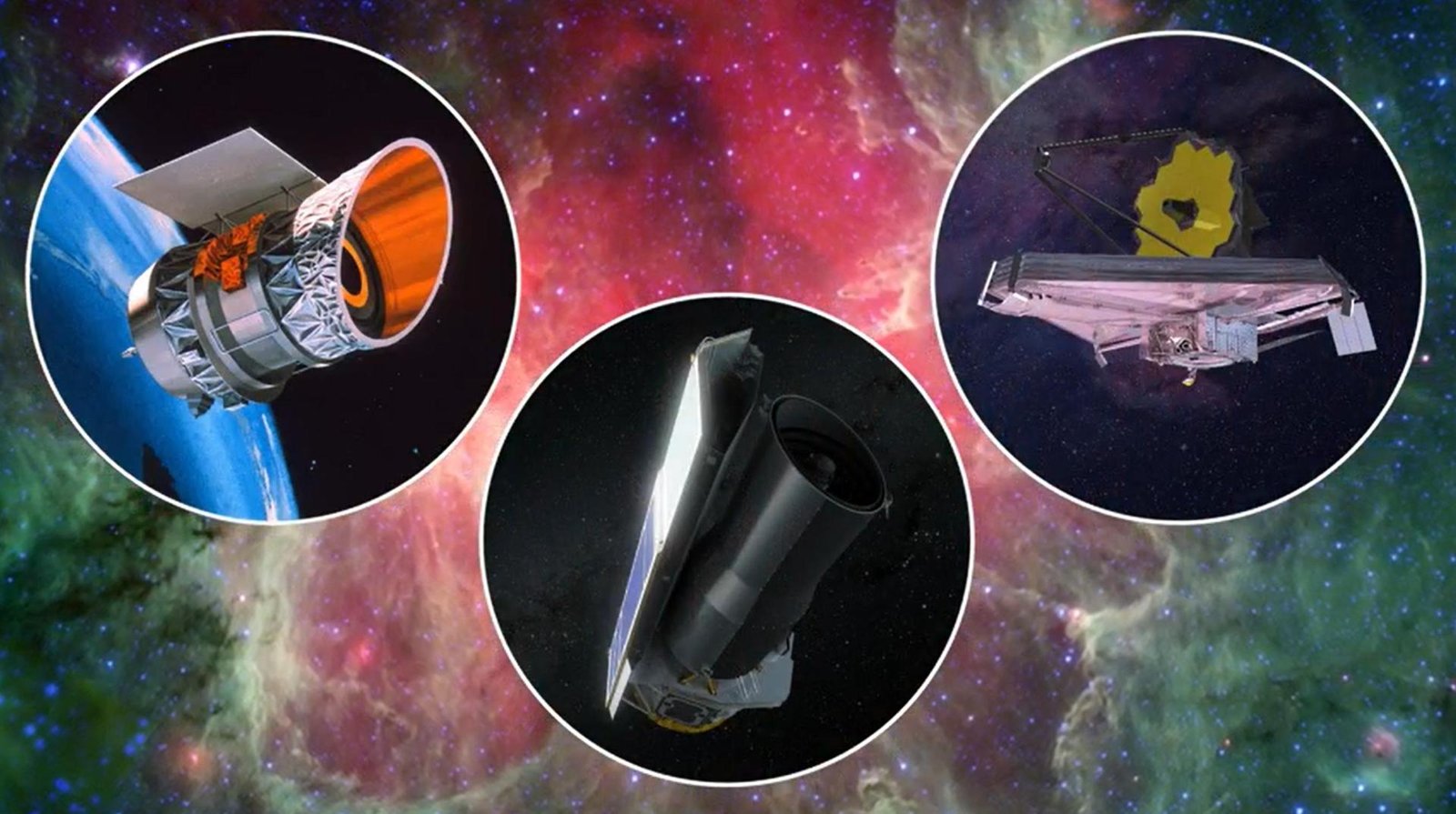
Roman vs Webb vs Hubble
How does Roman stack up against NASA's two most famous telescopes?
| Roman | Webb | Hubble | |
|---|---|---|---|
| Main mirror | 2.4 m (7.9 ft) | 6.5 m (21.3 ft) | 2.4 m (7.9 ft) |
| Field of view | At least 100 times Hubble's (0.28 square degrees) | Narrow, deep views | Narrow, deep views |
| Light it sees | Visible to near-infrared (0.5 to 2.3 microns) | Infrared (0.6 to 28.5 microns) | Ultraviolet, visible, near-infrared (0.2 to 1.7 microns) |
| Where it orbits | Sun-Earth L2, about 1.5 million km away | Sun-Earth L2, about 1.5 million km away | Low Earth orbit, about 560 km up |
| Launched | 2026 | 2021 | 1990 |
| Best at | Huge, fast surveys: dark energy, a billion galaxies, a census of planets | The faintest, earliest galaxies and dusty star nurseries | Sharp ultraviolet and visible views, 35+ years of science |
Source: NASA, Roman and Hubble; NASA, Roman FAQ; NASA, Webb fact sheet; NASA, Hubble vs. Webb; NASA, Roman mission page
Where Is Roman Now?
Roman is still traveling to its permanent home. Here is how far it has gone, and where it is headed.
1,419,144 km
about 881,815 miles from Earth, as of November 4, 2026 (00:00 UTC)
Roman is on its way to orbit around Sun-Earth L2. For comparison, Webb is about 1,403,399 km from Earth today.
Distance from the center of Earth, from NASA/JPL's Horizons ephemeris for Roman (ID -211). This page refreshes it once a day; NASA's own numbers update continuously.
Source: NASA/JPL Horizons; NASA, Roman launch release (Aug 30, 2026)
Explore space in 3D with NASA's Eyes on the Solar System · NASA's Roman blog
What Is a Lagrange Point?
Roman's destination, L2, is one of five special parking spots in space.
A Lagrange point is a spot in space where the pull of two big bodies, like the Sun and Earth, balances out so a spacecraft can stay put with very little fuel. There are five: L1, L2 and L3 sit on the Sun-Earth line, and L4 and L5 lead and trail Earth in its orbit.
- Why L2? It is close enough to talk to Earth easily, and it keeps the Sun, Earth and Moon behind the telescope, so it gets solar power and a clear, cold view of deep space.
- Webb lives there too. Webb orbits L2 in a loop about the size of the Moon's orbit around Earth, and takes about 6 months to go around once.
- Fun fact: L1 and L2 are a little wobbly, so spacecraft there make small course corrections, roughly every 23 days.
Source: NASA, What is a Lagrange Point?; NASA, Webb's orbit; NASA, Roman launch release (Aug 30, 2026)
Newest Image and First Light
Until Roman sends its first science images, this space shows NASA's newest Roman photo and counts down to first light.
First images: early 2027

Source: NASA, Roman launch release (Aug 30, 2026); NASA Image and Video Library
How This Saves People & the Planet
Why does a faraway telescope matter here on Earth?
For People: Everyone Can Help
Machine learning, SI and citizen scientists will help sift Roman's 1.4 terabytes a day, so anyone can take part in discovery.
For Nature: How Rare Is Earth?
Roman will complete a statistical census of planetary systems in our galaxy. Knowing how common, or how rare, worlds like ours are shows how precious Earth's oceans, forests and air really are.
For Life: Finding Other Earths
Roman's Coronagraph tests the technology that future missions like NASA's Habitable Worlds Observatory concept could use to photograph Earth-like planets and search for life.
For Future Missions: Lighter and On Budget
Roman's mirror weighs 80% less than Hubble's, and NASA delivered the telescope ahead of schedule and on budget, a sign of how far telescope technology has come.
Source: NASA, Roman mission page; NASA, Roman launch release (Aug 30, 2026); NASA, Roman FAQ
The Five W's of the Roman Space Telescope
Who
NASA builds and operates Roman. The An instrument that collects light (or other energy) to see faraway things more clearly. Glossary is named for Nancy Grace Roman, NASA's first Chief of Astronomy, known as the "mother of Hubble."
Source: NASA, Roman mission page
Source: NASA, Who is Nancy Grace Roman?
What
A space telescope with a mirror the size of Hubble's (2.4 m) and images just as sharp, but each picture covers at least 100 times more sky. It is built to study dark energy and dark matter, map a billion galaxies and take a census of planets.
Source: NASA, Roman mission page
When
Launched August 30, 2026 on a SpaceX Falcon Heavy. NASA expects its first images by early 2027.
Where
In The curved path an object takes as it travels around a planet, moon or star, like a satellite circling Earth. Glossary around Sun-Earth L2, a balance point about 1.5 million km (about 930,000 miles) from Earth, near the Webb telescope.
Source: NASA, Roman mission page
Source: NASA, What is a Lagrange point?
Why
Roman's census of planets across our galaxy, with more than 1,000 exoplanets expected, will help show how rare a world like Earth may be. Knowing how special our home is gives people one more reason to protect its oceans, forests and wildlife.
Impact Statement
Agency solution · active
NASA's Nancy Grace Roman Space Telescope launched on August 30, 2026 aboard a SpaceX Falcon Heavy and is heading to Sun-Earth L2. It pairs Hubble-sharp A kind of light our eyes can't see that we feel as heat. Special cameras use it to see warm objects and gases. Glossary images with a field of view at least 100 times larger to explore dark matter, dark energy and exoplanets, and NASA expects its first images by early 2027.
Source: NASA, Roman launch release (Aug 30, 2026); NASA, Roman mission page
NASA's Roman Space Telescope sends home 1.4 terabytes of data a day, the most of any NASA astrophysics mission so far.
A census of planets around other stars tells us how rare a living world like Earth is, and why it is worth protecting.
Want to go deeper? NASA, Roman mission page has the full story and the latest updates.
 For Further Information
Related Solutions
More solutions like this one, matched by meaning.
Help This Work
NASA doesn't take donations, but anyone can join one of its citizen science projects.
For Teachers
Discussion questions
- What is Nancy Grace Roman Space Telescope (NASA), and what problem does it help solve?
- Who is behind Nancy Grace Roman Space Telescope (NASA), and where does the work happen?
- How does Nancy Grace Roman Space Telescope (NASA) help both people and nature? Use one fact from this page.
Sources are listed with each fact in the Five W's above.
Standards Alignment
U.S. Next Generation Science Standards (NGSS) and Common Core. Official text, in English.
- MS-ESS1-3 (Grade 6-8) Analyze and interpret data to determine scale properties of objects in the solar system.
- CCSS RST.6-8.1 (Grade 6-8) Cite specific textual evidence to support analysis of science and technical texts.
Cite This Page
APA
Saving Planets. (n.d.). Nancy Grace Roman Space Telescope (NASA). https://www.savingplanets.com/Nancy_Grace_Roman.html
MLA
"Nancy Grace Roman Space Telescope (NASA)." Saving Planets, https://www.savingplanets.com/Nancy_Grace_Roman.html.