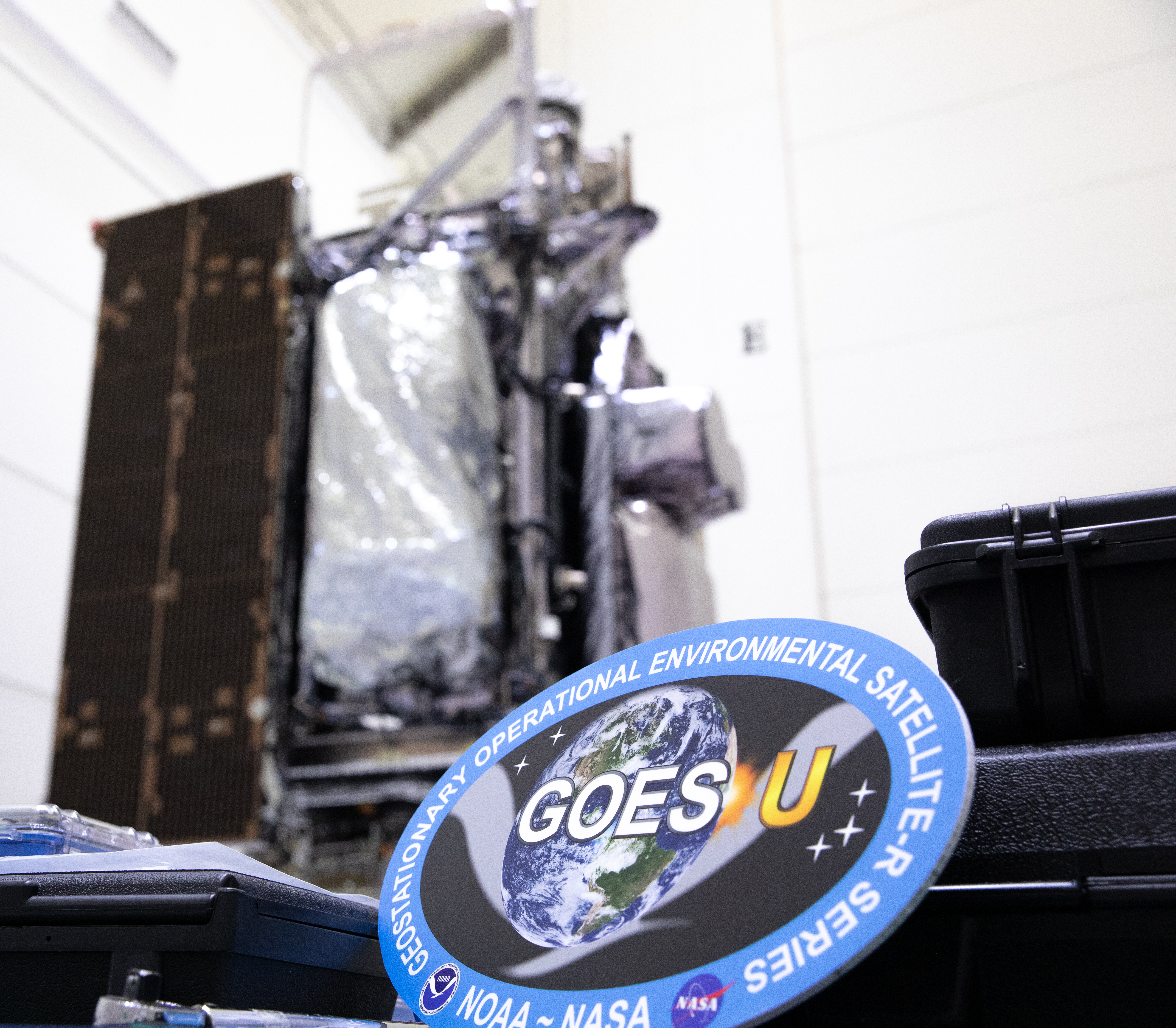

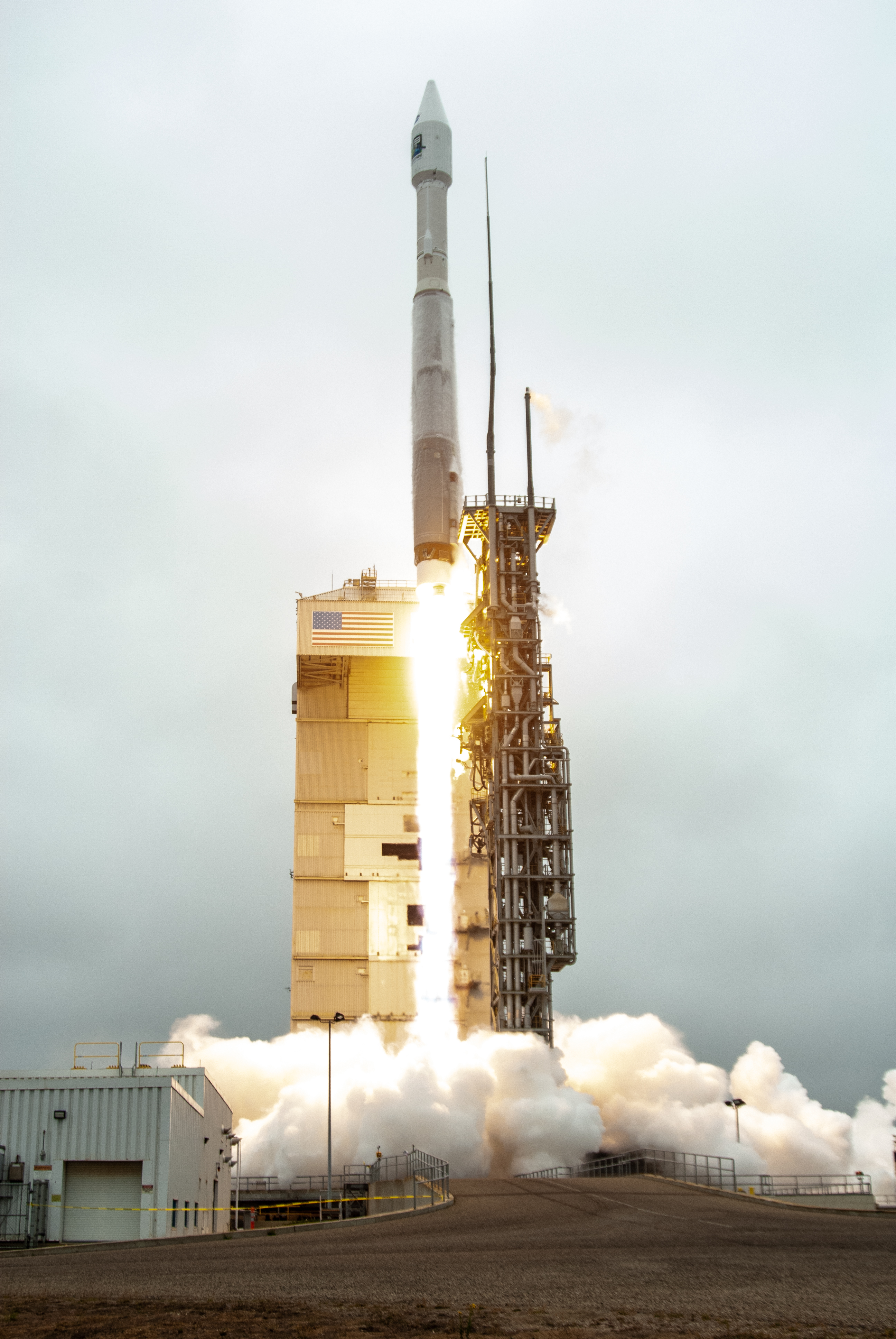
GOES-19 and CCOR-1 (NOAA)
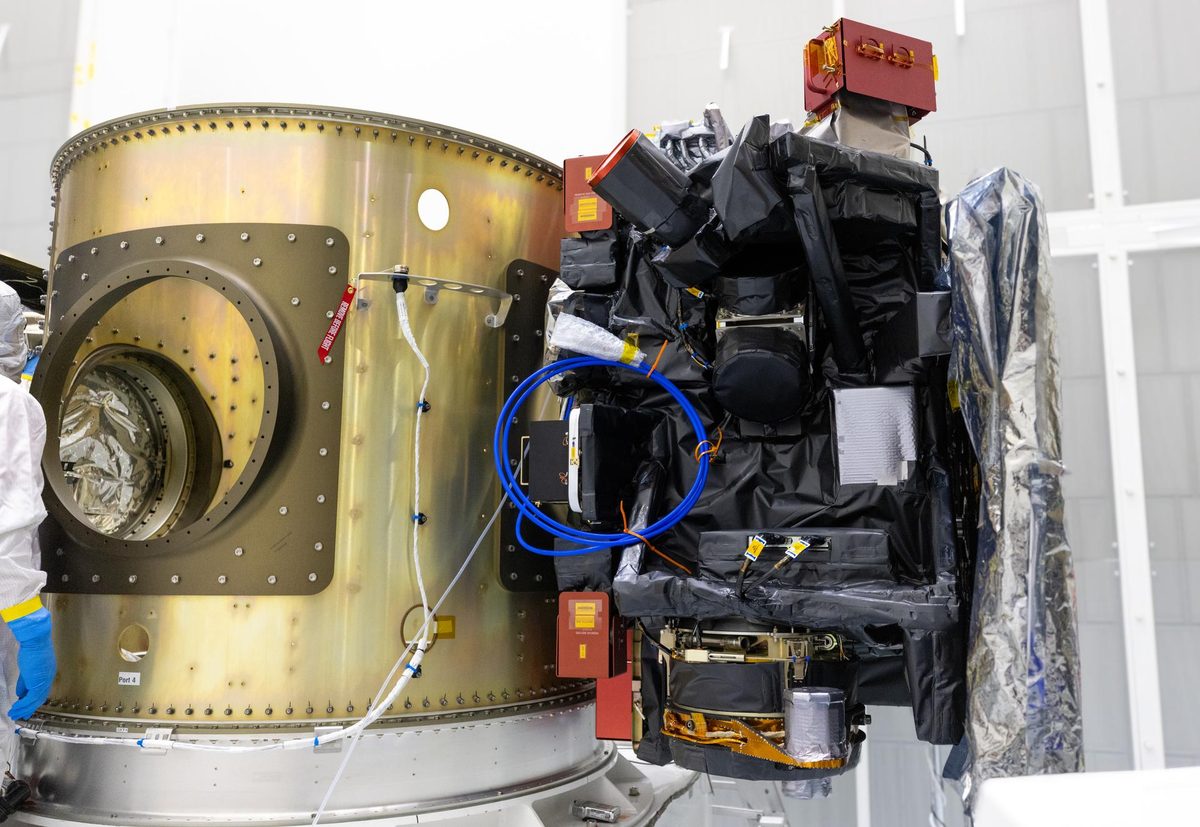
NOAA's GOES-19 carries CCOR-1, the world's first operational space-based coronagraph, imaging the Sun's corona every 15 minutes.
Image: NASA/KSC.
Last reviewed: 4 sources cited
Explain Like I'm 10
- What is it? A weather satellite whose CCOR-1 coronagraph watches the corona from 3.7 to 17 solar radii, replacing the aging coronagraphs on SOHO.
- Why does it matter? A huge cloud of charged gas thrown out from the Sun. If it hits Earth it can cause auroras and disturb satellites and power grids. Glossary can disrupt satellites, GPS and power grids; seeing them early gives forecasters time to warn operators.
The Five W's of GOES-19 and CCOR-1
Who
NOAA, which operates the GOES series of weather satellites and its Space Weather Prediction Center uses CCOR-1 imagery.
Source: NOAA NESDIS, first operational space-based coronagraph
What
A weather satellite whose CCOR-1 coronagraph watches the corona from 3.7 to 17 solar radii, replacing the aging coronagraphs on SOHO.
Source: NOAA SWPC, CCOR-1 coronagraph
When
Launched June 25, 2024; CCOR-1 first light September 19, 2024; operational as GOES-East April 7, 2025.
Launched (as GOES-U) on a SpaceX Falcon Heavy on June 25, 2024 from NASA's Kennedy Space Center, Florida.
Source: NASA, LSP primary launches archive
Source: NOAA OSPO, GOES status
Source: NOAA NESDIS, first operational space-based coronagraph
Where
A high orbit, about 22,000 miles up, where a satellite moves with Earth's spin and stays over the same spot. Glossary at 75.2° West, making CCOR-1 the first coronagraph to fly in geostationary The curved path an object takes as it travels around a planet, moon or star, like a satellite circling Earth. Glossary.
Source: NOAA OSPO, GOES status
Source: NOAA SWPC, CCOR-1 coronagraph
Why
Coronal mass ejections can disrupt satellites, GPS and power grids; seeing them early gives forecasters time to warn operators.
Source: NOAA NESDIS, first operational space-based coronagraph
Impact Statement
Agency solution · active
NOAA's GOES-19 became the operational GOES-East satellite on April 7, 2025. On board is CCOR-1, the world's first operational, space-based coronagraph dedicated to space weather: it blocks the Sun's bright disk and images its faint outer corona every 15 minutes to spot coronal mass ejections heading our way.
Source: NOAA OSPO, GOES status
Source: NOAA SWPC, CCOR-1 coronagraph
GOES-19's CCOR-1 is the world's first operational space-based coronagraph, imaging the Sun's faint corona every 15 minutes.
Connected Solutions
- GeoXO Geostationary Extended Observations (NOAA / NASA) The next generation that will follow the GOES-R Series.
Want to go deeper? NOAA SWPC, CCOR-1 coronagraph has the full story and the latest updates.
 For Further Information
Related Solutions
More solutions like this one, matched by meaning.
For Teachers
Discussion questions
- What is GOES-19 and CCOR-1 (NOAA), and what problem does it help solve?
- Who is behind GOES-19 and CCOR-1 (NOAA), and where does the work happen?
- How does GOES-19 and CCOR-1 (NOAA) help both people and nature? Use one fact from this page.
Sources are listed with each fact in the Five W's above.
Standards Alignment
U.S. Next Generation Science Standards (NGSS) and Common Core. Official text, in English.
- MS-ESS3-2 (Grade 6-8) Analyze and interpret data on natural hazards to forecast future catastrophic events and inform the development of technologies to mitigate their effects.
- CCSS RST.6-8.1 (Grade 6-8) Cite specific textual evidence to support analysis of science and technical texts.
Cite This Page
APA
Saving Planets. (n.d.). GOES-19 and CCOR-1 (NOAA). https://www.savingplanets.com/GOES-19.html
MLA
"GOES-19 and CCOR-1 (NOAA)." Saving Planets, https://www.savingplanets.com/GOES-19.html.