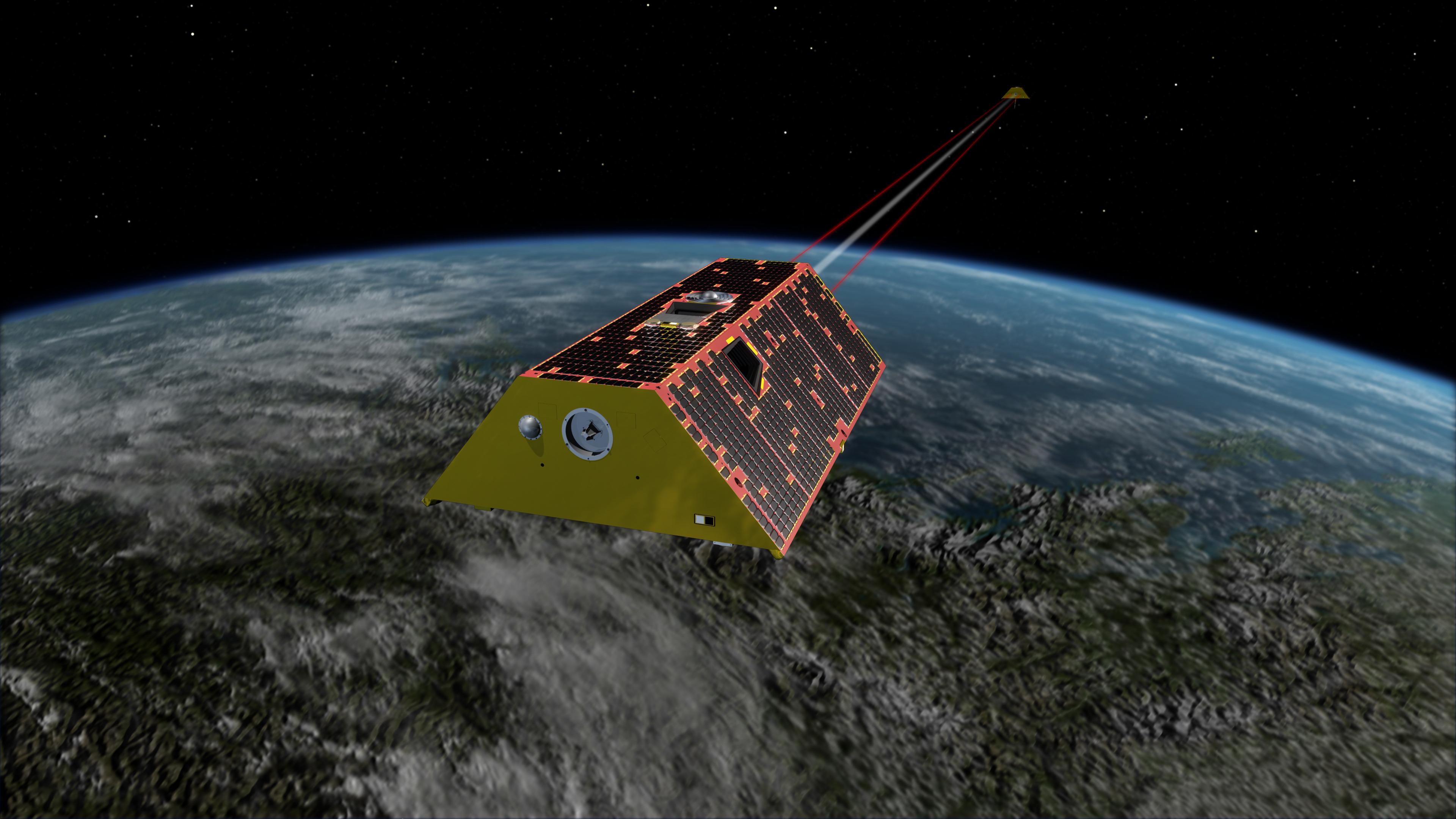
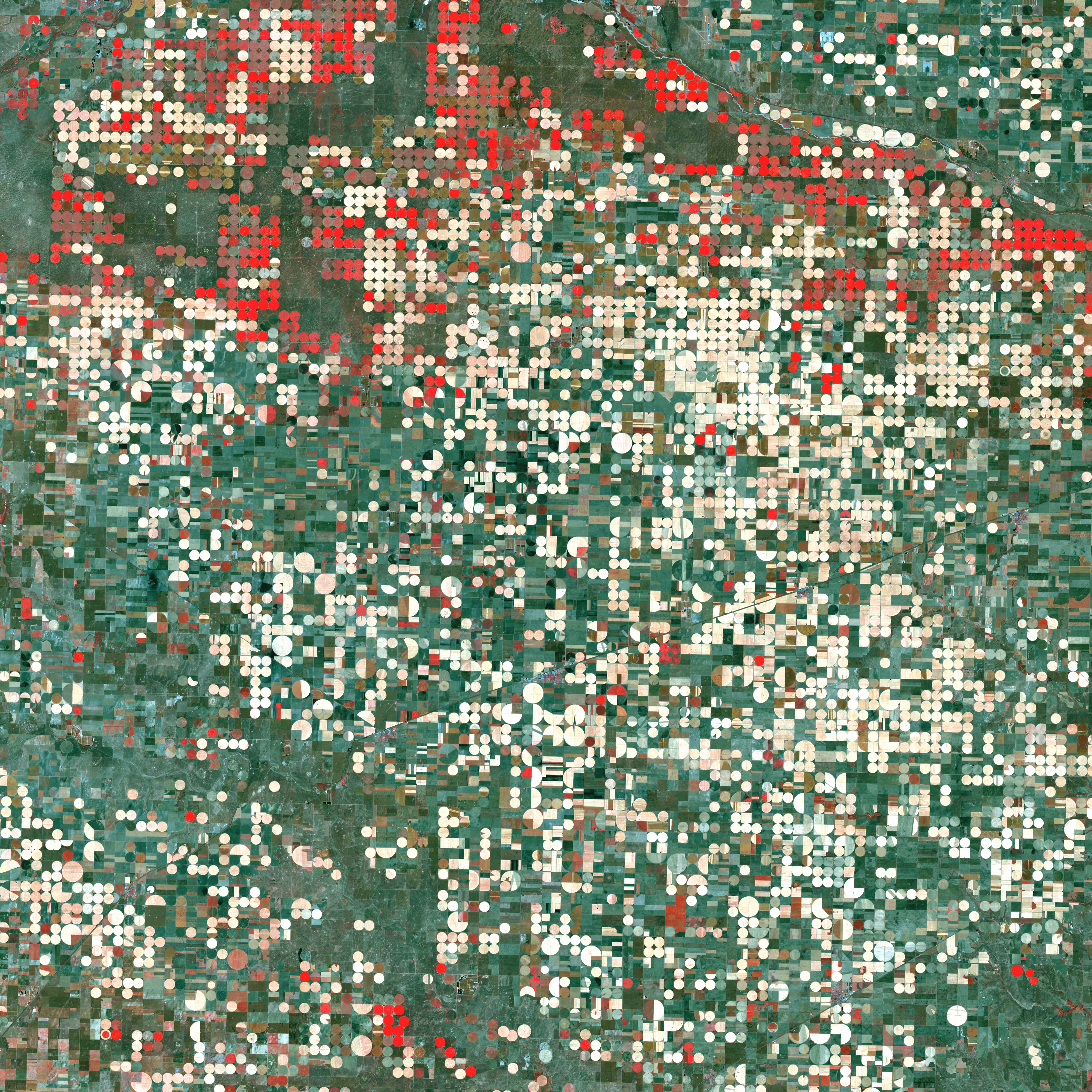
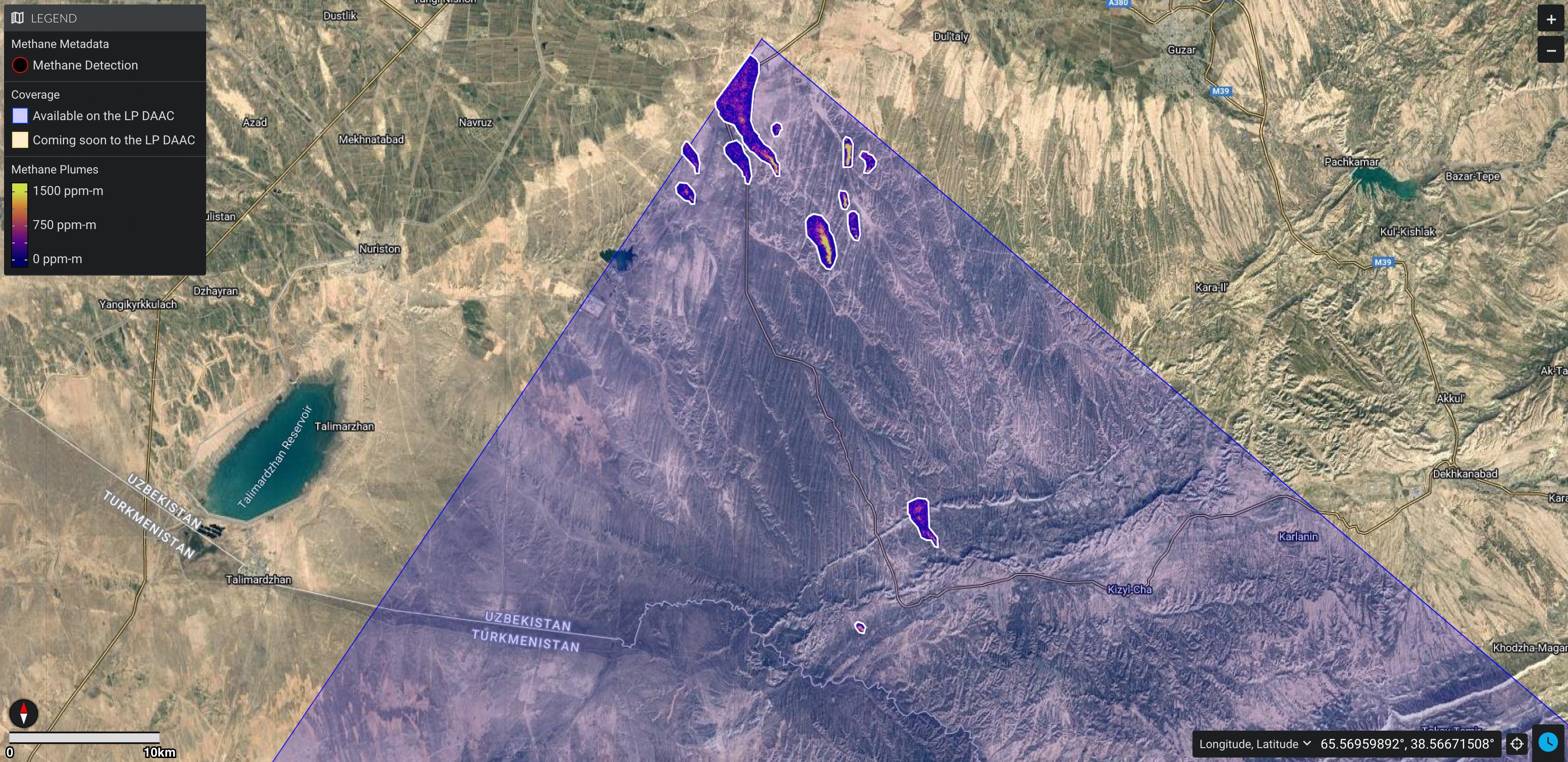
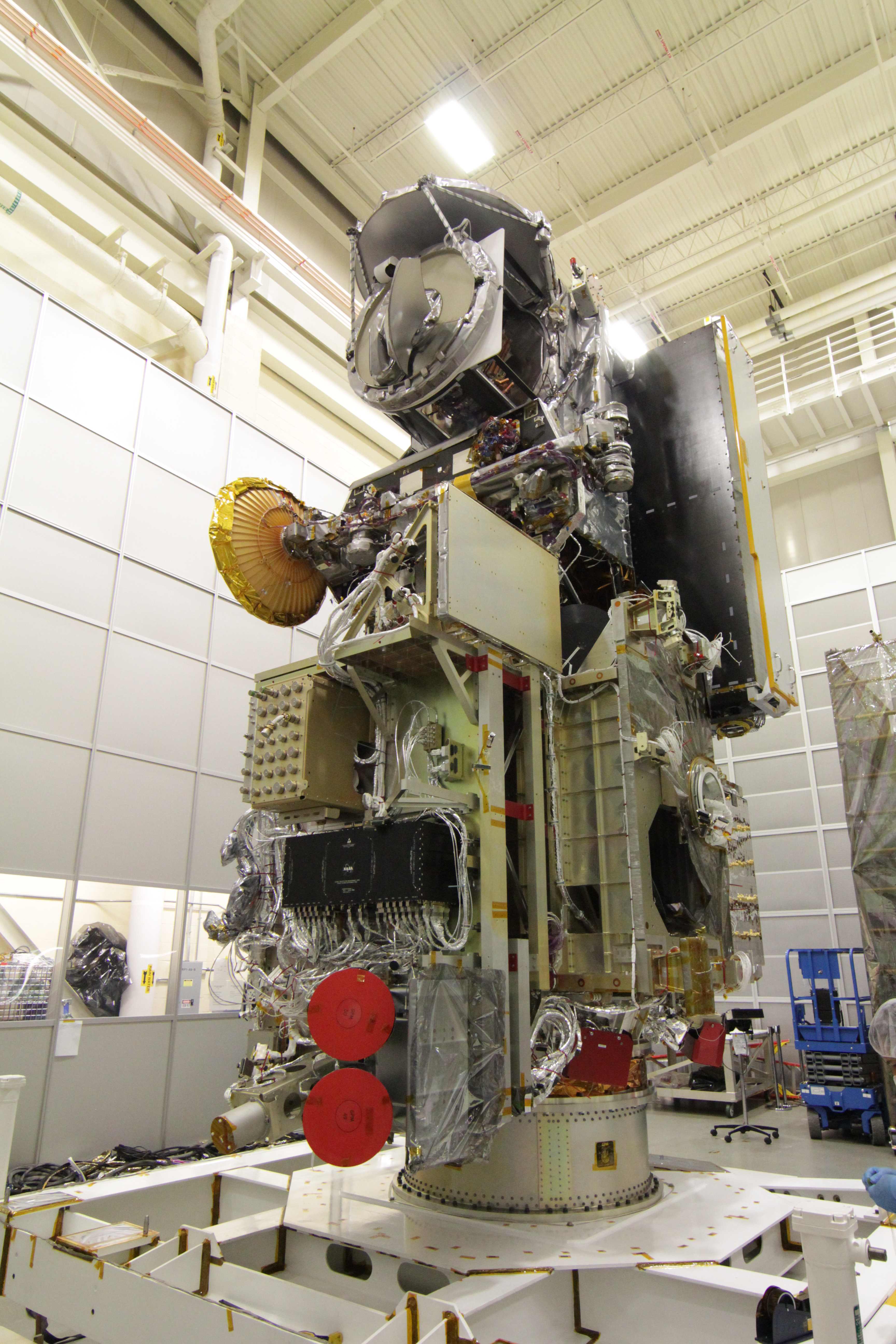
An interactive satellite explorer: drag the parts of a satellite into place, then learn about laser communication and computing in orbit, from K-3 to university.
Build a satellite! Drag each part onto its spot (or tap a part, then tap its spot). Then pick a level to go from a K-3 wow to university detail.
Try another spot!Nice!You built a satellite! Read about each part below.Now tap its spot on the satellite:Pick a part first.Drop it on a dashed spot.Satellite cleared. Ready to build again!Build your satellite, then press Launch!Your satellite is built. Ready for launch!3…2…1…Liftoff! The rocket engines roar.Climbing through the thick air. The sky turns dark.Stage separation! The empty first stage falls away.Fairing separation: the nose cone opens and your satellite sees space.Orbit insertion! Your satellite is circling Earth.Solar arrays unfolding to catch sunlight.Antenna deploying to talk to Earth.Mission ready: your satellite is at work in orbit!Launch complete: liftoff, stage separation, fairing separation, orbit insertion, solar arrays and antenna deployed.DayNightLEOMEOGEOYour orbitNot to scale; time sped upRed arrow: gravity pulls toward EarthAltitudeSpeedPeriodkmkm/sminhRadioLaserHandoff to the next ground stationCloud blocks the laserIllustrative speeds, not to scaleSI chipClear: sent homeCloudy: deletedWater used by US data centers (LBNL)about 21 billion Labout 66 billion LIn orbit: heat radiates into spaceno cooling waterPause animationsPlay animationsDrag to spin the satellite, pinch to zoom. Try Explode, Build in 3D or Launch!Parts are floating! Tap a glowing label to snap each part into place.{p} docked!Satellite complete! Press Launch to send it to space.{p}: see the real hardware photo below.Exploded view: every part pulled apart so you can see inside.All parts back together.This is NASA’s real 3D model of Landsat 8. Drag to look all around it.Loading NASA’s 3D model…Sorry, the 3D model could not load.Laser link! Green light carries data down to a ground station.Spacecraft separation! Your satellite flies free.BusReaction wheelsPayloadStar trackersThrusterAntennaSolar arrays
Satellite parts
3D satellite lab
Spin it, blow it apart, build it, launch it!
Turn the satellite in 3D, open the exploded view to see the reaction wheels hidden inside, then launch it: watch the booster drop away, the nose cone split open and the solar arrays unfold in orbit.
Exploded view and a full mission sequence: staging, fairing jettison, spacecraft separation, array and antenna deployment, then an optical downlink. Earth uses NASA’s Blue Marble and Black Marble maps, lit by the Sun so you can see the day and night sides.
The 3D lab needs WebGL. The 2D builder above and the photos below work everywhere.
Press Launch and watch your satellite ride a rocket into space!
Watch the launch, then compare three orbit heights. Low Earth orbit (LEO) laps Earth in about an hour and a half, GPS satellites in medium Earth orbit (MEO) take about 12 hours, and geostationary (GEO) satellites take a whole day, so they seem to hover over one spot.
Move the altitude slider. The page computes the circular orbital speed v = √(μ/a) and the period from Kepler’s third law, T = 2π√(a³/μ), live, with μ = 398,600 km³/s² and Earth radius 6,371 km. The green arrow is the velocity, always along the orbit; the red arrow is gravity, always toward Earth’s center.
Created by the Founder and SI
Link budget note: received power falls with the square of distance, so a GEO link (about 36,000 km) is roughly 8,000 times weaker than a 400 km LEO link at the same power, antennas and frequency. That is why GEO satellites use big dishes and high power.
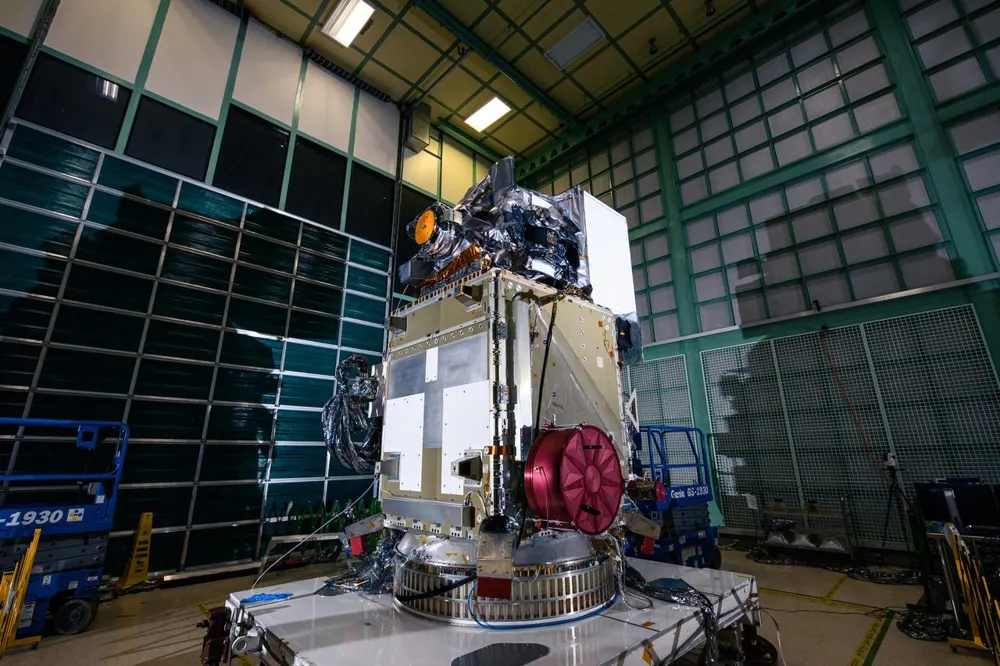
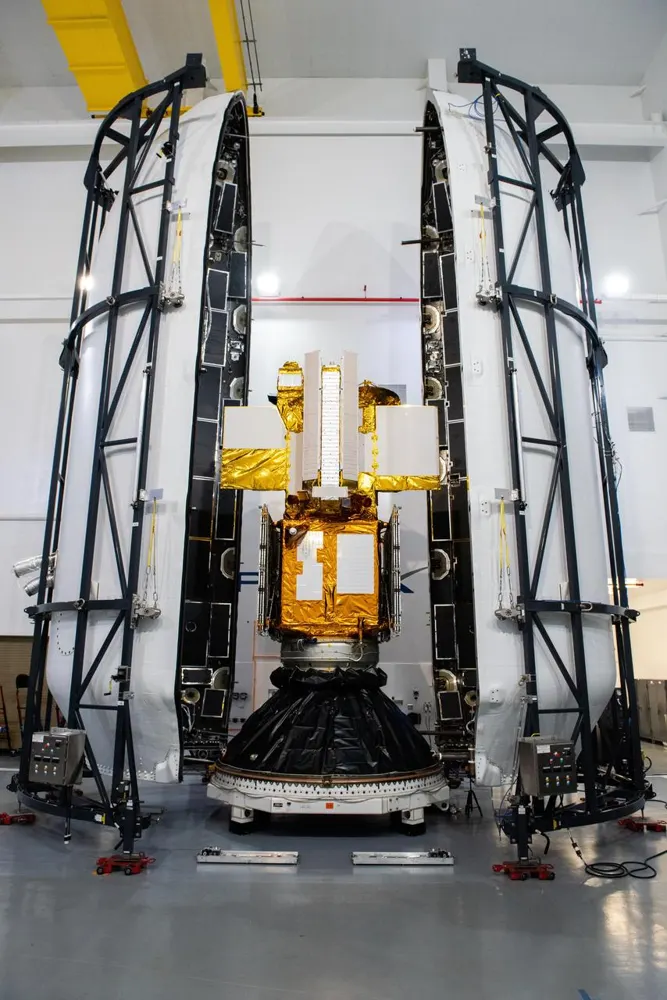
Landsat 9 before launch: the bus carries every other part. Credit: NASA/Randy Beaudoin
The bus is the satellite’s body. It holds everything together, like a backpack that carries all the tools.
The bus gives the satellite its structure, shares out electricity, keeps parts at safe temperatures, runs the onboard computer and controls which way the satellite points. Engineers often reuse one bus design for many different missions.
Bus subsystems: structure, electrical power, thermal control, command and data handling, attitude determination and control, and communications. Designers trade the mass, power and volume budgets against what the payload needs.
🔭 Payload
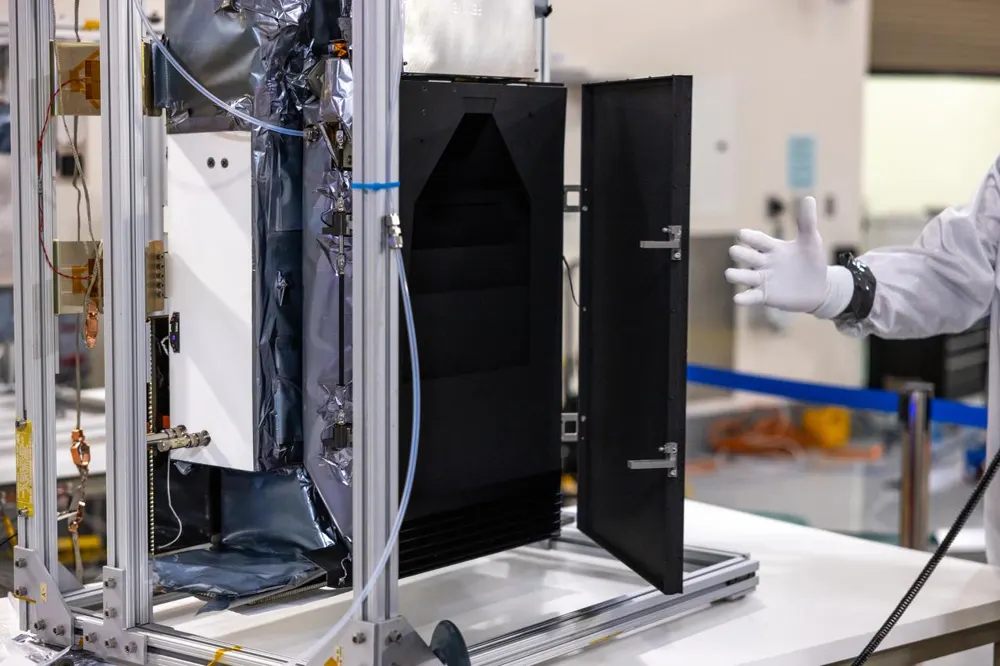
The Ocean Color Instrument, PACE’s main payload, being installed. Credit: NASA/Denny Henry
The payload is the satellite’s job tool, like a camera that takes pictures of forests from space!
The payload is the reason the satellite exists: cameras, radar or instruments that measure air, ice, forests or oceans. Everything else on board is there to help the payload do its job.
Payload requirements (resolution, spectral bands, revisit time, data volume) drive the choice of orbit and the size of the power, pointing and downlink systems. Radar payloads need large antennas and high power; optical payloads need very stable pointing.
🧭 Pointing sensors
Star trackers for Europa Clipper: cameras that steer by the stars. Credit: NASA/JPL-Caltech
Satellites use star cameras to see which way they are pointing, like sailors using the stars to find their way.
Star trackers, sun sensors and gyroscopes tell the satellite which way it is facing. A GPS receiver tells it where it is in orbit.
Attitude determination fuses star tracker, gyroscope, sun sensor and magnetometer data, often with a Kalman filter. Reaction wheels, magnetorquers or thrusters then turn the spacecraft to keep instruments and antennas on target.
Solar panels are the satellite’s lunch. They turn sunlight into electricity!
Solar arrays turn sunlight into electricity, and batteries store some of it for when the satellite passes through Earth’s shadow.
Array sizing accounts for the time spent in eclipse, cell efficiency, the sun angle and the slow loss of output from radiation over the mission. Satellites commonly use multi-junction cells, which convert more sunlight per square meter than typical rooftop panels.
🔥 Propulsion
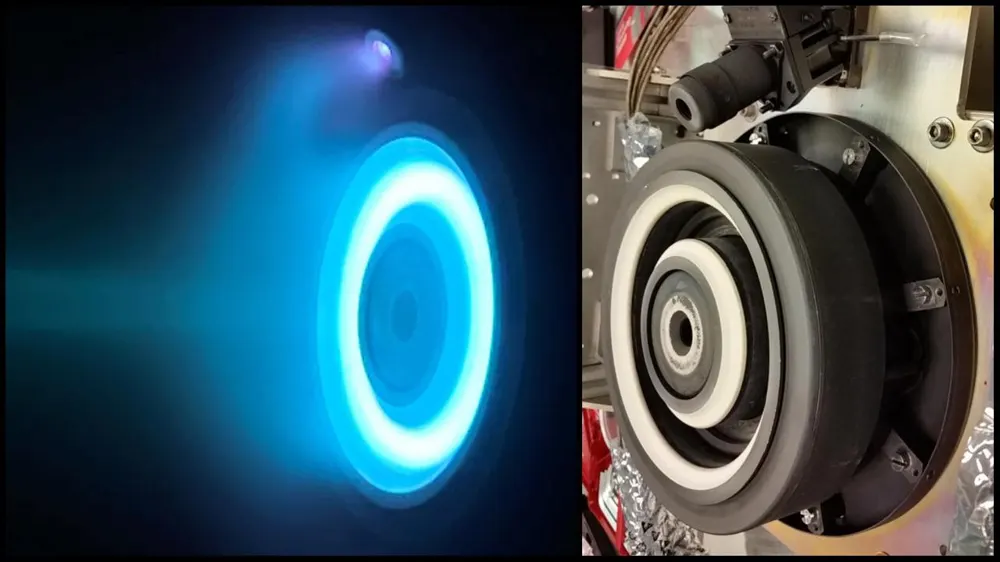
An electric Hall thruster like those on NASA’s Psyche, firing in a test chamber. Credit: NASA/JPL-Caltech
Little rocket thrusters give gentle pushes so the satellite stays in the right place.
Thrusters raise or adjust the orbit and help dodge space junk. At the end of the mission they can push the satellite down to burn up, so it does not become debris.
Chemical thrusters give high thrust; electric thrusters (ion or Hall-effect) use far less propellant but push gently for a long time. Planning end-of-life disposal is part of space sustainability, as in the Zero Debris Charter.
📡 Antennas
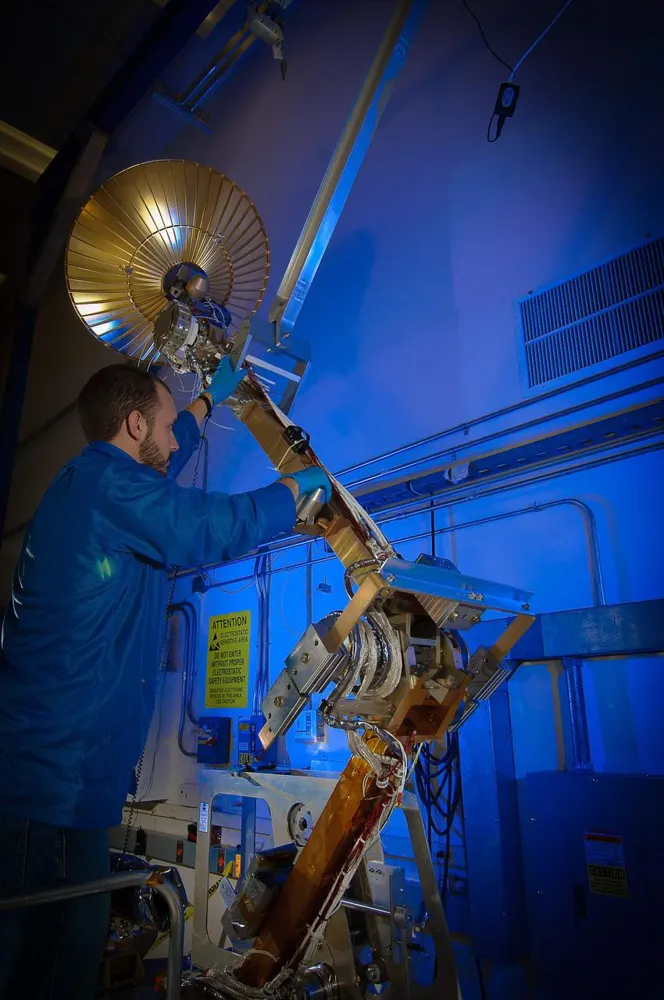
The high gain antenna system of the GPM rain-measuring satellite in testing. Credit: NASA
Antennas let the satellite talk to Earth, sending pictures home through the air!
Antennas send data down and receive commands. Ground stations around the world catch the signals as the satellite flies overhead.
Link budgets balance transmitter power, antenna gain, distance, frequency and noise. Radio spectrum is limited and licensed, one reason missions are turning to laser links and to processing data on board.
🌀 Reaction wheels
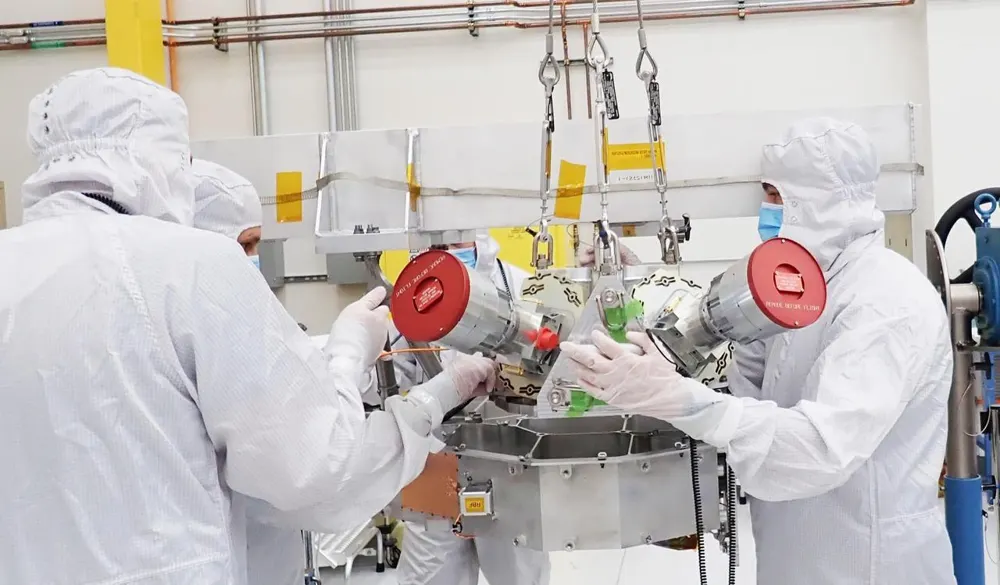
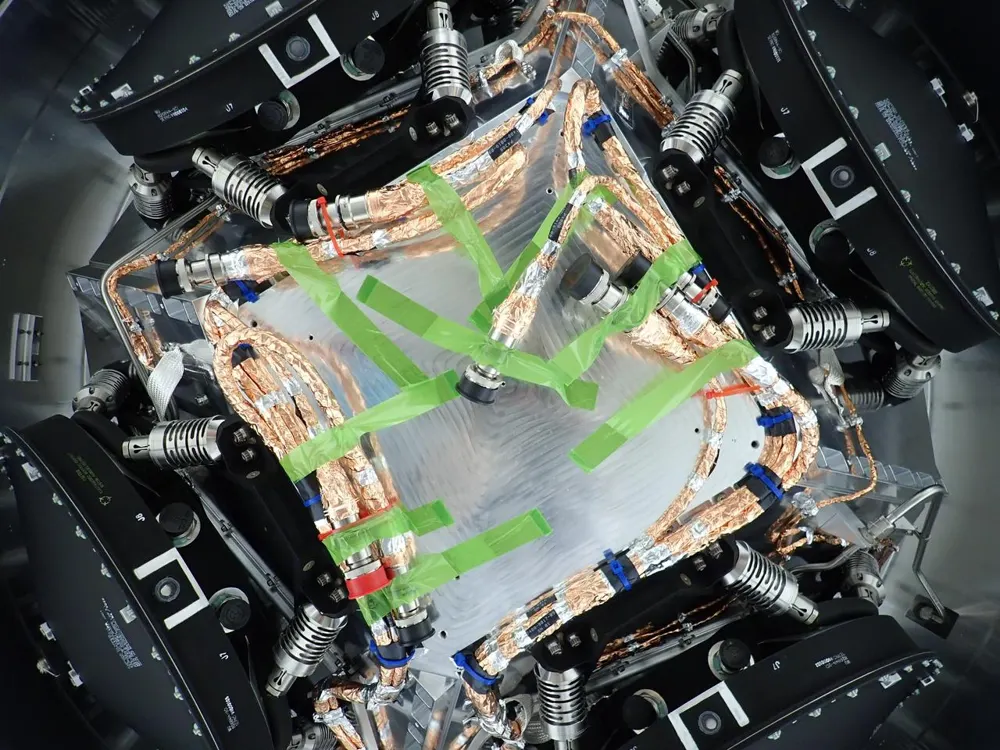
Reaction wheels on Europa Clipper: spinning wheels that turn the spacecraft. Credit: NASA/JPL-Caltech
Spinning wheels inside the satellite help it turn around, like a figure skater pulling in their arms!
Reaction wheels are heavy wheels spun by electric motors. When a wheel speeds up one way, the satellite turns the other way, with no fuel needed.
Reaction wheels exchange angular momentum with the spacecraft body. Outside torques (from sunlight pressure, gravity gradient and drag) slowly saturate the wheels, so magnetorquers or thrusters periodically “dump” the stored momentum.
🚀 Booster (first stage)
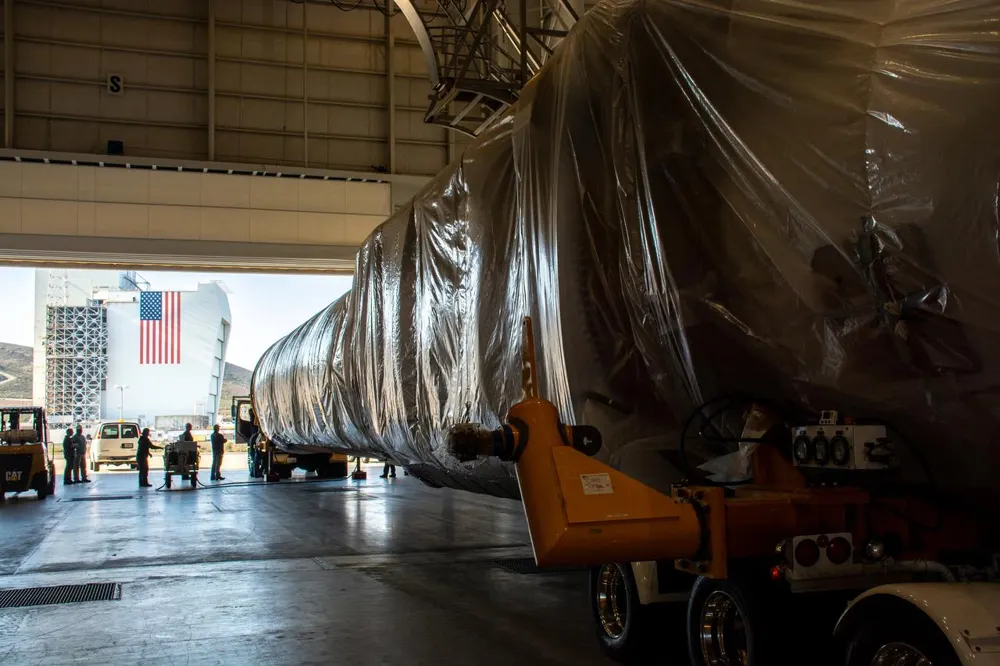
The Atlas V booster for Landsat 9 on its way to the launch pad. Credit: NASA/Randy Beaudoin
The booster is the giant bottom part of the rocket. It pushes hardest to lift everything off the ground.
The first stage carries most of the fuel and burns for the first few minutes. When it is empty it drops away, so the rest of the rocket is lighter.
Staging improves performance because each stage discards dead mass. The rocket equation, Δv = vₑ ln(m₀/m_f), shows why shedding empty tanks lets the upper stage reach orbital speed.
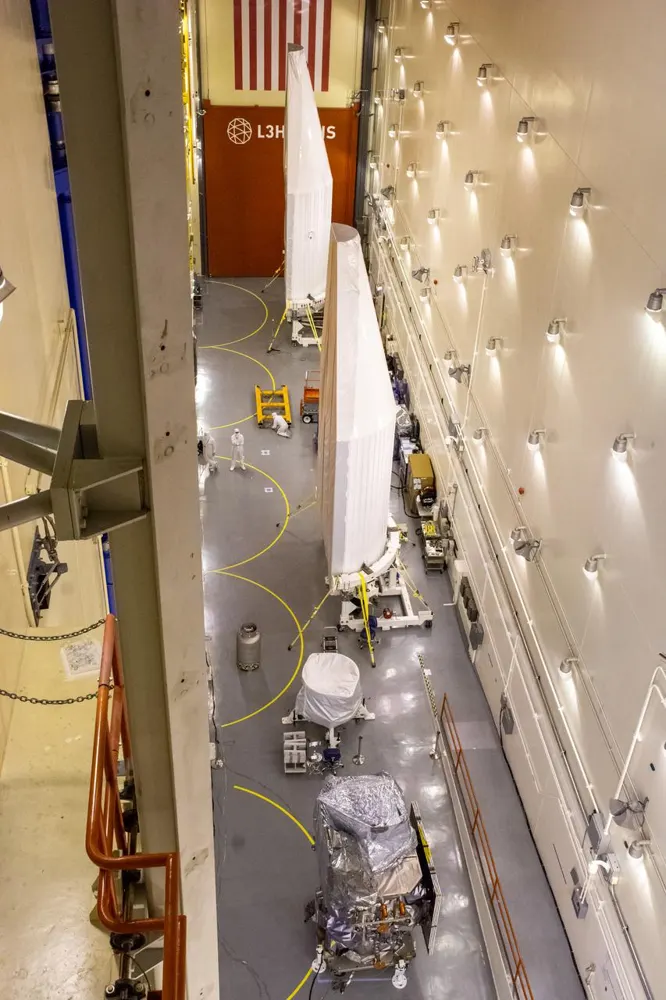
The fairing is the rocket’s nose cone. It protects the satellite like an eggshell until it reaches space.
The fairing shields the satellite from air, heat and buffeting during the climb. Once the rocket is above most of the atmosphere, the two halves split apart and fall away.
Fairing jettison is timed after aerodynamic heating drops below a safe limit. Its acoustic and thermal environment, plus the fairing’s inside diameter, constrain the spacecraft’s size and how its arrays and antennas must fold.
🔥 Launch
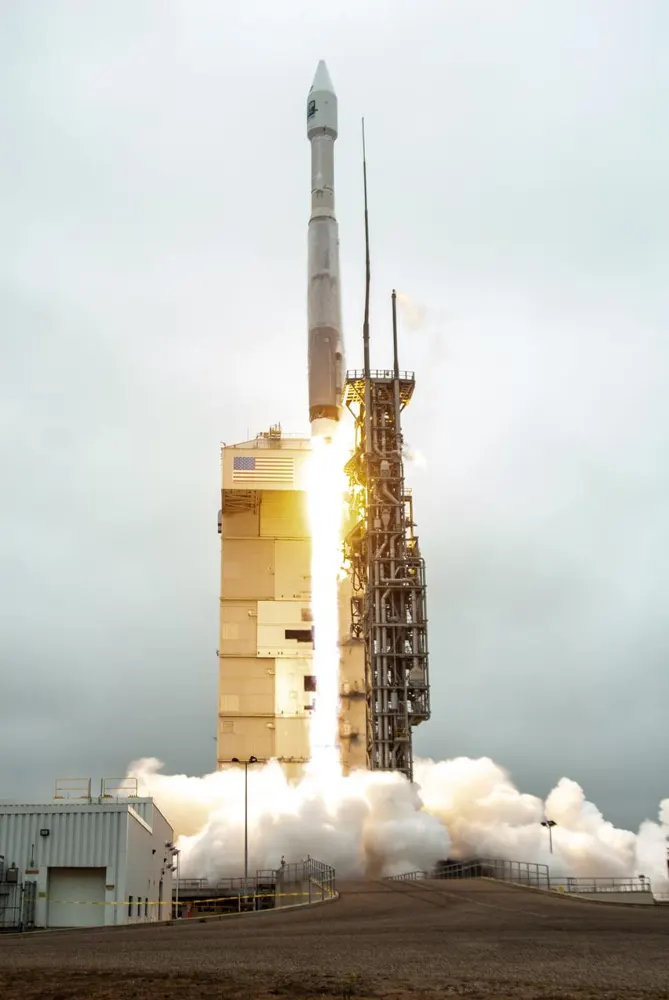
Landsat 9 lifts off on an Atlas V rocket, September 27, 2021. Credit: NASA/Kim Shiflett
Laser communication: talking with light
Some satellites send messages with invisible laser light instead of radio. It is like sending a whole library home in minutes!
Laser (optical) links pack information into infrared light. The beam is very narrow, so it can carry far more data than radio, but the satellite must point it very precisely, and clouds can block it.
Laser (optical) links pack information into infrared light. The beam is very narrow, so it can carry far more data than radio, but the satellite must point it very precisely, and clouds can block it.
In 2023, NASA’s TBIRD CubeSat sent 4.8 terabytes of error-free data to the ground in under five minutes at 200 gigabits per second, the fastest satellite-to-ground data link on record.
Created by the Founder and SI
Optical terminals need extremely precise pointing, ground stations at clear-sky sites, and error-recovery protocols (TBIRD used automatic repeat request) to survive atmospheric fading.
How it helps people and nature: faster downlinks get flood, fire and forest data to the people who need it sooner.
Computing in orbit (SI in space)
Some satellites have a tiny SI brain that throws away cloudy pictures before sending them home!
In 2020, ESA’s Φ-sat-1 became the first European satellite to run a deep-learning SI model on board. It sorted cloudy images from clear ones, so only useful pictures were sent to the ground.
On the ground, many data centers use water for cooling. Lawrence Berkeley National Laboratory estimated that US data centers directly consumed about 66 billion liters of water in 2023 (about 17 billion gallons), up from about 21 billion liters in 2014.
In orbit, waste heat is radiated into space, so a data center there would not need cooling water. The EU-funded ASCEND study, led by Thales Alenia Space (2024), found space data centers could be feasible, but would only cut carbon emissions if launchers became about ten times less emitting over their whole life cycle.
Created by the Founder and SI
Early flights are already testing chips in orbit. See our Orbital Data Centers page.
Trade-offs to weigh: radiation hardening, radiator mass and area, launch emissions, debris risk, repair, and the delay of sending results down. Honest comparisons count the whole life cycle, not just cooling water.
How it helps people and nature: less water drawn from rivers and lakes for cooling, and quicker answers from satellite data.
Real hardware, real launches
These clips come from NASA. Captions are on; tap CC to change them.
Landsat 9 is lifted and placed on top of its rocket Credit: NASALandsat 9 launch on an Atlas V rocket Credit: NASAReal fairing panels separating, seen from a camera on Orion’s solar array (Artemis I) Credit: NASANASA’s Psyche spacecraft tests its giant solar arrays Credit: NASA/JPL-Caltech